
Pixel Art Games That Look Simple but Hide Incredible Depth
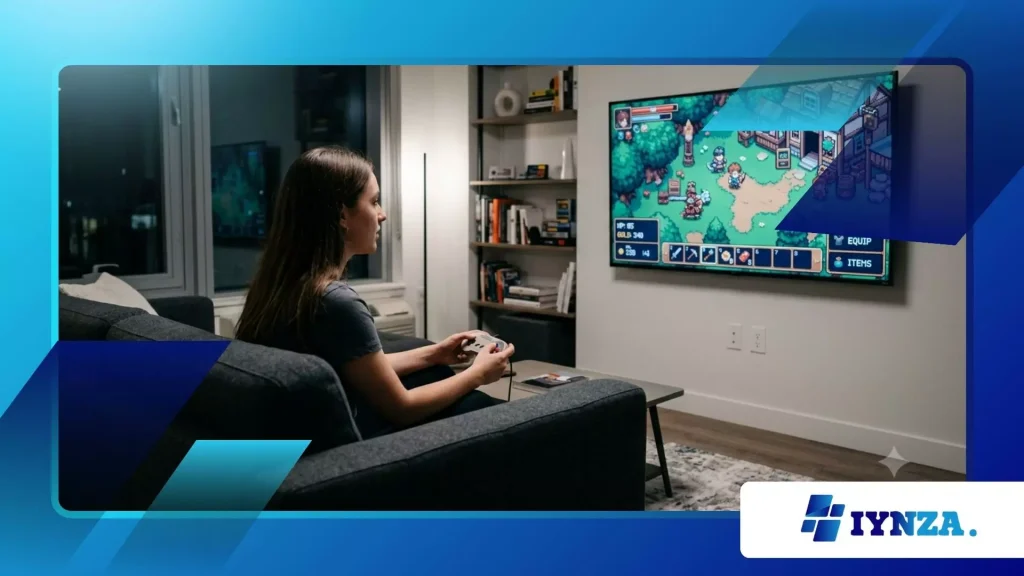
Pixel art games that look simple frequently deceive the untrained eye because casual observers often mistake minimal squares for minimal design effort.
As a veteran columnist covering the indie landscape, I continually witness developers utilizing these constraints to construct deeply intricate mechanical frameworks.
This design philosophy strips away visual excess, forcing players to engage directly with core gameplay loops that rival AAA titles in sheer complexity.
The digital landscape shifts rapidly, yet this specific artistic approach remains a dominant force in contemporary game development.
By analyzing specific modern masterpieces, this article explores how minimalist aesthetics mask profound mechanical depth, economic simulation, and narrative weight.
We will dissect the technical brilliance behind these projects, evaluate market data, and understand why these nostalgic visuals continue to capture global audiences.
Quick Overview of What Lies Ahead
- Mechanical Foundations: Understanding the paradox of complex systems built entirely on minimalist frameworks.
- Case Studies in Depth: Analyzing how specific indie titles use visual constraints to maximize player engagement.
- Industry Data & Evolution: Looking at market realities, performance metrics, and player reception through structured data.
Why Do Simple Graphics Attract Serious Gamers?
The modern gaming industry often suffers from sensory overload, where photorealism masks shallow gameplay loops and repetitive design choices.
Experienced players increasingly migrate toward independent titles because these projects prioritize structural integrity, mechanical innovation, and raw agency over cinematic distraction.
When a game abandons the race for high polygon counts, it must rely entirely on its rules, physics, and world-building to retain attention.
A fascinating paradox exists here: reducing visual fidelity actually expands the scope of what a developer can simulate behind the scenes.
Without the burden of rendering millions of polygons in real time, CPU cycles focus purely on complex AI, procedural generation, and intricate physics calculations.
Is it any surprise that titles utilizing retro aesthetics often feature the most unpredictable, reactive, and rewarding sandbox environments on the market today?
What Is the Visual Paradox in Indie Design?
The visual paradox rests on intentional limitation, where low-resolution sprites represent highly complex physical objects, tactical units, or environmental variables.
Pixel art games that look simple act like a chessboard; the pieces are basic shapes, but the mathematical permutations of their movements are virtually infinite.
This contrast forces players to use their imagination, filling the visual gaps while their brains focus entirely on mastering deep tactical systems.
Developers use this aesthetic not out of nostalgia, but as a deliberate tool to manage scope while delivering uncompromising mechanical depth.
A single developer can code a generational simulation with thousands of interacting variables if they do not have to animate realistic human faces.
The simplicity becomes an asset, transforming potential technical bottlenecks into a streamlined, highly optimized playground for systemic experimentation.
++ Cozy Indie Games That Are Perfect for Relaxing After Work
How Do Minimalist Mechanics Create Deep Systems?
Minimalism in game design operates on the principle of emergent gameplay, where a few basic rules interact to create unexpected, complex outcomes.
When every action has multiple cascading consequences, players transition from basic button-mashing to long-term strategic planning.
A simple movement grid can easily become a tense psychological battlefield when environmental hazards, enemy AI, and resource management collide simultaneously.
Consider how a basic stamina bar or a grid-based inventory system forces constant, meaningful choices during every second of gameplay.
By limiting the player’s physical actions, the game amplifies the weight of every decision, turning simple inputs into complex triumphs.
This elegant balance ensures that the learning curve remains accessible while the mastery ceiling extends far beyond initial expectations.
Also read: Dungeon Crawler Indie Games: Why Old Genres Feel Fresh
What Are the Advantages of Stripping Away AAA Visuals?
By removing the financial and technical pressures of high-end graphic production, independent studios retain absolute creative freedom over their projects.
This autonomy allows them to take massive gameplay risks that traditional publishers would veto due to market volatility.
The resulting games feel distinct, auteur-driven, and highly specialized, catering to niches that crave genuine intellectual stimulation.
Furthermore, these titles enjoy incredible optimization across a vast range of hardware, ensuring smooth performance on laptops, consoles, and handheld devices.
Lower development costs translate directly into longer support cycles, community-driven updates, and fairer pricing models for consumers worldwide.
Players receive a polished, endlessly replayable product that respects their intelligence and their time without requiring a thousand-dollar graphics card.

Which Titles Master This Deceptive Complexity?
Looking closely at the market reveals specific benchmark titles that perfectly exemplify this design philosophy across different gaming genres.
For instance, the legendary simulation Dwarf Fortress launched on Steam with updated pixel sprites, yet it tracks the individual psychological trauma and fingernail growth of hundreds of underground inhabitants.
It proves that minimal visuals can support the most sophisticated, chaotic, and detailed cultural simulation ever coded by human hands.
Another brilliant example is Into the Breach, a tactical masterpiece that presents its entire battlefield on an unmoving eight-by-eight grid.
The game displays all enemy intentions beforehand, turning every match into a deterministic, high-stakes puzzle where survival requires flawless positioning.
Through these practical examples, we see how independent creators turn visual restrictions into masterclasses of focused, intentional game design.
Read more: Indie Farming Games 2026: Why Cozy Sims Still Dominate
How Does Vampire Survivors Redefine the Action Genre?
At first glance, Vampire Survivors looks like a chaotic, chaotic relic from the early nineties, requiring the player to use only a single joystick to move.
However, this casual presentation hides an incredibly addictive mathematical engine driven by weapon synergies, item scaling, and precise positioning.
The game quickly becomes a sophisticated exercise in probability management, where players calculate damage-per-second ratios against overwhelming exponential enemy growth.
The true depth emerges during the mid-game, where choosing the wrong passive item can ruin an entire thirty-minute survival run.
By automating the attacking phase, the developer shifts the player’s focus entirely to movement optimization, resource gathering, and build construction.
It is a brilliant distillation of the action-RPG genre, proving that compelling gameplay loops do not require complex controller inputs.
Why Is Baba Is You a Logical Masterpiece?
Baba Is You presents itself as a charming, block-pushing puzzle game, but it is actually an interactive course in literal computer programming logic.
Every level contains words that function as physical rules, and pushing these blocks alters the fundamental syntax of the game world itself.
By changing the phrase “Wall Is Stop” to “Wall Is You,” the player suddenly controls the entire structural perimeter of the map.
This radical mechanic forces a complete rewiring of traditional lateral thinking, as players must break the rules to solve the puzzles.
The simplicity of the sprites ensures that players never get distracted by visual noise while untangling complex conditional statements.
It remains one of the most intellectually demanding puzzle games ever created, disguised as a harmless, low-resolution adventure.
How Does Celeste Blend Narrative and Precision Platforming?
On its surface, Celeste is a retro platformer about jumping up a mountain, utilizing classic pixel aesthetics to ensure perfect visual clarity.
However, the game possesses tight, responsive physics that allow for advanced movement techniques like wavedashing and wall-bounce stamina conservation.
Every screen is a carefully calibrated physical puzzle that requires mechanical precision, spatial awareness, and rapid muscle-memory adaptation.
More importantly, these punishing mechanics serve as a direct metaphor for the protagonist’s internal struggle with anxiety and mental health.
The grueling difficulty forces the player to experience the same frustration, perseverance, and ultimate triumph as the main character.
It achieves a rare level of narrative-mechanical resonance, proving that simple squares can convey profound human emotions.
How Does the Market Value These Games?
The financial viability of these projects is backed by incredible sales data and critical acclaim within the global gaming ecosystem.
According to VG Insights market reports, independent titles accounted for over 40% of total game sales on Steam in recent periods, outperforming many bloated big-budget releases.
Investors and players alike recognize that sustainable development models built around strong core loops yield far higher player retention rates.
To illustrate this point, let us look at the historical data of major independent successes that utilized minimalist aesthetics to conquer the global market.
The following table showcases how small teams achieved massive cultural and financial impact by prioritizing mechanical depth over superficial graphical presentation.
| Game Title | Developer Team Size | Core Mechanical Focus | Estimated Lifetime Sales (Units) |
| Terraria | 4 Developers | Sandbox Exploration & Crafting | Over 45 Million |
| Stardew Valley | 1 Developer (ConcernedApe) | Farming & Social Simulation | Over 30 Million |
| Dead Cells | Motion Twin (Small Indie) | Roguelike Metroidvania Combat | Over 10 Million |
| Loop Hero | Four Quarters | Passive Deckbuilding Strategy | Over 2 Million |
This statistical reality shatters the myth that high-end graphics are mandatory for widespread commercial success in the modern era.
When a game offers genuine depth, the community responds with long-term loyalty, positive reviews, and continuous word-of-mouth promotion.
The market explicitly values mechanical substance, proving that pixel art games that look simple can stand alongside the biggest names in entertainment history.
What Role Does Nostalgia Play in Modern Success?
While nostalgia initially attracts older players who grew up with classic consoles, it is not enough to sustain long-term engagement.
Modern indie hits use retro aesthetics as a familiar entry point, but they implement completely modern quality-of-life features and design philosophies.
The visual style evokes comfort, while the underlying systems provide the friction, complexity, and challenge that modern audiences crave.
Therefore, nostalgia acts merely as the gateway, not the destination, for these highly successful independent projects.
Younger generations of gamers, who have no living memory of the 8-bit era, embrace these titles solely because their mechanics are superior.
The artistic style transcends age demographics, transforming from a historical limitation into a timeless, universally respected medium for artistic expression.
How Do Modding Communities Extend Game Lifespans?
The clean, structured nature of low-resolution assets makes these titles incredibly fertile ground for community modding and user-generated content.
Players can easily design custom sprites, write simple scripts, and implement entirely new mechanics without needing expensive industrial development suites.
This accessibility democratizes content creation, allowing the community to build massive expansions that keep the game fresh for years.
Games like Starbound and Terraria owe a massive portion of their decade-long longevity to the tireless work of community modders.
By providing accessible tools, developers turn their audience into active co-creators, extending the product’s lifespan indefinitely.
This organic ecosystem keeps the player base highly active, driving continuous sales long after the initial launch window closes.
Why Are Streamers Obsessed with These Complex Titles?
Live-streaming platforms thrive on unpredictable entertainment, high-stakes tension, and moments of profound player creativity or failure.
Because these indie titles feature deep, emergent systems, they naturally generate unique, unscripted narratives during every single playthrough.
A viewer tuning in can witness a completely different strategy, build, or chaotic outcome than they experienced in their own game.
Additionally, the visual simplicity of pixel art games that look simple makes them incredibly easy to read on small mobile screens.
Audiences can instantly understand the player’s positioning, health status, and immediate dangers without getting lost in cinematic motion blur.
This high legibility, combined with deep mechanical unpredictability, makes these titles perfect for the modern creator economy.
Summary of the Pixel Revolution
The ongoing success of minimalist indie titles proves that game design is fundamentally an art of engagement, not visual decoration.
By embracing structural limitations, independent developers create complex systemic sandboxes that respect the player’s intelligence and foster true mechanical mastery.
These projects challenge our perceptions of value, proving that the deepest digital worlds are often built from the smallest blocks.
As we look toward the future of the medium, the demand for these focused, substantive experiences will only continue to grow.
Have you ever found yourself completely losing track of time inside a world made entirely of simple squares?
Pixel art games that look simple remind us that true immersion comes from what we do within a game, not just what we look at.
Share your favorite deceptive indie masterpieces in the comments below, and let us discuss the systems that kept you hooked.
Frequently Asked Questions
Why do developers choose pixel art over modern 3D graphics?
Developers use this style to maximize resource efficiency, focus heavily on complex gameplay mechanics, and ensure smooth performance across all hardware.
It allows small teams to create vast, systemic worlds without the immense financial burden of modern 3D asset production.
Can a game with simple graphics really offer a deep story?
Absolutely, because minimal visuals force the writing, environmental design, and musical score to carry the narrative weight.
Titles like Undertale and To the Moon use simple sprites to deliver emotional, complex stories that rival traditional cinematic games.
Are these retro-style games harder than mainstream AAA titles?
They often feature higher difficulty ceilings because they rely on player mastery, strategic thinking, and precise mechanical execution rather than automated assistance.
However, they compensate for this challenge by offering incredibly rewarding loops and fair, consistent rules.
