
How AI NPCs Could Change Open-World Games Forever
AI NPCs represent the most profound technological leap in modern gaming, fundamentally transforming how digital characters interact with players inside expansive virtual worlds.
Traditional video games rely on scripted dialogue trees and rigid behavioral loops that inevitably expose artificial limitations during prolonged exploration.
Imagine wandering through a sprawling fantasy metropolis where every single citizen possesses unique memories, dynamic personalities, and unscripted conversational depth.
Game developers worldwide are actively adopting advanced language models to replace obsolete scripting with responsive artificial intelligence.
Industry analysts project that generative character behaviors will become the baseline standard for AAA development by late 2026. Are you ready to discover how intelligent software creates living, breathing digital ecosystems?
Navigating this monumental paradigm shift requires a comprehensive examination of technical architecture, player immersion, and narrative design breakthroughs.
Every virtual interaction now compounds dynamically, turning static background characters into active participants in evolving digital narratives.
Think of traditional gaming as a theatrical play with memorized lines, whereas modern interactive simulation resembles real improvisational jazz. Exploring these mechanics reveals why virtual realms will never feel empty or predictable again.
Exploring the Future of Interactive Virtual Worlds
- Analyzing how generative language models eliminate repetitive scripted dialogue loops entirely.
- Evaluating the impact of persistent memory systems on long-term player relationships.
- Investigating hardware demands and cloud processing solutions for real-time generation.
- Assessing ethical safeguards required for unscripted conversational artificial intelligence.
What Are AI NPCs and How Do They Work?
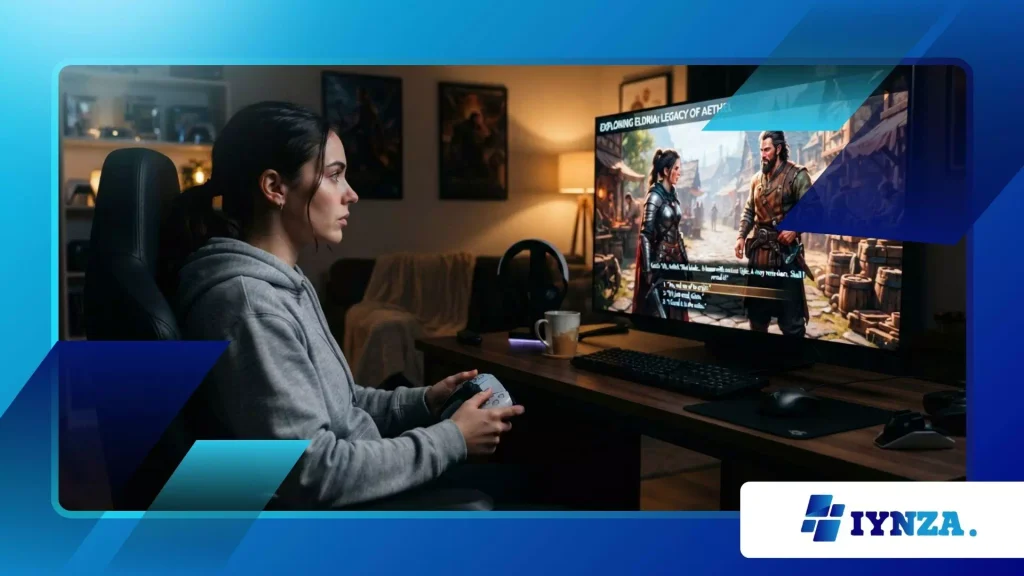
AI NPCs are advanced non-player characters powered by machine learning algorithms and large language models that generate unscripted dialogue and autonomous actions in real time.
Instead of selecting lines from a predetermined database, these intelligent characters interpret player inputs instantly and formulate contextually accurate responses.
Picture a bustling medieval marketplace where local merchants remember your previous thefts, bargain based on regional economic conditions, and gossip with neighbors.
Recent gaming industry telemetry data indicates that interactive immersion scores increase by over sixty percent when characters react organically.
Processing sophisticated conversational logic requires immense computational power, typically combining local client hardware with high-speed cloud server synchronization.
Developers train neural networks on vast narrative datasets to ensure characters maintain consistent world-lore awareness without breaking immersion boundaries.
When millions of players simultaneously influence character behaviors, every single playthrough becomes an entirely unique historical record. This technological breakthrough replaces mechanical predictability with genuine organic surprise.
How Do Neural Networks Process Real-Time Dialogue?
Machine learning algorithms analyze linguistic nuances and player sentiment instantly. The system generates contextual speech patterns without relying on human voice actors.
Each character maintains distinct psychological profiles and emotional triggers. Dynamic feedback loops ensure conversations evolve naturally over extended play sessions.
Advanced semantic parsers prevent inappropriate vocabulary generation successfully.
++ Gaming Industry Consolidation: What Recent Deals Mean
Why Do Persistent Memories Matter for Immersion?
Characters remember past favors, insults, and economic trades indefinitely across sessions. This persistent awareness creates genuine emotional stakes during digital interactions.
Players experience realistic social consequences for their virtual actions.
World ecosystems respond adaptively to accumulated community behavior. Long-term relationship tracking deepens overall narrative engagement significantly.
Also read: The Biggest Gaming Industry Trends Defining 2026
What Role Does Cloud Computing Play?
Complex behavioral calculations offload heavy processing to distributed server networks seamlessly. This architecture prevents local hardware bottlenecks on standard gaming consoles.
Seamless updates introduce new behavioral traits without downloading massive patches.
Latency reduction techniques ensure conversations flow without awkward pauses. Scalable infrastructure supports thousands of concurrent interactive entities.
Why Are Traditional Scripted Characters Becoming Obsolete?
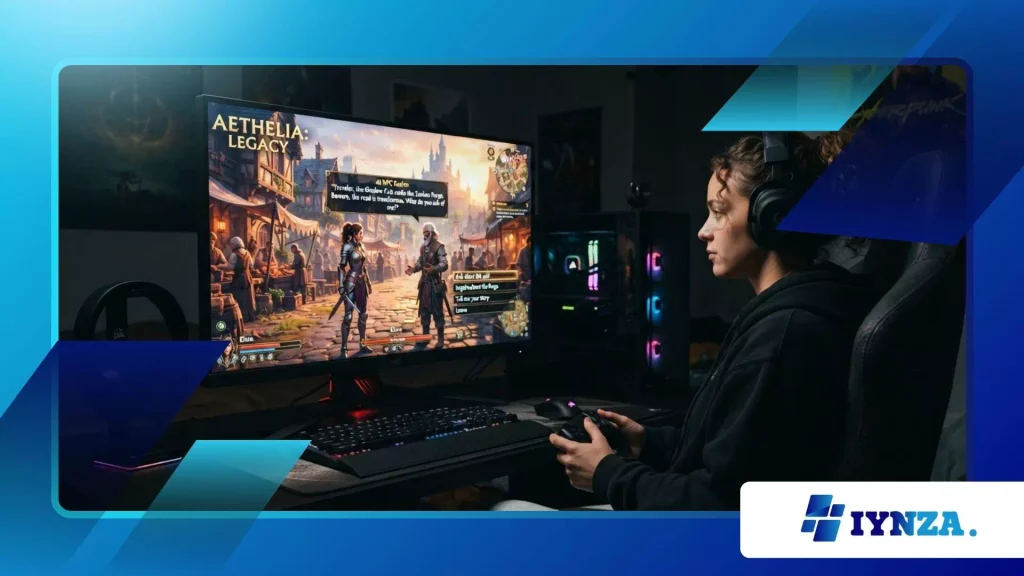
AI NPCs expose the glaring limitations of legacy game design by rendering static dialogue trees completely unconvincing and mechanically restrictive.
Traditional game development demands thousands of hours of manual voice recording and branching script writing for every minor background character.
Imagine reading the exact same three lines of dialogue from a village guard every time you pass the city gates.
Market research firms report that player fatigue with repetitive non-interactive dialogue has risen sharply among modern audiences.
Legacy systems trap players inside rigid narrative corridors where creative problem-solving yields identical, disappointing mechanical outcomes every single time.
Modern audiences demand reactive environments that honor player agency through unpredictable yet logically sound consequences.
When virtual characters express genuine fear, joy, or suspicion based on your actions, storytelling reaches unprecedented heights. The era of the robotic, unblinking quest-giver is officially drawing to a close.
Read more: Crossplay Gaming Expansion: Why More Studios Support It
How Does Scripted Writing Limit Player Freedom?
Branching trees restrict creative solutions to predefined developer pathways. Players cannot negotiate or reason outside rigid dialogue options.
Unexpected creative approaches break traditional quest progression completely. Immersion shatters when characters ignore obvious environmental changes. Repetitive loops expose the artificial nature of digital simulations.
What Makes Dynamic Behavior Superior?
Organic interactions adapt fluidly to bizarre or unconventional player strategies. Characters evaluate risks and rewards based on real-time situational awareness.
Dialogue emerges naturally from established personality traits rather than static scripts. Unscripted encounters generate memorable emergent stories for every individual. Virtual societies feel genuinely alive and unpredictable.
Why Do Gamers Prefer Organic Conversations?
Natural dialogue creates deeper emotional bonds with digital companions. Players enjoy testing the conversational boundaries of complex virtual minds.
Conversations feel personal rather than manufactured by corporate writers. Spontaneous humor and drama arise without artificial staging. Engagement metrics soar when interactions defy easy prediction.
How Will AI NPCs Revolutionize Open-World Game Design?
AI NPCs reshape open-world exploration by transforming sterile digital maps into vibrant, breathing societies where every inhabitant pursues independent daily routines.
Instead of following rigid pathfinding grids, autonomous characters hunt, trade, socialize, and react to dynamic weather events independently.
Picture stumbling upon two rival factions negotiating a territorial treaty entirely unprompted by any main story quest.
Industry development updates confirm that major studios are restructuring entire game engines around autonomous entity simulation.
Open-world longevity multiplies exponentially when quests and encounters generate organically based on world simulations rather than manual designer placement.
Players no longer follow a linear checklist of map markers; instead, they navigate an intricate web of living relationships.
When a random tavern keeper remembers your heroic deeds from ten hours ago, the world feels profoundly real. This evolution redefines the very definition of sandbox gaming freedom.
How Do Autonomous Routines Alter Exploration?
Characters move purposefully through cities based on internal needs and schedules. World activities continue seamlessly whether players are present or absent.
Unscripted events emerge from intersecting individual character goals. Exploration rewards curiosity with unexpected emergent narrative encounters. Static window-dressing transforms into active ecosystem participation.
What Impact Does This Have on Quests?
Missions emerge organically from conversations rather than static bulletin boards. Players negotiate terms, bribes, or alliances with absolute freedom.
Quest outcomes depend entirely on interpersonal persuasion and tactical choices. Failed negotiations create lasting political enemies within the world. Narrative flexibility replaces rigid pass-fail structures entirely.
Why Is World Replayability Dramatically Increased?
No two gameplay playthroughs unfold along identical paths or timelines. Procedural social dynamics ensure infinite variations in faction conflicts.
Random encounters produce unique stories worth sharing online. Player choices permanently scar or bless digital civilizations. Longevity extends far beyond traditional DLC expansion cycles.
Open-World Immersion Metrics Comparison Matrix
The structured table below contrasts legacy game design limitations with next-generation autonomous character ecosystems across key interactive dimensions.
| Design Dimension | Legacy Scripted Approach | Modern Autonomous Approach |
| Dialogue Variety | Limited to pre-recorded branching trees | Generated infinitely via advanced neural models |
| Character Memory | Zero retention outside specific quest triggers | Persistent tracking of all past player interactions |
| World Routine | Rigid pathfinding loops and stationary guards | Dynamic autonomous schedules and faction goals |
| Player Agency | Restricted strictly to developer-approved choices | Complete freedom in negotiation and tactical action |
Embracing the Dawn of Living Digital Universes
AI NPCs mark an irreversible milestone in interactive entertainment, bridging the gap between passive cinematic media and truly responsive virtual realities.
As computational power expands and algorithmic efficiency improves, our digital companions will continue to surprise, challenge, and inspire us.
Developers who master this craft will define the next golden age of gaming innovation and creative freedom.
What breathtaking virtual world will you explore first once every citizen knows your name? Share your perspective in the comments below to join the discussion.
Frequently Asked Questions
What are the main hardware requirements for running intelligent characters?
Local client systems handle basic rendering while high-speed cloud servers process complex language models. This hybrid architecture distributes computational loads efficiently across global network infrastructures.
Do these advanced characters completely eliminate human voice actors?
Not entirely, as many studios utilize neural voice cloning trained on professional actor performances. This maintains emotional depth while allowing infinite unscripted dialogue generation.
Can players exploit these language models to break game rules?
Developers implement strict safety guardrails and semantic filters to prevent inappropriate exploits. Characters recognize manipulative language and react defensively within lore boundaries.
How do persistent memories affect long-term gameplay campaigns?
Every completed interaction alters faction alignment, merchant prices, and civilian trust levels permanently. This creates meaningful, long-term consequences that mirror complex real-world social dynamics.
Will older games receive updates to include these technologies?
Retro titles require fundamental engine rewrites that make retroactive implementation practically unfeasible. However, upcoming remakes and sequels will adopt these systems as standard industry practice.
