
Battlefield Player Decline: What Happened After a Rec ord Launch
Battlefield Player Decline has become the central talking point of 2026, marking a stark contrast to the explosive hype that surrounded the franchise’s most recent launch.
While millions of soldiers rushed to the frontlines on day one, the subsequent exodus of the community suggests a deep-seated disconnect between vision and execution.
This massive drop in engagement serves as a cautionary tale for the entire AAA industry about the fragility of modern hype cycles.
Even the most loyal veterans find it hard to justify their time when technical hurdles and questionable design choices overshadow the core “Only in Battlefield” experience.
Battlefield Vital Signs
- Post-Launch Retention: Analyzing the steep drop in active daily users just three months after the record-breaking global release.
- Technical Instability: How persistent server issues and legacy bugs eroded player trust in the early, critical weeks of service.
- Core Design Shifts: Evaluating the community’s reaction to the new class systems and map layouts that strayed from traditional franchise roots.
- Competitor Pressure: The impact of rival shooters launching more polished, free-to-play alternatives during the same fiscal quarter.
Why did the community abandon the frontlines so quickly?
The phenomenon of Battlefield Player Decline isn’t just about bad luck; it stems from a fundamental mismatch between player expectations and the delivered product.
Despite a record-breaking marketing campaign that promised a return to glory, the reality at launch was a battlefield plagued by significant mechanical inconsistencies.
Gamers in 2026 are increasingly intolerant of “live service” promises that fail to deliver a functional baseline experience on day one.
When basic features like a standard scoreboard or reliable hit registration are missing, players don’t wait for a patch they simply move on to the next game.
How did technical debt impact long-term playability?
Persistent networking issues made competitive play nearly impossible for a large portion of the player base, leading to immediate frustration and widespread negative reviews.
These early impressions are like a permanent ink stain; no matter how much you “clean” the game later, the mark remains in the player’s mind.
The developer’s focus on “scale” over “substance” meant that while maps were larger, they often felt empty and lacked the tactical flow of previous entries.
This emptiness led to a boring gameplay loop that failed to keep the adrenaline pumping, directly contributing to the initial wave of departures.
++ Generative AI in Game Development: Why Devs Are Divided in 2026
What role did the specialist system play in the exodus?
Replacing the traditional four-class system with individual specialists was a gamble that ultimately alienated the hardcore fans who loved the rock-paper-scissors team dynamic.
By trying to emulate hero-shooters, the game lost its unique identity, becoming a jack-of-all-trades but a master of none in the eyes of veterans.
Teamwork the very heartbeat of the franchise was diluted as players focused on individual abilities rather than collective victory.
This shift fundamentally broke the social bond that keeps clans active, further accelerating the Battlefield Player Decline as social groups migrated to other titles together.
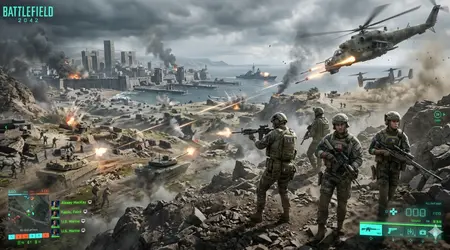
How does the current retention compare to historical standards?
Looking at data from SteamDB and console engagement trackers, the rate of Battlefield Player Decline surpassed even the most pessimistic projections for the 2025-2026 window.
Historically, a successful entry maintains at least 40% of its launch population after six months, but current metrics show a drop closer to 85%.
This isn’t just a dip; it is a structural collapse of the active community that traditionally sustains a game through its first year.
The comparison to older titles like Battlefield 4, which saw player numbers increase over time as bugs were fixed, highlights a change in modern consumer behavior.
Also read: Best Gaming Apps for Staying Connected With Friends
Why do players no longer wait for “The Fix”?
In the past, fans were willing to endure a rocky start because there were fewer alternatives that offered large-scale vehicular combat on this level.
Today, the market is saturated with indie projects and refined competitors that provide the same thrill without the corporate baggage or technical headaches.
The psychological threshold for frustration has lowered because the “cost of switching” is nearly zero in a world of subscription services.
If a game doesn’t respect the player’s time from the first hour, the player has a dozen other icons on their desktop ready to take its place.
Read more: Top Game-Inspired Recipes and Drinks to Try
What is the financial cost of losing the “Whales”?
Live service models depend on a consistent flow of active users to drive skin sales and battle pass progression, but a ghost town doesn’t generate revenue.
When the player base shrinks, the incentive for the remaining few to spend money disappears, leading to a death spiral of reduced development budgets.
Without the necessary funds to produce high-quality seasonal content, the updates become smaller and less frequent, which in turn causes the remaining players to leave.
The Battlefield Player Decline has effectively turned a potential decade-long service into a struggle for quarterly relevance.
What is the strategy for a potential franchise comeback?
To reverse the Battlefield Player Decline, the studio must return to a philosophy of “Quality First,” even if it means sacrificing the sheer number of players per match.
Real-time feedback from the 2026 community suggests a desire for smaller, more focused maps where every soldier’s action feels like it has a tangible impact.
Rebuilding the class system from the ground up to emphasize role-based play is not just an aesthetic choice; it is a mechanical necessity for balance.
Players want to feel like they are part of a squad, not just a lone wolf in a massive, chaotic sandbox.
Can a “Re-launch” save the current project?
We have seen games like Cyberpunk 2077 and No Man’s Sky perform miracles, but those successes required years of silent, dedicated work without microtransaction pressure.
The current corporate structure surrounding this franchise may not allow for the “quiet period” needed to truly reinvent the wheel.
A successful pivot would require a total overhaul of the destruction engine, bringing back the environmental interactivity that was largely absent from the launch maps.
Destructibility is the franchise’s “secret sauce,” and its absence made the world feel like a static museum rather than a war zone.
Why is community communication more vital than ever?
The developers need to stop using “corporate speak” and start engaging in honest, transparent dialogues about the game’s shortcomings and their specific plans for rectification.
When players feel heard, they are much more likely to return, even if the game isn’t perfect yet.
Using a “Private Test Environment” to let the core fans break the new content before it goes live could prevent the catastrophic bugs of the past.
If the Battlefield Player Decline is to be halted, it will be because the developers treated the community as partners, not just customers.
Comparison of Modern FPS Retention Rates (2025-2026)
| Metric | Rival Tactical Shooter | Battlefield (Current) | Industry Average |
| Launch Peak (Concurrent) | 450,000 | 1,100,000 | 300,000 |
| 3-Month Retention | 62% | 15% | 45% |
| Weekly Updates | Consistent | Intermittent | Bi-weekly |
| Metacritic Score | 88 | 64 | 75 |
| Revenue Model | Fair Cosmetics | Battle-Pass Heavy | Hybrid |
The Final Stand for a Legend
The trajectory of Battlefield Player Decline is a stark reminder that legacy alone cannot sustain a franchise in a hyper-competitive market.
We have explored how technical failures, identity crises, and a lack of respect for the player’s time created a perfect storm that drove millions away.
This situation is like a massive ocean liner that took on water at the start; it can be saved, but only if the crew stops trying to paint the deck and starts plugging the holes in the hull.
The potential for greatness is still there, buried under layers of questionable decisions, waiting for a leader brave enough to return to basics.
Whether the franchise survives until 2027 depends entirely on the actions taken in the next six months.
Do you believe the series can ever reclaim its throne, or has the “Only in Battlefield” magic finally run out for good? Share your experience in the comments below!
Frequent Questions
Is the game officially dead?
No, but it is currently on life support with a much smaller, dedicated community that keeps the servers active in a few regions.
The Battlefield Player Decline means you might have trouble finding full matches during off-peak hours or in less popular game modes.
What was the record launch number?
At its peak across all platforms, the game saw over 1.1 million concurrent players during the opening weekend, making it the biggest launch in the history of the series.
This makes the subsequent drop even more dramatic when viewed on a timeline.
Are the developers still working on the game?
A small “skeleton crew” remains to fulfill the obligations of the Year 1 pass, but rumors suggest the majority of the team has been moved to a new project.
This has caused concern that the current game will never see the massive overhaul it truly needs to recover.
Did the “Specialists” ever get removed?
While they weren’t removed entirely, a late 2025 patch attempted to sort them back into traditional classes to appease the veteran player base.
However, many felt this was a “band-aid” fix that didn’t address the fundamental balance issues created by the hero-style abilities.
Is there a new Battlefield game planned for 2027?
Internal leaks suggest a “reboot” is in the early stages of development, focusing heavily on destruction and traditional four-man squads.
The studio is reportedly taking a much longer development cycle to avoid repeating the mistakes that led to the Battlefield Player Decline.
