
Best Ways to Explore Hidden Areas in Open-World Games
Best Ways to Explore Hidden Areas often define the difference between a casual playthrough and a legendary gaming experience in 2026’s massive digital landscapes.
Anúncios
Developers now hide intricate stories and powerful loot behind environmental puzzles that require more than just following a golden waypoint on your mini-map.
Mastering these techniques allows you to break the invisible walls of conventional gameplay and discover secrets that most players simply walk past.
Whether you are navigating the dense ruins of Elden Ring: Shadow of the Erdtree or the vertical neon heights of a refreshed Cyberpunk 2077, curiosity is your most potent tool.
Essential Guide Sections
- Deciphering Environmental Cues: Understanding how developers guide your eyes.
- Verticality and Mobility Gadgets: Using height to bypass traditional roadblocks.
- Community Intelligence: How social data helps reveal the “impossible” secrets.
- Interactive Loot Table: Comparison of exploration rewards in top titles.
How can environmental design reveal secret paths?
Modern game designers use “environmental storytelling” to whisper hints about nearby secrets without using explicit icons or text prompts.
You might notice a series of yellow flowers leading away from a main path or a flickering light deep within a dark ventilation shaft.
Paying attention to these subtle changes in color and lighting serves as one of the Best Ways to Explore Hidden Areas.
These visual markers act like breadcrumbs in a forest, rewarding players who keep their eyes off the interface and on the world.
Why does color contrast matter?
A sudden splash of red paint on a ledge in Mirror’s Edge or white chalk marks in Uncharted signals climbable surfaces.
Developers use these “affordances” to subconsciously direct your movement toward areas that initially look inaccessible or decorative.
Learning to spot these artificial highlights helps you distinguish between static background scenery and interactive routes.
This skill proves vital in games with high fidelity where every rock looks unique, yet only some lead to hidden caves.
++ How to Manage Skills and Abilities in Complex RPGs
What do NPC patterns suggest?
Non-playable characters often follow specific loops that hint at restricted zones or back entrances to guarded fortresses.
Watching a guard slip through a side door in Hitman reveals an entry point you likely missed while staring at the front gate.
Observing these behaviors provides a narrative map of the environment’s weaknesses. If an NPC can walk there, usually the player can too, provided they find the right trigger or timing to exploit the path.
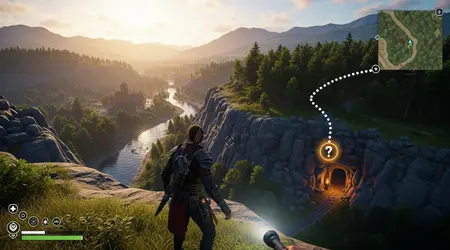
Which tools are the Best Ways to Explore Hidden Areas effectively?
In 2026, mobility is the king of discovery, as games prioritize vertical exploration over flat terrain.
Utilizing specialized gadgets like grappling hooks, gliders, or double-jump boots allows you to reach rooftops that hold the most elusive Easter eggs.
Without the right gear, many secret zones remain strictly “look but don’t touch” areas designed to tease the player.
Investing your skill points into traversal abilities early in the game pays massive dividends in the form of hidden legendary items.
Also read: Step-by-Step Guide to Perfecting Parkour in Platformers
How to use photo mode as a drone?
Photo mode serves as a powerful, unofficial scouting tool to peek around corners or inside locked rooms without moving your character.
You can fly the camera through narrow gaps to see if a chest exists before spending time finding the entrance.
This technique bypasses the physical limitations of the game world. It functions like a reconnaissance drone, giving you a literal “bird’s eye view” of complex structures that hide secrets in plain sight.
Read more: Best Tips for Multiplayer Survival Game Success
Why is backtracking essential?
Many open worlds use “Metroidvania” logic, where you see a secret area early but lack the power to enter it.
Returning to the starting zone after gaining a late-game ability, like the water-breathing mask in Horizon Forbidden West, often yields the best rewards.
Backtracking turns the world into a living puzzle that unfolds as you grow stronger.
It ensures that the Best Ways to Explore Hidden Areas involve memory and strategy rather than just brute-force wandering through the wilderness.
Why should you trust community data for discovery?
Research suggests that the collective intelligence of the internet solves 90% of a game’s secrets within the first 48 hours of launch.
According to data from Steam global achievement trackers, only about 1.5% of players find “Ultra Rare” hidden areas without external help.
The Best Ways to Explore Hidden Areas frequently involve checking community heatmaps and shared coordinates on platforms like Discord.
While solo discovery is satisfying, some puzzles are designed with a “global” difficulty that assumes players will collaborate online to solve them.
What are community heatmaps?
Heatmaps visualize where the majority of players travel, unintentionally highlighting “cold zones” that nobody has stepped in yet.
These empty spaces on the map are usually where developers hide the most complex and rewarding secrets.
By following the absence of other players, you find the frontiers of the game.
This counter-intuitive strategy leads you to corners of the map that remain untouched by the masses, offering a truly unique discovery.
How do cryptic messages help?
In games like Dark Souls, player-left messages can warn of traps or point toward illusory walls that hide entire optional bosses.
Even if a message says “try jumping,” it forces you to look at the environment from a perspective of “what if?”
These social clues create a shared culture of exploration.
One person’s accidental fall becomes a guidepost for thousands of others, turning a solo adventure into a massive, cooperative treasure hunt across a digital continent.
Comparison of Exploration Rewards
| Game Title | Exploration Reward | Difficulty | Tool Required |
| Shadow of the Erdtree | Unique Bosses/Spells | Extreme | Observation |
| Zelda: Tears of the Kingdom | Rare Armor/Materials | Medium | Creative Building |
| Cyberpunk 2077 | Iconic Weapons | High | Technical Ability |
| Starfield | Legendary Gear | Low | Scanning/Booster |
Are you ready to stop being a tourist and start being a pioneer in your favorite digital worlds? Exploring is like a magic trick; once you see the developer’s hand, the whole world opens up.
The Best Ways to Explore Hidden Areas rely on patience, the right tools, and a keen eye for the unusual. Mastering environmental cues and mobility will ensure you never miss a secret again.
Now, go back to that suspicious cliffside and see what’s actually behind the waterfall. Share your most incredible discovery in the comments below!
Frequently Asked Questions
Do developers hide loot in areas that look like glitches?
Sometimes, yes. “OOB” (Out of Bounds) exploration is a niche community that finds secrets tucked away in unfinished rooms or behind textures that lack collision.
Is there a penalty for exploring areas too early?
In “level-scaled” games, no. However, in “fixed-level” games like The Witcher 3, wandering into a hidden cave might put you face-to-face with a monster that can one-shot you.
Can I find all secrets without using the internet?
It is possible but extremely time-consuming. Developers often hide things that require specific, illogical actions that the average human would never attempt without a hint.
What is a “Waterfall Secret” analogy?
It is the oldest cliché in gaming. If there is a waterfall, there is a 99% chance a hidden room or chest sits behind the curtain of water.
How do achievement percentages help me find secrets?
If you see an achievement for “Discovering the Hidden Valley” and only 0.2% of people have it, you know you need to look for something extremely well-hidden.
