
Los costos de desarrollo de juegos AAA alcanzan nuevos récords en 2026: ¿es sostenible el modelo actual?
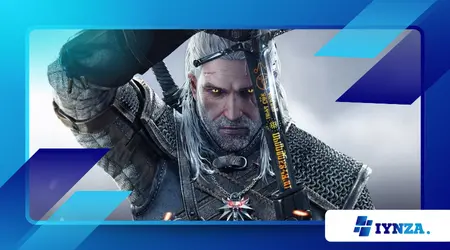
AAA Game Development Costs have officially crossed the threshold of fiscal sanity in 2026, leaving both industry veterans and enthusiastic players questioning the future of high-end entertainment.
Anuncios
As we stand in the first quarter of the year, reports indicate that the most anticipated blockbusters are no longer just expensive; they are becoming financial behemoths that require near-miraculous sales figures to break even.
The tension between creative ambition and economic reality has never been more palpable than it is today.
While gamers demand ever-increasing fidelity and sprawling open worlds, the sheer capital required to build these digital universes is forcing a radical, and perhaps painful, reorganization of how our favorite titles are financed and produced.
The Digital Arms Race: A Quick Breakdown
- Skyrocketing Budgets: Major 2026 releases now regularly exceed $300 million in pure development costs.
- The “Billion Dollar” Shadow: Upcoming flagship titles like El brujo 4 are projected to approach a total cost of nearly $900 million.
- Industry Correction: A staggering 33% of US gaming employees faced layoffs over the last two years due to unsustainable spending.
- Technological Shifts: Generative AI and “Agentic AI” are being integrated to curb labor costs, despite significant pushback from creative staff.
Why are game budgets reaching unprecedented heights in 2026?
The primary driver behind the surge in AAA Game Development Costs is the insatiable demand for “hyper-fidelity” and world density that pushes current hardware to its absolute limits.
Every blade of grass and every NPC facial twitch now requires hundreds of man-hours from specialized artists, animators, and engineers spread across global time zones.
Furthermore, the “live service” mandate means that launch day is just the beginning of the financial drain.
Developers must now fund massive post-launch teams to provide “seasonal content drops” and server maintenance, turning a single game into a permanent, high-overhead utility that must generate revenue for a decade.
What are the specific technical factors increasing expenses?
Modern games rely on “Spatial Computing” and “Agentic AI” to create worlds that react in real-time to player behavior, which adds layers of complexity to proprietary backend systems.
This custom software design requires elite talent whose salaries have risen sharply, significantly increasing the monthly “burn rate” for top-tier studios.
AAA Game Development Costs are also inflated by the expectation of cross-platform parity.
Ensuring a game runs flawlessly on a mobile device, a high-end PC, and a cloud-based console simultaneously requires extensive optimization and testing phases that were virtually nonexistent during the PlayStation 3 era.
How does marketing contribute to the financial burden?
In many cases, the marketing budget for a premier title now equals or even surpasses the actual production costs, as publishers fight for attention in a saturated market. T
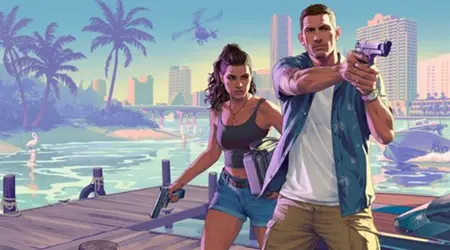
o ensure a game like GTA VI o El brujo 4 reaches its massive break-even point, companies must spend hundreds of millions on global ad campaigns.
This creates a high-stakes “winner-takes-all” environment where a single critical failure can result in the closure of a legendary studio.
For instance, the 2026 State of the Game Industry Report revealed that two-thirds of respondents at AAA studios witnessed layoffs at their companies in the past year alone.
Is the current “Blockbuster” model truly sustainable?
The current trajectory of AAA Game Development Costs suggests that we are approaching a “Gordian Knot” where the price of production outpaces the growth of the audience.
If a game costs $500 million to produce, it must sell roughly 10 million copies at full price just to recover the initial investment, leaving no room for error.
We are essentially watching a high-stakes poker game where the “ante” has become so high that only the largest five or six publishers can afford to play.
This consolidation limits diversity, as companies become “risk-averse,” opting for safe sequels and established intellectual properties rather than daring new creative visions.
Leer más: How AI-Driven NPCs and Procedural Content Are Changing Game Designad more:
What are the consequences of studio consolidation?
When budgets balloon, publishers tend to “play it safe,” leading to a market filled with sequels and reboots that lack the soul of original innovation.
This trend explains why, according to a recent Bain & Company survey, 22% of gamers cited gameplay as their top priority, while only 7% prioritized high-end graphics.
Alto AAA Game Development Costs also lead to a “squeezed middle,” where mid-tier studios vanish because they cannot compete with the polish of giants or the agility of indies.
This gap leaves the industry lopsided, with a few massive titans on one side and a sea of small, self-funded indie creators on the other.
Why is player burnout becoming a financial risk?
As games become more expensive, they also become longer and more demanding of a player’s time to justify the $80 price tag.
This creates “consumer fatigue,” where players find themselves overwhelmed by 100-hour epics, leading to lower completion rates and a reduced appetite for the next big release.
The industry is like a marathon runner who has decided to sprint the final ten miles; the speed is impressive, but the heart might not survive the effort.
Without a shift toward shorter, more focused experiences, the bubble of massive budgets may finally burst before the end of this decade.
What are the alternatives to the traditional dev cycle?
To combat rising AAA Game Development Costs, many visionary studios are pivoting toward modular releases and “early access” models to generate revenue during the long production years.
This allows for community feedback to shape the game, reducing the risk of a catastrophic “market mismatch” after five years of silent development.
Other companies are leaning into procedural generation and AI-assisted art pipelines to automate the “grunt work” of building massive environments.
While controversial, these tools are often the only way a team of 300 can produce what previously required 1,000 people, potentially stabilizing the industry’s shaky financial foundations.
Average Cost Breakdown for AAA Titles (2026 Projections)
| Expenditure Category | Estimated Cost (USD) | Percentage of Total | Key Impact Factor |
| Core Engineering | $40M – $80M | 25% | Networking & Engine Physics |
| Art & Animation | $80M – $150M | 45% | High-fidelity assets & Mo-cap |
| Marketing & PR | $100M – $300M | Varies | Global reach & brand presence |
| LiveOps & Servers | $20M – $50M | 10% | Post-launch engagement |
| Voice & Audio | $5M – $15M | 5% | Orchestral scores & A-list talent |
The spiraling AAA Game Development Costs of 2026 are forcing a long-overdue conversation about what we value most in our digital experiences.
We have reached a point where the “graphics-first” philosophy is no longer economically viable for most studios, leading to a brutal correction that has already impacted thousands of talented developers.
To survive, the industry must embrace a more disciplined approach to scope, perhaps trading “infinite” open worlds for denser, more meaningful interactive spaces.
The success of indie “breakouts” that focus on mechanics over textures proves that the audience is ready for this change, even if the biggest publishers are still caught in a cycle of overspending.
Ultimately, the sustainability of the AAA model depends on finding a balance between the spectacular and the profitable, ensuring that the games we love don’t bankrupt the people who make them.
Would you be willing to accept slightly less realistic graphics if it meant more innovative and frequent game releases? Share your experience in the comments!
Preguntas frecuentes
Why do some games cost nearly $1 billion now?
Títulos como El brujo 4 reach these figures due to decade-long development cycles, massive staff counts, and astronomical global marketing campaigns.
Does AI really help lower AAA Game Development Costs?
In theory, yes. AI can automate repetitive tasks like texturing rocks or animating background NPCs, though it currently faces legal and ethical challenges.
Will game prices go up to $100 soon?
While some publishers are testing higher price points, the industry is largely leaning into battle passes and microtransactions to offset production deficits.
What happened to mid-tier “AA” games?
Most have been “squeezed out” as they struggle to find an audience that isn’t already occupied by either a free-to-play titan or a $15 indie masterpiece.
Is cloud gaming cheaper to develop for?
No, it actually increases backend and infrastructure costs, as the game must be optimized for a variety of streaming conditions and latencies.
