
El auge de la IA y el análisis de datos en el juego profesional: cómo los equipos utilizan la tecnología inteligente
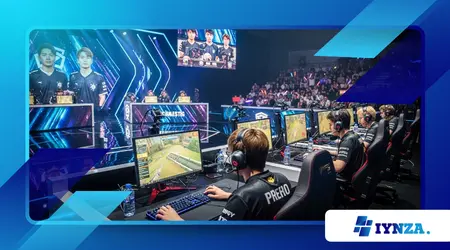
Rise of AI & Data Analytics in Pro Play marks a definitive shift in how elite organizations approach the digital battlefield in 2026.
Anuncios
Gone are the days when raw talent and gut instinct decided the champions of League of Legends or Counter-Strike.
Today, every mouse click and movement is a data point analyzed by sophisticated neural networks to find the winning edge.
Teams now employ more data scientists than assistant coaches to process terabytes of match history and player biometric data.
This technological arms race has transformed the locker room into a laboratory where strategy meets silicon.
Can a human mind truly compete with a machine that has simulated the next match ten million times?
Inside the Digital Playbook
- Algorithmic Drafting: How AI predicts opponent picks before they happen.
- Biometric Performance: Monitoring stress levels and reaction times in real-time.
- Predictive Pathing: Using heatmaps to anticipate enemy movements.
- Economic Optimization: Managing in-game resources with mathematical precision.
How does AI influence pro drafting and strategy?
El Rise of AI & Data Analytics in Pro Play has revolutionized the “Pick and Ban” phase of major tournaments.
Software like SAP’s specialized analytics for Team Liquid now predicts enemy team compositions with over 85% accuracy.
Coaches receive real-time suggestions based on win-rate probabilities against specific player archetypes and patch updates.
Top-tier teams use AI to simulate millions of skirmish outcomes during their preparation week.
These simulations identify tiny flaws in positioning that no human eye could catch during a standard VOD review. By the time players take the stage, they are following a roadmap built on cold, hard logic.
Is predictive modeling the new head coach?
Drafting is now like playing chess against a supercomputer that knows your favorite openings. Teams use historical data to force opponents into uncomfortable “low-probability” scenarios early in the game.
Strategic depth has increased because AI identifies “meta-breaking” combinations that humans might dismiss as too risky.
This tech-driven innovation ensures the competitive landscape remains in constant, unpredictable flux.
Leer más: Cómo influyen los aficionados a los deportes electrónicos en el metajuego y la estrategia
Why do heatmaps matter for map control?
Analyzing movement patterns allows analysts to predict where a jungler or roamer will be at any given minute. Data shows exactly how a player reacts when they lose vision or face specific pressure.
These heatmaps serve as a digital “scent” that reveals the subconscious habits of the world’s best players. Knowing a rival always retreats left under fire gives a massive tactical advantage.
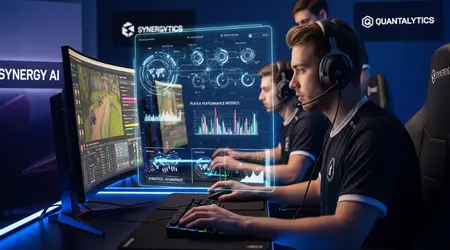
What role does data play in player health and scouting?
Scouting has shifted from watching highlights to analyzing raw input data and APM (actions per minute) consistency.
Organizations now look for “efficiency ratings” that show how much value a player provides per gold spent. This objective lens removes the hype and focuses on sustainable, long-term performance metrics.
El Rise of AI & Data Analytics in Pro Play also extends to the physical well-being of the athletes.
Wearable tech monitors heart rate variability (HRV) and cortisol levels to prevent burnout before a season-ending injury occurs.
If a player’s reaction time drops by 10 milliseconds, the system flags it immediately for the medical staff.
How do biometrics prevent competitive burnout?
Wearable sensors track sleep quality and mental fatigue during intense boot camps. Coaches adjust practice schedules based on the physical readiness of the roster to ensure peak performance.
Data helps balance the grueling schedule of pro life with necessary recovery periods. This scientific approach extends the careers of players who previously would have retired at twenty-three.
Can analytics identify the next global superstar?
Hidden gems are found by filtering millions of solo-queue matches for specific mechanical outliers. Scouts no longer travel the world; they query databases for high-pressure performance stats.
This democratization of talent allows players from remote regions to get noticed by major leagues. Numbers don’t care about your location, only your ability to perform under stress.
Why are organizations investing millions in proprietary tech?
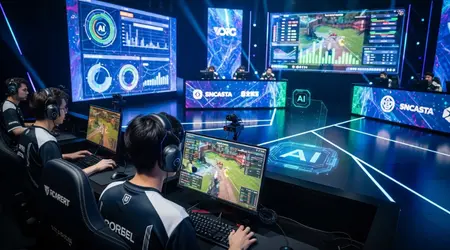
Competitive gaming is a game of inches where a 1% improvement in efficiency can mean a million-dollar trophy.
El Rise of AI & Data Analytics in Pro Play is now a primary budget item for teams like T1 and G2 Esports.
They develop custom tools that provide “win-state” conditions to players via haptic feedback or audio cues during practice.
A recent report by Newzoo indicates that over 70% of professional esports organizations now have dedicated data departments.
This investment creates a barrier to entry that smaller, “old-school” teams struggle to overcome. The game is no longer played just on the screen, but in the server racks of the team headquarters.
Does proprietary tech create an unfair advantage?
Custom algorithms can find exploits in new patches before the rest of the world. Teams with bigger budgets essentially buy a faster lane to the current “meta” secrets.
However, this forces the entire industry to evolve and adopt more professional standards. The gap between the best and the rest is now defined by technical literacy.
What is the future of real-time broadcast analytics?
Fans now see “win-probability” bars during live streams, much like in traditional sports broadcasting. This transparency helps viewers understand the complexity of the strategies being executed on stage.
El Rise of AI & Data Analytics in Pro Play makes the viewing experience more engaging for casual fans. It turns a chaotic team fight into a clear story of tactical triumph or failure.
Esports Technology Integration Matrix 2026
| Technology Tier | Objetivo | Impact Level | Implementation Cost |
| Predictive Draft AI | Comps & Counters | Critical | Alto |
| Biometric Wearables | Burnout Prevention | Medio | Bajo |
| Lidar Eye-Tracking | Focus & Mechanics | Alto | Medio |
| Neural Match Sim | Strategy Testing | Critical | Extremo |
The digital arena has evolved into a space where human skill is amplified by machine intelligence.
El Rise of AI & Data Analytics in Pro Play represents the inevitable maturation of esports into a truly professional discipline.
While some fans miss the era of pure spontaneity, the level of play has never been higher or more exciting.
Organizations that ignore the power of data will find themselves left behind in the digital dust of 2026.
Embracing these tools is not about replacing the player, but about unlocking their full potential through the lens of science. The future of gaming is here, and it is written in code.
How do you feel about AI influencing the outcome of your favorite esports tournaments? Share your experience in the comments!
Preguntas frecuentes
Is AI used during live tournament matches?
No, most leagues prohibit external software assistance during the game to maintain competitive integrity. AI is primarily used for pre-match preparation and post-match analysis.
Does data analytics make the games more boring?
On the contrary, it pushes players to find creative solutions to beat the “optimal” playstyles. This leads to more complex and high-level gameplay.
Can small teams afford this technology?
Many basic analytics tools are becoming more accessible. However, the most advanced proprietary systems remain exclusive to the wealthiest organizations in the industry.
What is the best metric for a pro player’s skill?
In 2026, many analysts look at “Gold Efficiency” and “Pressure Impact.” These stats measure how much a player influences the map without needing constant resources.
