
Esports Education Boom: How Schools and Universities Are Shaping the Next Generation
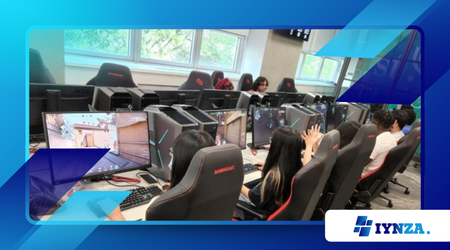
The Esports Education Boom is transforming modern classrooms into high-tech arenas where strategy and digital literacy meet traditional academic rigors.
Anúncios
For decades, educators viewed video games as mere distractions, but the 2026 landscape tells a radically different story of professional integration.
Today, universities treat competitive gaming like a vital bridge to the tech industry.
This shift recognizes that the skills required to win a professional match often mirror the demands of high-level management and data analysis.
Schools are no longer just letting students play; they are building comprehensive curricula.
By treating digital competition with the same respect as law or engineering, institutions are finally catching up with the global economy.
Inside the Educational Shift
- Curriculum Design: How competitive logic integrates into STEM subjects.
- Scholarship Opportunities: The rise of financial aid for digital athletes.
- Career Pathways: Moving from the server to the boardroom.
- Social Impact: Building community through structured school leagues.
What is driving this global shift in academic priority?
The Esports Education Boom stems from the realization that competitive gaming fosters intense teamwork and rapid problem-solving.
Educators now see these virtual battlegrounds as perfect laboratories for developing critical soft skills that traditional lectures often fail to reach effectively.
Universities have invested over $200 million in state-of-the-art arenas recently.
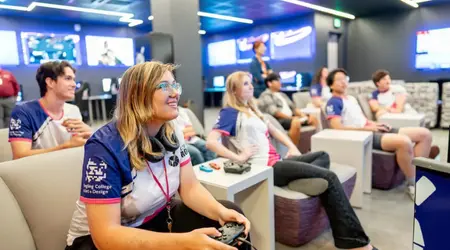
These facilities serve as both recruitment magnets and training grounds for students who aim for careers in broadcasting, event management, and competitive data science.
The current trend reflects a deeper change in societal values regarding digital achievement.
High schools are adopting varsity programs to increase student engagement and lower absenteeism, proving that gaming can be a powerful hook for educational retention.
By treating pixels with the same gravity as physical sports, schools create inclusive environments.
This strategy empowers students who might not excel on a football field to find their voice and leadership potential within a digital team.
Why are STEM fields embracing gaming logic?
Computational thinking is inherent in modern competitive games.
Students must analyze vast datasets and execute complex algorithms in real-time to succeed, making the transition to software development or cybersecurity feel incredibly natural and intuitive.
Mathematics and physics suddenly become tangible when applied to game mechanics.
Teachers use these platforms to explain projectile motion or resource management, turning abstract theories into practical tools that students actually want to master.
Also read: How Esports Fans Influence Game Meta and Strategy
How are university scholarships changing the game?
The Esports Education Boom has led to more than 300 US colleges offering dedicated scholarships.
This financial support mirrors NCAA programs, allowing talented players to earn degrees while competing at the highest levels of collegiate play.
These programs prioritize academic performance alongside mechanical skill.
Students must maintain high GPAs to remain eligible, ensuring that the next generation of gamers is as literate in the library as they are in the arena.
What are the long-term career benefits for students?
Graduates from these programs enter a market that is hungry for digital fluency and operational resilience.
The Esports Education Boom prepares them for roles in live production, digital marketing, and even specialized sports psychology tailored for high-pressure online environments.
Think of an esports program as a modern flight simulator for the global tech industry.
It provides a safe, structured space to crash and learn before entering the high-stakes world of corporate competition.
A recent study by the Electronic Sports Research Network (ESRN) in 2025 found that students in structured esports programs reported a 20% higher proficiency in collaborative software tools compared to their peers.
This data underscores the practical utility of gaming education. Industry leaders now actively scout university leagues for talent.
They look for players who understand the “meta” the most effective tactics available because that same analytical mindset is what drives innovation in product development and market strategy.
Read more: Key Differences Between Amateur and Pro Competitive Play
Is competitive gaming helping with social development?
Esports programs provide a sense of belonging for “digital natives” who often feel disconnected from traditional extracurriculars.
These teams offer a structured environment where social anxiety is replaced by shared goals and clear communication protocols. Conflict resolution is a daily part of team play.
Students learn to handle losses with grace and give constructive feedback to peers, which are essential traits for any healthy workplace in the future.
Can schools afford to ignore the gaming industry?
Institutions that fail to adapt risk becoming obsolete to a generation that views digital life as primary.
Why would a student choose a school that ignores their passions when competitors offer professional-grade facilities and career pipelines?
Ignoring this sector means missing out on massive corporate partnerships.
Major tech brands now fund university labs in exchange for access to the bright minds thriving within these competitive gaming ecosystems.
Why does 2026 mark the peak of academic gaming?
The Esports Education Boom has reached a tipping point where national governments are now standardizing competitive gaming in secondary education.
This isn’t a fad; it is a permanent integration of play and work that defines the current century’s learning philosophy.
Would you rather have a workforce trained in static textbooks or one trained in dynamic, ever-changing environments?
The answer is clear as more companies seek out graduates who can adapt to new information in milliseconds without flinching.
Comparison of Traditional and Esports Academic Metrics
| Metric | Traditional Sports Programs | Esports Academic Programs |
| Primary Skill | Physical Coordination | Cognitive Load Management |
| Industry Link | Professional Leagues | Tech, Media, and AI Sectors |
| STEM Integration | Limited (Kinesiology) | High (Coding, Data Analytics) |
| Facility Cost | High (Stadiums/Fields) | Moderate (Labs/Arenas) |
| Global Reach | Local/Regional | Instant Global Connectivity |
The Esports Education Boom proves that the boundary between entertainment and education has permanently dissolved.
By embracing digital competition, universities are not just entertaining students; they are arming them with the resilience, analytical depth, and collaborative spirit required for the 2026 workforce.
This academic revolution validates gaming as a serious pursuit of excellence.
Schools that lead this charge are setting a new standard for what it means to be truly prepared for a digital future. Share your experience with campus gaming in the comments!
Dudas Frequentes
Is an esports degree actually respected by employers?
Yes, especially in the tech and media sectors.
Employers value the analytical skills, project management experience, and digital literacy that these specialized programs provide to students.
Do students just play games all day in these programs?
Not at all. The majority of the time is spent on film review, statistical analysis, communication drills, and traditional coursework in marketing, business, or computer science.
How can parents support a student interested in esports?
Focus on balance and structure. Encourage them to join school-sanctioned teams rather than just playing solo, as these programs emphasize academic eligibility and physical wellness.
Are there physical health risks involved in school esports?
Programs in 2026 include mandatory “physical resets,” ergonomic training, and nutrition counseling. These measures ensure students avoid common issues like carpal tunnel or sedentary lifestyle problems.
What is the “meta” in gaming terms?
The “meta” refers to the most effective strategies or character choices currently available in a game. Learning to adapt to the “meta” is a key lesson in flexibility and market awareness.
