
Forgotten Arcade Cabinets That Were Ahead of Their Time
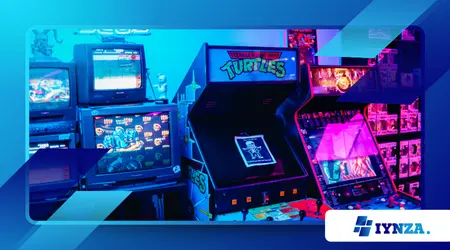
Forgotten Arcade Cabinets often represent the skeletal remains of a future that arrived far too early for the general public to fully comprehend.
Anúncios
Walking into a neon-lit arcade in the mid-1980s or early 1990s was akin to entering a laboratory of experimental human-machine interfaces and sensory input.
While titles like Pac-Man or Street Fighter II claimed the spotlight, several engineering marvels pushed the boundaries of immersion through mechanical innovation and early 3D.
These machines were not merely boxes with screens; they were complex simulators that used hydraulic movements and vector graphics to transport players beyond the physical room.
Navigation of Arcane Innovations
- Pioneering Visionaries: Exploring the hardware of Computer Space and the first commercial attempts at digital entertainment.
- Tactile Immersion: Analyzing the hydraulic systems and specialized controls of Sega’s “Taikan” cabinets like After Burner and OutRun.
- The 3D Frontier: Looking at the vector-based physics and holographic illusions found in forgotten titles like Star Wars and Time Traveler.
- Modern Preservation: How current technology allows us to revisit these mechanical behemoths through digital emulation and restorative efforts.
What makes these experimental machines so significant today?
Modern gaming thrives on the haptic feedback and VR immersion that Forgotten Arcade Cabinets first prototyped decades ago for a handful of quarters.
These machines acted as the vanguard of consumer technology, often utilizing expensive military-grade components that home consoles could not afford for another twenty years.
Reflecting on these designs allows us to see the genealogy of the “immersion” industry, where the cabinet itself was as important as the code.
These relics prove that innovation is rarely a straight line, but rather a series of ambitious leaps that sometimes fail due to timing.
++ How Classic Side-Scrollers Inspire Modern Indie Hits
Why did Sega’s “Taikan” cabinets change player expectations?
Sega’s “Taikan” or “body sensation” series, specifically After Burner II, turned the act of playing a video game into a full-body physical experience.
These Forgotten Arcade Cabinets used complex hydraulic motors to tilt and rotate the player in sync with the on-screen dogfights and barrel rolls.
The sheer physical scale of these machines meant they occupied more space than four standard cabinets, making them a risky investment for small operators.
However, for the player, the sensation of gravity shifts and mechanical vibration offered a level of realism that remains difficult to replicate even today.
Also read: Must-Try Indie Puzzle Games That Challenge Your Mind
How did Computer Space pave the way for modern aesthetics?
Released in 1971 by Nutting Associates, Computer Space was the world’s first commercial arcade game, featuring a fiberglass body that looked like a prop from Star Trek.
Its futuristic, curved aesthetic was a bold statement that digital entertainment belonged in its own unique, avant-garde vessel.
Despite its striking appearance, the game’s high difficulty curve meant it was largely ignored by a public not yet accustomed to digital control schemes.
It remains a hauntingly beautiful example of a design that prioritized art and vision over the safe, boxy standards that later dominated.
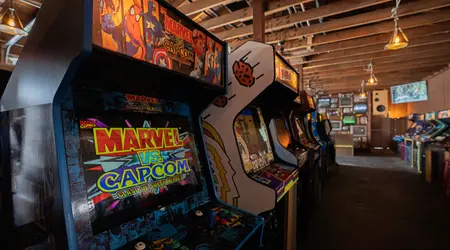
Which hardware features were truly ahead of their time?
Long before the era of 4K resolutions and ray tracing, Forgotten Arcade Cabinets utilized vector monitors to create incredibly sharp, glowing lines with infinite resolution.
Games like Tempest and Major Havoc used these displays to render complex geometric shapes that felt three-dimensional without the need for traditional pixels.
These cabinets also experimented with laserdisc technology, as seen in Dragon’s Lair, to provide cinematic quality long before CD-ROMs existed.
The integration of high-quality FM synthesis sound chips also turned the arcade floor into a thumping concert hall of synthesized melodies and digitized speech.
Read more: Top 10 Indie Metroidvanias That Are Better Than the Originals
What happened to the holographic dream of Time Traveler?
Sega’s Time Traveler, released in 1991, attempted to create a holographic effect using a large curved mirror and a television screen hidden in the base.
This created the illusion of tiny characters walking in thin air, a feat that captured the imagination of everyone who saw it in person.
While the “hologram” was a clever optical trick rather than true 3D, it represented a fearless attempt to break the “screen barrier.”
Today, these Forgotten Arcade Cabinets are extremely rare because the delicate mirrors and heavy monitors were difficult to maintain and frequently broke during transport.
Why was Star Wars (1983) a masterclass in atmospheric design?
Atari’s Star Wars sit-down cabinet utilized a flight yoke controller and vector graphics to put players inside an X-Wing during the assault on the Death Star.
The cabinet featured high-fidelity digitized voices from the film, which was an astonishing feat for a machine with such limited memory.
The cockpit version enveloped the player in sound and light, creating a sensory bubble that shut out the noise of the surrounding arcade floor.
This focus on “environmental storytelling” through hardware is a philosophy that modern VR headsets are still trying to perfect through digital means.
Why are these machines vanishing from the public eye?
The primary enemy of Forgotten Arcade Cabinets is not lack of interest, but the simple, brutal reality of mechanical and electrical degradation over decades.
Capacitors leak, CRT monitors lose their brightness, and the specialized custom chips found in titles like Irobot are no longer being manufactured by anyone.
According to a 2024 report by the Video Game History Foundation, nearly 87% of classic games are at risk of being lost due to hardware failure.
When a proprietary motor in a G-Loc cabinet fails, it often means the end of that specific machine’s playable life forever.
How does modern emulation struggle with these physical giants?
Software can be copied easily, but the physical sensation of a 500-pound moving chair or a specialized light-gun sensor is much harder to preserve.
Digital emulators can replicate the code of Forgotten Arcade Cabinets, but they cannot give you the smell of ozone or the kick of a solenoid.
Modern enthusiasts are building “super-cabinets” using modern actuators and high-refresh screens to try and simulate these experiences, but the soul often remains missing.
There is an undeniable weight and tactile resistance to original hardware that a modern, lightweight joystick simply cannot reproduce for the purist.
What is the role of indie developers in reviving these concepts?
Many indie developers are looking back at these “failed” experiments to find inspiration for new titles that utilize “Alt-Ctrl” (alternative control) schemes.
By studying the mistakes and successes of the past, they are creating new experiences that prioritize physical interaction over standard gamepad inputs.
The analogy of these arcades is like a classic car show; while modern cars are faster and safer, the old models have a character and mechanical soul.
Have we traded the raw, physical excitement of the arcade for the convenience of a sterile, digital download on our couches?
Comparative Statistics of Arcade Innovation
| Cabinet Model | Release Year | Innovation Type | Current Rarity | Modern Influence |
| Computer Space | 1971 | Fiberglass Housing | Ultra Rare | Industrial Design |
| Star Wars (Sit-down) | 1983 | Environmental Audio | Rare | VR Cockpits |
| After Burner II | 1987 | Servo-Hydraulics | Very Rare | Motion Simulators |
| Irobot | 1983 | First 3D Polygons | Ultra Rare | Modern 3D Engines |
| Time Traveler | 1991 | Pseudo-Holography | Very Rare | Augmented Reality |
The legacy of Forgotten Arcade Cabinets serves as a vital reminder that our current gaming landscape was built on the risks taken by engineers who dreamt of more than just pixels.
These machines were the massive, thumping hearts of a culture that prioritized the “event” of gaming, turning every session into a physical journey.
As we move further into a purely digital future, the tactile history of these cabinets becomes a precious map of where we have been and how much we have truly gained or lost.
Preserving this history is a collective responsibility for anyone who values the intersection of art and engineering in our digital age.
By supporting retro-arcades and preservation societies, we ensure that the roar of a hydraulic engine and the glow of a vector monitor don’t fade into total silence.
What was your most memorable encounter with a cabinet that felt like it belonged in a different century? Share your experience in the comments and let’s keep the high score of history alive together.
Frequently Asked Questions
Can I still play these games if I don’t have the original machine?
Most can be played via MAME (Multiple Arcade Machine Emulator), but you will lose the physical feedback of the hydraulics and specialized controls.
Some VR titles recreate the arcade room to bring back a sense of the scale and lighting.
Why were arcade games so much more advanced than home consoles?
Arcade operators could afford to spend $3,000 to $10,000 on a single machine because it would earn its cost back in quarters.
Home consoles had to be affordable for parents, limiting them to much cheaper and less powerful internal components.
Where can I see these machines in person today?
Museums like the Strong National Museum of Play or retro-arcades like Funspot in New Hampshire maintain working versions of these legends.
There is a growing movement of private collectors who dedicate their lives to restoring these mechanical marvels.
What was the most expensive arcade cabinet ever made?
While prices vary, Sega’s R360, which could rotate 360 degrees in any direction, was notoriously expensive and complex to install and maintain.
It cost tens of thousands of dollars in the early 90s, making it a rare sight even in its prime.
