
Retro Fighting Games That Shaped Competitive Play
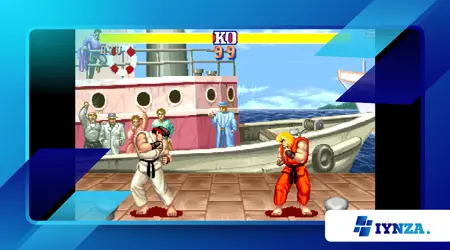
Retro Fighting Games That Shaped Competitive play is more than a nostalgic trip; it is the study of the very architecture of modern esports.
Anúncios
In 2026, as we witness the launch of titles like Marvel Tokon and Virtua Fighter 6, the shadow of the 90s arcade era looms larger than ever before.
Every frame-perfect parry in today’s high-definition tournaments traces its lineage back to low-resolution sprites and smoky arcade basements.
This historical foundation is not just about old code, but about the emergence of a global community that turned “playing games” into a high-stakes psychological war.
Foundational Pillars of the FGC
- The Combo Revolution: How accidental glitches became the core mechanic of every modern fighter.
- 3D Movement Mastery: The shift from 2D planes to full lateral evasion in the late 90s.
- Team Synergy: The introduction of 3v3 dynamics that paved the way for modern tag-team fighters.
- Community Longevity: Why titles from 2001 are still headlining major tournaments in 2026.
Which 2D classics defined the rules of engagement?
Street Fighter II is the undisputed progenitor of the genre, fundamentally shifting arcade dynamics from high-score chasing to head-to-head dominance.
By introducing a diverse roster with unique silhouettes and specialized move sets, Capcom created a language of “matchups” that remains the industry standard today.
Retro Fighting Games That Shaped Competitive history often highlight the accidental discovery of the “combo” system within this 1991 masterpiece.
Developers realized players could cancel animations into new attacks, a “bug” that transformed fighting from slow trades into the high-octane sequences we see in Street Fighter 6.
The 1998 release of The King of Fighters ’98 further refined the 2D landscape by perfecting the 3v3 team-based format.
This “Dream Match” removed complex narratives to focus entirely on mechanical balance, creating a competitive environment so stable it remains a staple in Latin American and Asian circuits in 2026.
SNK’s masterpiece introduced the “handicap” system for losing teams, a subtle strategic layer that added depth to resource management.
Even today, the tactical choice between “Advanced” and “Extra” modes in KOF ’98 serves as a masterclass in providing players with agency over their own playstyle.
++ Top Forgotten Games From the PlayStation 1 Era
How did the combo system evolve from a glitch?
Early playtesting of Street Fighter II revealed that certain moves could be executed before the previous animation finished.
Rather than fixing this, the team embraced it, realizing that rewarding precise timing with extra damage created a secondary skill ceiling for dedicated players.
This evolution is like discovering that a musical instrument can play chords instead of just single notes; it didn’t change the tool, it expanded the art.
This unintended discovery is arguably the most important moment in competitive gaming history, as it gave birth to the concept of the touch of death.
Also read: Retro Racing Games That Defined a Generation
Why does KOF ’98 remain a competitive benchmark?
The game’s legacy lies in its peerless animation and the “Neutral Game” which demands absolute mastery of spacing and jumps.
Because the game features a massive roster with distinct archetypes, it forces competitors to learn dozens of unique interactions, a feat that still challenges top pros in 2026.
Retro Fighting Games That Shaped Competitive scenes like KOF ’98 thrive because their logic is transparent yet difficult to execute.
There are no hidden “comeback mechanics” just pure, unadulterated skill and the ability to read an opponent’s soul across three different characters.
How did 3D fighters change the perspective of combat?
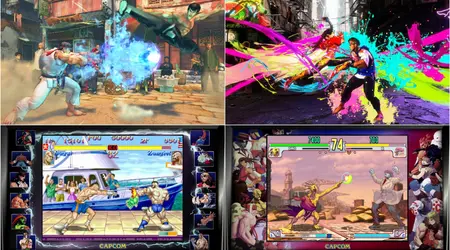
When Tekken 3 arrived in 1997, it revolutionized the 3D subgenre by emphasizing lateral movement and the “sidestep” as a defensive tool.
No longer were players trapped on a 2D line; the ability to walk around a projectile changed the geometry of the fight forever.
The impact of Retro Fighting Games That Shaped Competitive play is best seen in the transition from Virtua Fighter‘s realism to Tekken‘s flashy, high-stakes combos.
This era taught us that “3D” wasn’t just a visual upgrade, but a fundamental expansion of how we perceive defensive space and frame data.
SoulCalibur (1998) added weapon-based combat to this 3D mix, introducing the “8-Way Run” system which allowed for fluid movement in any direction.
This level of mobility made the game feel more like a dance than a brawl, rewarding players who understood the “reach” and “arc” of their blades.
According to research by the Fighting Game Historical Society, Tekken 3 remains one of the best-selling fighting games of all time, with over 8 million copies sold on the original PlayStation alone.
This massive reach ensured that its “four-button” control scheme one for each limb became an intuitive standard for millions of competitive hopefuls.
Are more: Top Indie Games That Reward Creative Problem-Solving
What made Tekken 3’s movement so revolutionary?
Before Tekken 3, many 3D fighters felt “floaty,” with jumps that lasted too long and movement that felt sluggish.
Namco’s engineers fixed this by grounding the characters, making the “sidestep” almost instantaneous and allowing for complex “chicken” parries that rewarded offensive reads.
This grounded approach meant that positioning was more important than ever, creating a high-speed game of “footsies” in three dimensions.
The game’s influence is directly visible in Tekken 8, where the core movement logic still relies on the foundations laid back in 1997.
Why did SoulCalibur’s 8-Way Run matter?
The 8-Way Run system removed the “clunkiness” of early 3D fighters by allowing characters to run toward or away from the camera at full speed.
This created a dynamic where a player could circle their opponent like a shark, looking for a precise opening to land a devastating vertical strike.
Retro Fighting Games That Shaped Competitive standards like this proved that 3D combat could be as fast and precise as 2D.
It offered a different kind of satisfaction one based on the physical weight of weapons and the spatial awareness of a 360-degree battlefield.
Why do some retro titles outlive their modern sequels?
Super Smash Bros. Melee (2001) is the ultimate anomaly, maintaining a massive, dedicated professional circuit twenty-five years after its release.
Its “emergent gameplay,” driven by unintended mechanics like “wavedashing,” created a speed and complexity that later entries in the series deliberately tried to slow down.
The longevity of Retro Fighting Games That Shaped Competitive communities often comes down to this “unintended depth.”
When a game has bugs that enhance the skill ceiling rather than breaking it, players will spend decades mastering every frame of those glitches to achieve perfection.
Guilty Gear XX Accent Core Plus R is another example of a “forever game” that received a massive resurgence in 2026 due to its complex “Roman Cancel” system.
This mechanic allows players to spend resources to freeze time, enabling creative combos and defensive resets that make every match feel like a unique work of art.
These games are the “stratovarius violins” of the gaming world old, difficult to master, but capable of producing a performance that modern, mass-produced tools cannot replicate.
They offer a level of raw, unbuffered control that feels increasingly rare in an era of simplified inputs and aggressive “hand-holding” mechanics.
Is Melee’s wavedashing a bug or a feature?
Technically, wavedashing is an exploit of the game’s physics engine, where an air-dodge into the ground results in a sliding motion.
However, this “glitch” became the primary way for players to move, allowing for micro-adjustments and incredibly fast retreats that the developers never officially intended.
Retro Fighting Games That Shaped Competitive play like Melee prove that the community, not the developer, often defines what a game truly is.
By refusing to let go of these “broken” mechanics, the Melee community has created the most enduring grassroots esport in history.
What is the appeal of Guilty Gear’s “Roman Cancel”?
The “Roman Cancel” is arguably the most flexible mechanic in any fighting game, allowing a player to cancel any move at the cost of meter.
This effectively turns a rigid set of rules into a sandbox, where the only limit to your offense is your imagination and your execution speed.
It allows for a “freestyle” approach to combat that feels more like jazz than a programmed sequence.
In 2026, as Guilty Gear Strive continues its run, many veteran players still return to Accent Core Plus R to experience that unfiltered, high-speed technicality.
Comparative Impact of Essential Retro Fighters
| Game Title | Release Year | Innovation | Modern Legacy |
| Street Fighter II | 1991 | Combo System | Foundation of all 2D fighters |
| Tekken 3 | 1997 | 3D Sidestepping | Standard for 3D spatial combat |
| KOF ’98 | 1998 | 3v3 Team Logic | Preferred “Dream Match” format |
| SoulCalibur | 1998 | 8-Way Run | Fluid 360-degree weapon combat |
| Super Smash Bros. Melee | 2001 | Wavedashing | Unmatched platformer speed |
| Guilty Gear XX AC+R | 2002 | Roman Cancels | Peak technical 2D “Anime” fighter |
The influence of Retro Fighting Games That Shaped Competitive play is not a matter of the past, but a living dialogue with the present.
As we look at the massive prize pools of 2026, we see the DNA of Street Fighter II and Tekken 3 in every pixel of the broadcast.
These games were the crucibles where the rules of spacing, timing, and psychological warfare were first forged in heat and quarters.
They remind us that true competitive depth often comes from the most unexpected places a glitch, a sidestep, or a hidden “Roman Cancel.”
To understand where fighting games are going, one must always respect the giants upon whose shoulders the entire FGC currently stands.
The beauty of these titles is that they are never truly “finished”; as long as two players are willing to sit down and challenge each other, the meta continues to evolve.
Do you believe modern “simplified” controls can ever truly match the raw, technical satisfaction of these classic titles? Share your experience in the comments!
Frequently Asked Questions
Why is Street Fighter II considered the most important game?
It didn’t just create the genre; it pioneered the six-button layout, the combo system, and the concept of “zoning” and “poking” that every fighter uses today.
Is it too late to start playing Melee in 2026?
Never. With modern “Slippi” netplay and a wealth of tutorials, new players are joining the Melee community every day, even 25 years after its debut.
What are “frame-perfect” inputs?
In fighting games, a “frame” is 1/60th of a second. Frame-perfect inputs require a player to press a button during a specific single frame to execute a move correctly.
Why did 3D fighters take longer to become competitive?
Early 3D hardware struggled with input lag and “floaty” physics. It wasn’t until Tekken 3 that the speed and precision matched the 2D counterparts.
Can I play these games on modern consoles?
Yes, most of these classics are available via the Street Fighter 30th Anniversary Collection, KOF ’98 Ultimate Match, and various retro “rollback” updates on Steam and consoles.
