
The Most Iconic 8-Bit Soundtracks of All Time
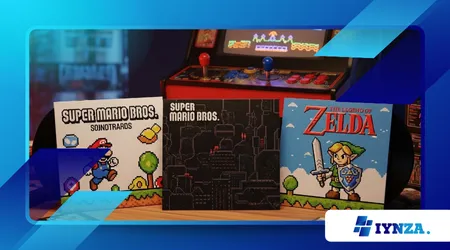
Most Iconic 8-Bit Soundtracks of All Time defined an entire generation of gaming, proving that complex emotion and unforgettable melody could emerge from limited technology.
Anúncios
These soundtracks, crafted using the primitive sound chips of systems like the Nintendo Entertainment System (NES) and Game Boy, transcended their technical constraints.
These compositions weren’t just background noise; they were integral to the gameplay, setting the mood, driving the action, and providing crucial feedback.
The chiptune aesthetic sparse, punchy, and instantly recognizable became a global cultural touchstone.
Why Did the NES Sound Chip Spark Musical Genius?
The NES utilized the Ricoh 2A03 sound processor, a marvel of limitation that allowed composers only five sound channels.
These constraints forced a profound level of creativity and technical discipline among early game musicians.
This tight sonic palette two pulse waves, one triangle wave, one noise channel, and one digital-to-analog channel demanded arrangements that were efficient, memorable, and rhythmically precise. This limitation actually fostered legendary results.
++ Must-Try Indie Puzzle Games That Challenge Your Mind
What Makes Chiptune Melody So Memorable?
Chiptune melodies often rely on repetitive, highly rhythmic patterns and strong harmonic progressions. The simplicity of the waveforms ensured that the primary melodic line always cut through the mix clearly.
Composers mastered the art of implied complexity. They used arpeggios (rapidly played notes in sequence) to simulate chords and lush harmonic movement, compensating for the lack of polyphony.
Also read: Top 10 Indie Metroidvanias That Are Better Than the Originals
How Did Technical Limitations Shape Composition?
Musicians had to become clever programmers, writing their music note-by-note into code. They utilized rapid pitch bending and volume changes to create effects like vibrato or percussion, pushing the chip’s capabilities.
These techniques, born out of necessity, created the distinct, buzzy, and energetic sound we now call “chiptune.” It remains a defining characteristic of the Most Iconic 8-Bit Soundtracks of All Time.
Read more: Top Retro Platformers That Still Hold Up Today
Koji Kondo’s Use of Rhythmic Pacing
Koji Kondo’s soundtrack for Super Mario Bros. (1985) is a masterclass in adapting music to gameplay. The main theme’s tempo perfectly matches Mario’s run, subconsciously urging the player forward.
The theme accelerates as Mario grabs a star, creating an auditory signal of invincibility and speed. This interactive score was a revolutionary concept in early gaming.
Which Composers Defined the Sound of the 8-Bit Era?
A handful of composers, working largely in isolation in Japan, established the foundation for all video game music that followed. Their influence extends into contemporary music production and electronic genres.
These pioneers were the unsung architects of the decade, translating pixelated visuals into enduring, emotional sonic experiences. They proved the artistic potential of the gaming medium.
Why is Koji Kondo Considered the Beethoven of 8-Bit?
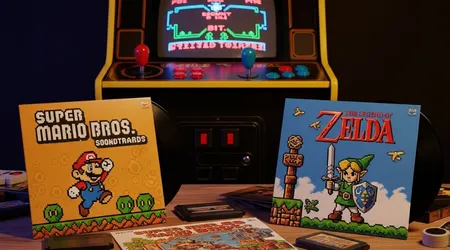
Kondo, creator of the music for Super Mario Bros. and The Legend of Zelda, established the core principle of using music to communicate emotion and gameplay states. His themes are universally recognized.
His compositions are deceptively simple yet harmonically rich, utilizing a perfect blend of Western classical structure and catchy, synthesized pop sensibilities. His work anchors the Most Iconic 8-Bit Soundtracks of All Time.
How Did Yuzo Koshiro Influence Modern Electronic Music?
Yuzo Koshiro, particularly known for the ActRaiser and Streets of Rage series (though slightly beyond 8-bit, his early work on Dragon Slayer was), brought sophisticated, contemporary electronic and club sounds into game music.
He employed complex drum programming and basslines, giving his work a vibrant, modern edge. His music was highly influential on the emerging chip-hop and techno scenes.
The Enduring Legacy of the Tetris Theme
The Tetris theme, famously based on the 19th-century Russian folk song “Korobeiniki,” became a global phenomenon. It demonstrated that game music could achieve mainstream ubiquity instantly.
The track’s frantic, accelerating tempo matched the increasing difficulty of the falling blocks. It perfectly encapsulates the urgency and addictiveness of the puzzle genre.
How Did 8-Bit Music Establish Core Narrative Techniques?
The limited capacity of the sound chips forced composers to condense the full emotional arc of a narrative into short, looping, highly thematic tracks. Music had to tell the story when graphics couldn’t.
Composers used leitmotifs recurring musical themes to represent characters, places, or emotional states. This classical technique provided necessary context in simple, pixelated worlds.
What is the Importance of the Game Over and Death Themes?
The specific “Game Over” or “Death” themes were brief, highly dissonant, and immediately recognizable. They served as a necessary auditory punctuation mark for failure.
These short musical cues often utilized the chip’s “noise” channel to create jarring, unpleasant sounds, reinforcing the penalty for failure and motivating the player to try again.
Why Did Different Game Genres Develop Distinct Sound Styles?
RPGs like Final Fantasy required epic, orchestral-sounding pieces to convey scale and adventure, often relying heavily on arpeggios and complex chord changes. They needed emotional depth.
Platformers favored upbeat, rapid-fire melodies, relying on punchy bass and sharp percussion from the noise channel to support fast action. Each genre found its signature sound among the Most Iconic 8-Bit Soundtracks of All Time.
The Chiptune as a Haiku
Chiptune music is like a Haiku poem. Both adhere to strict, small structural rules (5-7-5 syllables for the Haiku; five sound channels for chiptune).
Yet, within those severe limitations, they manage to convey profound emotion, complexity, and universally resonant beauty.
How Did This Era Influence Modern Video Game Scores and Indie Games?
The legacy of the 8-bit aesthetic is not confined to retro gaming; it profoundly shapes contemporary music and game development. The chiptune style is often utilized today for nostalgic or artistic effect.
Modern composers frequently pay homage to the era, incorporating synthesized waveforms into massive orchestral scores, blending the old simplicity with new complexity.
Why Do Indie Developers Embrace the 8-Bit Aesthetic?
The chiptune sound is a deliberate aesthetic choice for indie developers. It evokes nostalgia, creates a low-fi, authentic feel, and is often simpler to produce than a full orchestral score.
The simplicity of the sound fits perfectly with pixel art visuals, creating a unified, coherent retro style. This fusion is highly popular among both veterans and new players.
What is the Role of Chiptune in Contemporary Music?
Chiptune has evolved into its own distinct electronic music genre. Artists use original console hardware or emulators to create music, often performing live shows based entirely on 8-bit sounds.
This demonstrates the enduring cultural impact of the original soundtracks, transforming utilitarian game music into a standalone musical art form. The influence of the Most Iconic 8-Bit Soundtracks of All Time remains vital.
According to music streaming data from 2024, the “Chiptune & 8-Bit” genre has seen a 48% increase in global streams over the last five years, indicating a massive resurgence of interest that goes far beyond pure gaming nostalgia.
| Game Title | Composer | Iconic Track | System | Reason for Icon Status |
| Super Mario Bros. | Koji Kondo | Ground Theme | NES | The first truly recognizable, looped video game earworm; perfectly paces gameplay. |
| The Legend of Zelda | Koji Kondo | Overworld Theme | NES | Established the grand, epic, and adventurous scope of RPG/Action music in 8-bit. |
| Mega Man 2 | Takashi Tateishi | Dr. Wily Stage 1 | NES | Demonstrated technical mastery; aggressive, complex syncopation and basslines. |
| Castlevania | Kinuyo Yamashita | Vampire Killer | NES | Melodically rich, driving rhythm that perfectly captured the game’s Gothic atmosphere. |
Conclusion: The Enduring Harmony of Minimalism
The Most Iconic 8-Bit Soundtracks of All Time represent a monumental triumph of creative limitation.
Composers transformed primitive electronics into music that is technically sophisticated, emotionally resonant, and eternally catchy.
These chiptune masterpieces remain powerful cultural artifacts, demonstrating that the scope of creativity is defined by the artist’s imagination, not the hardware’s capacity.
What is your favorite 8-bit track that still gets stuck in your head, proving the enduring power of these legendary compositions? Share your top tracks in the comments below!
Frequently Asked Questions
What is the difference between 8-bit and 16-bit music?
8-bit music (NES) used fewer simultaneous sound channels (typically 5) and simpler waveforms. 16-bit music (SNES/Genesis) had more channels, stereo sound, and could utilize sampled, higher-quality audio.
Is chiptune only for video games?
No. Chiptune is now a standalone electronic music genre. Artists create music using the original sound chips or software emulations, often performing live concerts dedicated to the style.
What does “arpeggio” mean in 8-bit music?
An arpeggio is a musical technique where the notes of a chord are played in rapid succession. Since 8-bit chips couldn’t play full chords simultaneously, arpeggios simulated harmonic richness.
Who composed the Mega Man soundtracks?
The Mega Man franchise saw several legendary composers, including Takashi Tateishi (MM2), Harumi Fujita (MM3), and Yasuaki Fujita (MM4), each contributing to its iconic sound.
Why do modern indie games still use 8-bit music?
Indie games use 8-bit music to evoke nostalgia (connecting with older players), maintain aesthetic coherence (matching pixel art), and leverage its instantly recognizable, punchy energy.
