
Top Indie Games That Reward Creative Problem-Solving

In the ever-evolving landscape of digital entertainment, Games That Reward Creative Problem-Solving have emerged as the ultimate intellectual playground for modern players.
Anúncios
As of January 2026, the “Indie Renaissance” continues to dominate the charts by prioritizing player agency over scripted cinematic sequences.
These titles don’t just ask you to find the “correct” answer; they provide a sandbox where your unique logic becomes the winning strategy.
From shifting manor rooms to psychic babies, the ingenuity found in today’s indie scene is redefining what it means to be a “smart” gamer.
What Defines the Best Modern Puzzle and Logic Games?
The most successful Games That Reward Creative Problem-Solving in 2026 share a core philosophy: they treat the player as an architect, not a tourist.
Titles like Blue Prince have set a new gold standard by tasking players with designing the very level they must navigate.
In these experiences, the solution isn’t hidden behind a pixel-hunt; it is born from how you manipulate the game’s internal physics and rules.
This shift toward “emergent gameplay” ensures that no two players ever have the exact same epiphany or success story.
Why is Emergent Gameplay the Future of Indie Design?
Emergent gameplay allows for solutions that even the original developers might not have anticipated during the coding process.
This freedom turns a standard puzzle into a personal triumph of logic, fostering a deeper emotional connection between the player and the software.
When a game provides tools rather than scripts, it empowers the user to experiment without the fear of a “Game Over” screen.
This low-stress, high-reward environment is the hallmark of the most engaging Games That Reward Creative Problem-Solving currently available on Steam and consoles.
++ Best Retro Shoot-‘Em-Ups Worth Revisiting
How Does “Mechanical Polish” Influence Player Ingenuity?
A game’s mechanics must be consistent and transparent for a player to solve problems creatively without feeling cheated by the engine.
High-quality indie developers spend years fine-tuning hitboxes and logic gates to ensure that every “creative leap” feels fair and earned.
Take Ball x Pit, a 2025 breakout hit that combined brick-breaking with roguelike strategy; its success relied on perfectly predictable physics.
Because the player could trust the bounce, they could plan complex, multi-stage maneuvers that felt like genuine strokes of genius.
Also read: How Retro Games Inspired Today’s Popular Franchises
What Role Does “Notebook Gaming” Play in 2026?
We are seeing a massive resurgence in “Notebook Gaming,” where players keep physical journals to track clues and map out complex digital worlds.
Games That Reward Creative Problem-Solving like Blue Prince almost require a secondary analog brain to manage their shifting variables.
This physical interaction bridges the gap between the screen and reality, making the problem-solving process feel more tangible and rewarding.
It transforms a solitary gaming session into a scholarly investigation, proving that high-level thinking is the new “power fantasy.”
Read more: Forgotten 16-Bit RPGs You Should Replay
How Do Developers Balance Difficulty and Frustration?
The “sweet spot” of difficulty is found when a challenge feels impossible at first glance but becomes obvious once a new perspective is applied.
Developers achieve this by introducing mechanics slowly before combining them in ways that demand lateral thinking from the player.
By rewarding “wrong” answers with interesting outcomes instead of simple failure, these games keep the player’s momentum alive.
This positive feedback loop is essential for maintaining the mental stamina required to conquer the world’s most difficult Games That Reward Creative Problem-Solving.
Why Should Gamers Prioritize Intellectual Challenges Over Graphics?
As we move deeper into 2026, the “graphics race” has plateaued, leading players to seek value in depth and cognitive engagement.
Games That Reward Creative Problem-Solving offer a level of replayability that high-fidelity, linear action games simply cannot match in the long run.
Investing in a game that challenges your brain provides a sense of accomplishment that a “platinum trophy” for mere persistence never will.
It is the difference between following a map and actually discovering a new territory through your own mental map-making.
What Do Cognitive Scientists Say About Puzzle Gaming?
Recent research from Swinburne University in late 2025 highlights that gaming, specifically in the puzzle genre, significantly boosts focus and oxygenates the brain.
Unlike social media, which can hinder attention, interactive problem-solving gets the “brain working harder in a good way.”
Participants in these studies showed increased levels of deoxygenated hemoglobin, indicating that their brains were actively consuming more oxygen during complex tasks.
This data confirms that Games That Reward Creative Problem-Solving are essentially high-intensity interval training for your prefrontal cortex.
How Do “Immersive Sims” Enhance Creative Thinking?
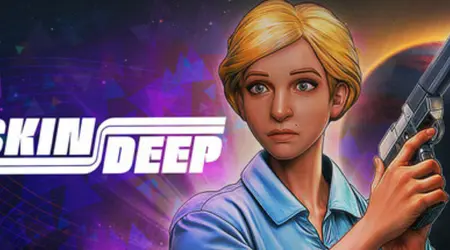
Immersive sims like Skin Deep allow players to use environmental objects including the power of cats to outsmart their digital opponents.
These Games That Reward Creative Problem-Solving provide a wide array of systems that interact in unpredictable and often hilarious ways.
You aren’t just clicking a “stealth” button; you are actively rearranging the world to create your own shadows and distractions.
This level of interaction requires a constant state of creative readiness, turning every hallway into a potential Rube Goldberg machine of tactical success.
What is the Economic Impact of the “Indie Puzzle” Boom?
The indie sector now accounts for over 25% of the most-played titles on major gaming social platforms as of early 2026.
This financial success is driven by players who are tired of “gameslop” generic, AI-generated content and crave authentic, human-designed challenges.
By supporting Games That Reward Creative Problem-Solving, players are directly funding small studios that take risks on weird, wonderful ideas.
This virtuous cycle ensures that the most innovative mechanics continue to reach the market, regardless of AAA industry trends or layoffs.
How is Solving a Video Game Puzzle Like “Digital Jazz”?
Playing a high-level logic game is like playing jazz; you know the scale and the tempo, but the melody is yours to invent.
You take the established rules of the game and improvise a solution that fits your specific style and immediate needs.
This “Digital Jazz” is the peak of the medium, where the player and the developer perform a silent, intellectual duet across time.
It is a rare form of communication that makes Games That Reward Creative Problem-Solving the most sophisticated art form of our current decade.
Which Titles are Currently Dominating the “Problem-Solving” Meta?
If you are looking for the best Games That Reward Creative Problem-Solving right now, the list starts with the award-winning Blue Prince.
This game forces you to build the manor you are exploring, making your own choices about room placement a matter of life or death.
Other notable mentions include UFO 50, a massive collection of retro-styled gems that hide deep, systemic puzzles within seemingly simple arcade shells.
These games prove that you don’t need a 100GB download to provide a world-class mental workout for the modern gamer.
How Does Big Walk Revolutionize Cooperative Puzzles?
Big Walk, from the creators of Untitled Goose Game, has become the cooperative hit of 2026 by focusing on non-verbal communication and shared logic.
It forces friends to solve environmental riddles that require synchronized movement and creative interpretation of visual cues.
It is a rare example of Games That Reward Creative Problem-Solving where the social bond is a literal mechanic of the game.
If you can’t think like your partner, you can’t progress, making the “Aha!” moment a shared victory for the entire group.
Why is Goodnight Universe a Breakthrough in Psychic Gameplay?
Goodnight Universe uses your webcam to track your eye movements and expressions, allowing you to control a psychic baby’s powers.
It redefines Games That Reward Creative Problem-Solving by using your own biological signals as the primary input for solving complex physical puzzles.
This “Biometric Logic” is the cutting edge of the indie scene, offering a level of immersion that traditional controllers cannot replicate.
It challenges you to master your own focus and emotions to manipulate the game world, creating a truly unique cognitive experience.
What Original Example Illustrates “High-Level Creative Logic”?
Consider a player in Skin Deep who needs to bypass a locked door guarded by space pirates. Instead of finding a key, they use a portable heater to set off the ship’s fire suppression system, creating a fog of steam.
Under the cover of that steam, they crawl through a ventilation shaft that was previously too hot to enter.
This is the essence of Games That Reward Creative Problem-Solving: using the game’s internal systems to “break” the level in a way that is totally legal.
Is the Difficulty of These Games “Cruel” or “Fair”?
A “fair” difficulty is one where the player says, “I see what I did wrong,” rather than “This game is broken.”
The best Games That Reward Creative Problem-Solving provide all the information you need upfront, even if it is disguised as flavor text or background art.
When you finally solve a “maddeningly marvelous” puzzle, the rush of dopamine is directly proportional to the effort you expended.
This balance of challenge and reward is why we continue to flock to these brain-bending indie titles year after year.
Top 2025-2026 Indie Games for Cognitive Engagement
| Game Title | Primary Mechanic | Problem-Solving Type | 2026 Status | Why It’s Unique |
| Blue Prince | Architectural Design | Spatial & Deductive | GOTY Contender | You build the level as you play |
| Ball x Pit | Physics Simulation | Strategic Planning | Viral Hit | Arkanoid mixed with roguelike |
| Skin Deep | Systemic Interaction | Emergent Stealth | Cult Favorite | Use anything (even cats) to win |
| Big Walk | Cooperative Logic | Social & Navigation | Best Seller | Focuses on humor and teamwork |
| Goodnight Universe | Biometric Control | Focus & Psychic | Innovative Tech | Controlled via webcam/eyes |
In conclusion, Games That Reward Creative Problem-Solving represent the peak of interactive design by treating the human mind with the respect it deserves.
Whether you are building rooms in a shifting manor or using psychic powers to move blocks, these titles prove that creativity is the most powerful weapon in any gamer’s arsenal.
As we move through 2026, the demand for “smart” games is only growing, ensuring a bright future for any developer brave enough to let the player take the lead.
Don’t just follow the path design the solution and prove your genius.
Which of these “brain-melting” challenges have you managed to conquer this year? Share your experience in the comments!
Frequently Asked Questions
Do I need to be a “genius” to play these games?
Absolutely not. The best Games That Reward Creative Problem-Solving are designed to teach you their logic as you play.
They start with simple concepts and gradually layer them, allowing your brain to adapt and grow alongside the challenges.
Are these games suitable for younger players?
Many are! Games like Big Walk and Scribblenauts Unlimited are fantastic for developing lateral thinking and vocabulary in children.
They encourage “thinking outside the box” in a way that traditional educational tools often fail to do.
Why are indie games better at this than AAA games?
Triple-A games often have massive budgets that make them “afraid” to let a player get stuck or lost.
Indie developers have the freedom to take risks on complex, “cruel” puzzles that might frustrate casual audiences but deeply satisfy logic-loving gamers.
Can playing these games actually improve my real-life work?
AYes. According to the Frontiers in Psychiatry study from 2025, cognitively engaging games can improve reflective ability, processing speed, and decision-making levels.
The mental “flexibility” you develop while gaming often translates to better problem-solving in the workplace.
QWhat should I do if I get completely stuck in a puzzle?
The best advice for Games That Reward Creative Problem-Solving is to step away for an hour.
Your brain often solves the logic in the background while you are doing something else, leading to that famous “Aha!” moment when you return.
