
How AI Coaching Tools Are Reshaping Competitive Gaming in 2026
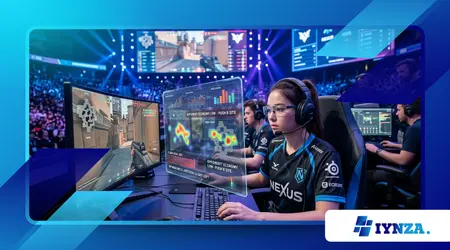
AI coaching tools are fundamentally shifting how players optimize their micro-transactions, positioning, and decision-making profiles across global esports ecosystems.
Anúncios
In 2026, the traditional reliance on instinct is rapidly giving way to real-time telemetry datasets that analyze human inputs down to the millisecond.
Professional training grounds no longer operate on simple video reviews or standard post-match breakdowns.
Instead, complex algorithms process live player behavior to pinpoint exact physical and tactical bottlenecks before they permanently solidify into bad muscle memory habits.
Inside This Investigation
- The Telemetry Shift: How deep-learning models evaluate physical inputs in real time.
- Strategic Evolution: The displacement of traditional, retrospective coaching methods.
- Competitive Balance: Analyzing the ethical and mechanical implications for fair play.
What Is the Technology Driving Modern Esports Training?
The integration of AI coaching tools relies entirely on advanced computer vision and neural networks that overlay directly onto a player’s screen capture feed.
These systems process pixels and positional coordinates simultaneously, instantly identifying macro-positioning errors that human analysts might miss over hundreds of competitive hours.
By tracking crosshair placement, resource management intervals, and spatial positioning patterns, these software platforms build a highly personalized mechanical profile for individual competitors.
The resulting data stream isolates specific visual blind spots and structural vulnerabilities during high-stress matches.
How Does Real-Time Telemetry Processing Work?
The primary engine behind this development is predictive behavioral modeling, which compares an active player’s inputs against a massive database of championship-level matches.
If a player consistently mismanages their ultimate cooldown or exposes their flank during specific rotation phases, the engine immediately flags the mechanical deviation.
This structural shift behaves exactly like having a chess grandmaster whispering optimal positional variations directly into your ear while you play.
The software eliminates the guesswork from personal practice, forcing players to confront objective, unyielding mechanical metrics rather than relying on emotional self-evaluation.
++ Esports Bootcamp Culture: How Teams Prepare for LAN Events
Why Do Teams Prefer Automated Systems Over Manual Reviews?
Manual video review session blocks are notoriously slow, often requiring support staff to spend dozens of hours cutting footage for minor tactical adjustments.
Automated systems remove this operational bottleneck by generating instant heatmaps and spatial vulnerability charts immediately after a custom lobby closes.
Furthermore, these platforms remove human bias from the strategic evaluation process, ensuring that personal relationships do not skew performance metrics.
When data dictates that an entry fragger is losing 64% of their isolated opening duels on a specific bombsite, the tactical priority becomes completely undeniable.
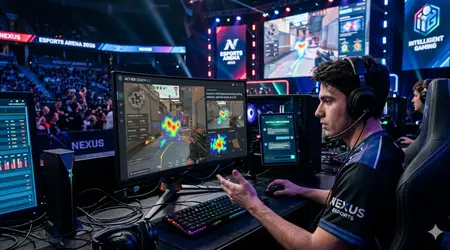
How Are These Automated Systems Transforming Daily Team Practice?
The daily routine for professional organizations in 2026 revolves around iterative, data-driven simulated scenarios rather than endless, repetitive public matches.
Platforms use specialized generative tools to recreate exact late-game situations where a roster previously crumbled under physical pressure.
This targeted approach allows teams to repeat a highly specific, five-second retake scenario fifty times in a single afternoon session.
The continuous feedback loops accelerate tactical adaptation, shrinking the traditional weeks-long strategic development pipeline down into a matter of days.
Also read: Advanced Tactics for PvP Battles in Online Games
What Role Does Individualized Feedback Play in Player Longevity?
By continuously monitoring input frequency and mouse acceleration curves, AI coaching tools can accurately detect early physical signs of cognitive fatigue and repetitive strain injuries.
When a player’s reaction time degrades by even fifteen milliseconds, the software proactively recommends specific resting intervals.
According to data from the Esports Performance Institute, teams utilizing automated telemetry tracking saw a 40% reduction in mid-season player burnout rates due to optimized practice schedules.
This predictive health monitoring ensures that organizations protect their financial investments while maintaining peak mechanical performance throughout grueling international tournament circuits.
Longevity in esports is no longer just about enduring the grind; it is about scientifically engineering your daily physical recovery.
How Do Automated Insights Change Live Match Strategy?
During high-stakes tournament stages, analysts utilize live dashboard interfaces to track real-time opponent adaptation patterns across multi-game series.
If an opposing team alters their defensive setup, the system identifies the structural shift within two rounds, allowing for rapid tactical counters.
Would anyone have believed five years ago that an algorithm could accurately predict an opponent’s rotation route with over 85% statistical certainty?
This predictive capability forces an entirely new layer of psychological warfare, where teams must deliberately play sub-optimally at times just to deceive the tracking software.
Why Is the Competitive Landscape Facing Critical Ethical Questions?
The rapid proliferation of sophisticated algorithmic assistance raises significant structural questions regarding competitive integrity and natural skill expression.
When software begins making complex tactical choices for a player, the boundary between legitimate training support and artificial performance enhancement becomes dangerously thin.
Tournament organizers are currently forced to establish strict firewalls to ensure these digital analytical suites remain completely inaccessible during live, sanctioned arena stages.
The fear of hidden, real-time algorithmic prompting continues to keep integrity commissioners up at night.
What Defines the Line Between Training Aid and Unfair Advantage?
The fundamental controversy lies in whether these systems diminish the value of a player’s natural tactical intuition and spatial awareness.
If an amateur player climbs the competitive ladder primarily by obeying real-time algorithmic directional prompts, their organic rank becomes fundamentally inflated.
- Permissible: Post-match data analysis, personalized mechanical heatmaps, offline scenario replication, and historical pattern tracking.
- Impermissible: Live tactical prompting, automated opponent cooldown tracking interfaces, and mid-match positioning alerts.
This division ensures that while players can use advanced technology to maximize their physical potential offline, the actual execution on the tournament stage remains a pure test of unassisted human capability.
Read more: How to Survive the First 10 Minutes in Hardcore Games
How Are Independent Tournament Organizers Responding to Algorithmic Assistance?
Major sanctioning bodies are actively deploying specialized software detection tools designed to identify unauthorized background telemetry programs during official qualifiers.
Any platform found interacting with live game memory states to provide tactical feedback is treated as a direct integrity violation.
Organizations are building unified regulatory frameworks that clearly dictate which analytics platforms are certified for official team use.
These strict compliance standards prevent wealthy organizations from developing proprietary, hyper-advanced models that create an insurmountable technological deficit for smaller, underfunded rosters.
The Analytical Breakdown
The current operational landscape highlights a distinct performance gap between traditional baseline analytical methodologies and advanced algorithmic optimization models.
The data below outlines the practical metrics monitored across major competitive titles.
Performance Optimization Metrics
| Analytical Category | Traditional Human Coaching | AI-Driven Systems | Primary Competitive Benefit |
| Micro-Input Tracking | Manual video review at 60fps | Millisecond input telemetry | Eliminates mechanical input errors |
| Tactical Pattern Recognition | Subjective match note taking | Automated spatial heatmaps | Predicts enemy rotation routes |
| Physical Burnout Prevention | Anecdotal player feedback | Biometric reaction tracking | Reduces physical strain injuries |
| Scenario Replication | Manual custom lobby setups | Generative state loading | Maximizes situational training density |
Engineering the Next Era of Human Performance
The ongoing development of AI coaching tools is fundamentally redefining the upper limits of human mechanical execution within competitive digital spaces.
By converting abstract gameplay concepts into definitive, actionable data points, these systems allow players to achieve unprecedented levels of operational consistency.
As the boundary between human intuition and algorithmic precision continues to blur, the organizations that successfully integrate these technologies without sacrificing core tactical creativity will dominate the next decade of esports.
True competitive mastery in 2026 is no longer about fighting the machine; it is about utilizing its analytical clarity to unlock your ultimate human potential.
What has your experience been with automated feedback systems during your personal competitive rank climbs? Share your thoughts and strategy shifts in the comments section below.
Frequently Asked Questions
Can amateur players benefit from these platforms?
Yes, minor consumer-facing versions of these analytical platforms directly assist lower-tier players by identifying basic mechanical flaws, sub-optimal crosshair placement, and repetitive positional mistakes during standard matchmaking games.
Do these programs directly alter game files?
Legitimate analytical platforms do not modify internal game memory or alter core executable files; instead, they rely on external screen capture overlays and API data streams to maintain total compliance with anti-cheat software.
Will automated systems eventually replace human coaches entirely?
No, because while algorithms excel at processing raw data and tracking mechanical inputs, they completely lack the emotional intelligence, psychological management skills, and leadership capabilities required to guide a human roster through high-pressure live tournaments.
