
MS-DOS Games Revival: Why PC Classics Are Trending Again
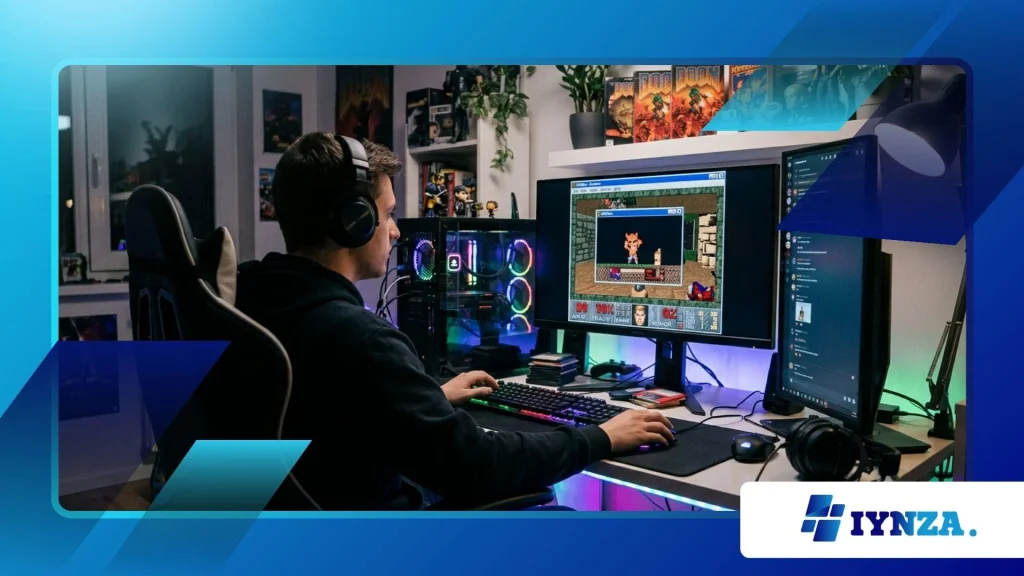
MS-DOS Games Revival is taking the digital gaming landscape by storm as modern players, tired of microtransactions and repetitive graphics engines, rediscover nineties classics.
Today, thousands of gaming enthusiasts are returning to command-line prompts and pixelated adventures to experience the pure creativity, challenge, and original storytelling that defined early personal computing history.
This massive resurgence reflects a broader cultural turn toward digital preservation, open-source emulation tools, and lightweight titles that run seamlessly across modern devices without hardware bottlenecks or predatory monetization systems.
What You Will Find in This Article
- Why Are Classic PC Titles Experiencing a Sudden Surge in Popularity?
- How Has Nostalgia and Modern Fatigue Driven Players Back to Command Lines?
- What Role Do Emulators and Digital Storefronts Play in Easy Accessibility?
- Why Do Contemporary Indie Developers Look to Early MS-DOS Mechanics?
- How Do Retro Games Compare to Modern AAA Release Standards?
- What Makes DOS Gameplay Mechanics Stand the Test of Time?
- How Did System Constraints Force Unprecedented Artistic Innovation?
- Where Can Gamers Legally Access and Play DOS Titles Today?
- Which Legacy Franchises Are Defining the Modern MS-DOS Movement?
- How Are FPS Classics Like Doom and Duke Nukem Maintaining Active Communities?
- Why Are Turn-Based Strategy and RPG Pioneers Experiencing a Second Golden Age?
- What Does the Future Hold for PC Preservation and Retro-Inspired Indie Design?
- Comparative Overview: MS-DOS Classics vs. Modern AAA Games
- The Lasting Legacy of Command-Line Gaming
- Frequently Asked Questions
Why Are Classic PC Titles Experiencing a Sudden Surge in Popularity?
The ongoing MS-DOS Games Revival demonstrates how modern player preferences are shifting away from heavily bloated, always-online gaming experiences toward focused gameplay loop design.
Recent market research from the Video Game History Foundation reveals that roughly 87% of classic video games released prior to 2010 are currently out of commercial publication, creating massive demand for digital preservation projects and community-led re-releases.
As players grow increasingly weary of endless download patches, battle passes, and intrusive digital rights management software, retro PC gaming offers an immediate, offline, and deeply rewarding alternative that respects both time and ownership.
How Has Nostalgia and Modern Fatigue Driven Players Back to Command Lines?
Modern players often seek solace in retro titles because early PC releases offered complete, polished products right out of the box without hidden fees or forced connectivity requirements.
The simple act of launching DOSBox or running a pre-configured script brings back a sense of authentic software ownership that has largely vanished from today’s subscription-dominated digital ecosystem.
Furthermore, seasoned gamers are eager to share these foundational experiences with younger generations who are fascinated by the raw, unvarnished aesthetics of 16-bit color palettes and MIDI soundtracks.
What Role Do Emulators and Digital Storefronts Play in Easy Accessibility?
Open-source emulation software, alongside specialized digital storefronts like GOG.com, has radically simplified the process of executing legacy software on modern operating systems.
Gone are the days of manually tweaking CONFIG.SYS and AUTOEXEC.BAT files just to allocate conventional memory or configure sound card IRQ settings properly.
Modern wrappers package classic DOS executables into self-contained installers that run smoothly on modern 64-bit systems, removing technical barriers for casual audiences.
++ Indie Detective Games: Best Mystery Adventures to Play
Why Do Contemporary Indie Developers Look to Early MS-DOS Mechanics?
Indie game developers frequently examine classic MS-DOS titles as primary blueprints for creative game design, resource optimization, and clear user interface layouts.
Stripping away modern graphical flair forces creators to prioritize tight movement, clever level design, and deep systemic interaction over cinematic spectacle.
This trend has given rise to the popular “boomer shooter” genre, where modern engines simulate the fast-paced, high-speed movement and complex maze-like maps popularized by early PC software.
How Do Retro Games Compare to Modern AAA Release Standards?
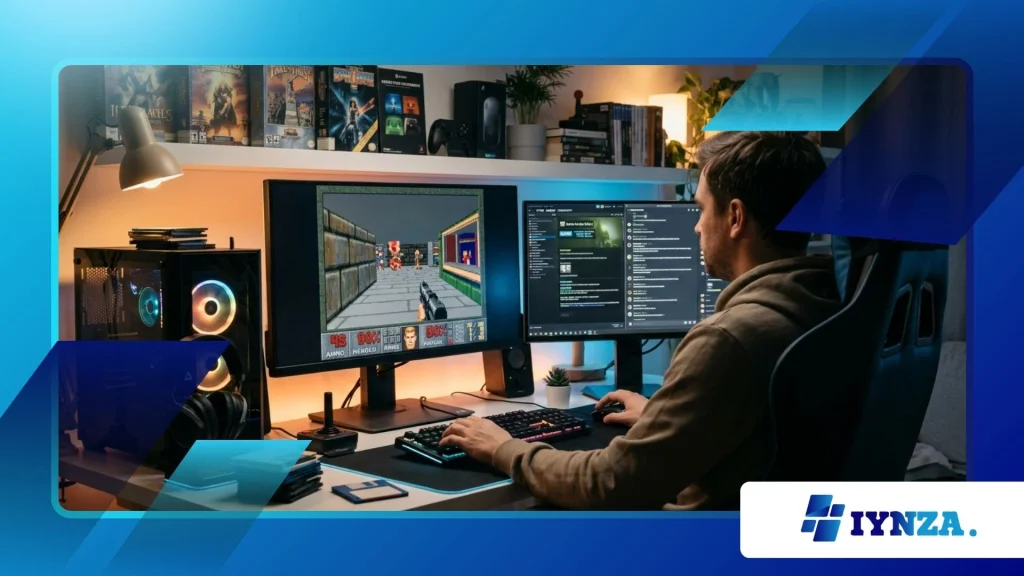
When examining the mechanics behind early PC releases, it becomes clear that technical limitations often yielded extraordinarily creative artistic solutions.
Early game developers could not rely on high-polygon models or photorealistic lighting, so they focused intensely on environmental atmosphere, challenging puzzles, and memorable sound design.
Consequently, an active MS-DOS Games Revival movement continues to thrive because these core design principles remain just as engaging and responsive today as they were thirty years ago.
Also read: Dungeon Crawler Indie Games: Why Old Genres Feel Fresh
What Makes DOS Gameplay Mechanics Stand the Test of Time?
The immediacy of early PC gameplay remains unmatched, allowing players to jump straight into action without navigating mandatory tutorials or drawn-out cinematic cutscenes.
Titles built for MS-DOS relied heavily on clear visual feedback, reactive input controls, and distinct audio queues that communicated gameplay state instantaneously to the user.
This focus on functional design ensures that classic mechanics feel precise, deliberate, and endlessly replayable across generations.
Read more: Indie Farming Games 2026: Why Cozy Sims Still Dominate
How Did System Constraints Force Unprecedented Artistic Innovation?
Strict hardware boundaries, such as the famous 640-kilobyte conventional memory limit and EGA/VGA palette limits, forced programmers to innovate relentlessly.
Pixel artists crafted intricate backgrounds using dithering techniques to simulate rich shadows and depth within limited color spaces.
Sound designers composed legendary FM synthesis tracks using sound chips like the Sound Blaster 16, producing audio signatures that remain iconic across the global gaming community.
Where Can Gamers Legally Access and Play DOS Titles Today?
Navigating the legal landscape for retro PC software has become significantly easier thanks to community archives, publisher initiatives, and dedicated storefronts.
Sites such as the Internet Archive host thousands of playable in-browser DOS titles, serving as vital educational tools for gaming history enthusiasts worldwide.
Meanwhile, digital retailers work continuously with copyright holders to re-release expanded editions of legendary titles complete with full digital manuals and soundtrack files.
Which Legacy Franchises Are Defining the Modern MS-DOS Movement?
A small handful of legendary franchises serve as the primary gateway for gamers entering the broader MS-DOS Games Revival community.
From iconic first-person shooters that pioneered 3D space rendering to complex turn-based strategy titles that laid the foundation for modern esports, these games represent the peak of PC engineering during the 1990s.
Their enduring popularity is sustained by active modding scenes that continually create new levels, high-resolution texture packs, and custom engine ports for modern systems.
How Are FPS Classics Like Doom and Duke Nukem Maintaining Active Communities?
First-person shooter classics maintain an incredibly active fanbase thanks to modular architecture that supports user-created levels, custom source ports, and total conversion mods.
Games like Doom, Quake, and Duke Nukem 3D featured open engine designs that encouraged players to modify game code and share custom maps freely across early online forums.
Today, thousands of community-created maps are uploaded annually, keeping gameplay fresh while preserving the underlying engine speed and mechanics.
Why Are Turn-Based Strategy and RPG Pioneers Experiencing a Second Golden Age?
Tactical strategy games like X-COM: UFO Defense and deep role-playing titles like Ultima VI offered unprecedented player agency and depth that modern titles rarely replicate.
These games trusted the player to navigate complex inventory management systems, draw hand-made physical maps, and calculate combat variables without hand-holding markers or dynamic difficulty scaling.
The resurgence of these titles proves that modern gamers deeply appreciate challenging gameplay loops that demand real strategy, patience, and problem-solving skills.
What Does the Future Hold for PC Preservation and Retro-Inspired Indie Design?
The intersection of retro hardware preservation and contemporary software design promises a vibrant future for retro PC gaming culture.
Open-source hardware developments, such as FPGA-based DOS sound cards and retro computing kits, allow enthusiasts to rebuild authentic nineties hardware setups reliably.
Simultaneously, mainstream game studios are increasingly recognizing the commercial and cultural value of restoring legacy source code, guaranteeing that classic software remains accessible, playable, and documented for decades to come.
Key Comparisons: MS-DOS Era vs. Modern Gaming Industry
| Feature / Metric | Classic MS-DOS Era Games | Modern AAA Industry Releases |
| Monetization Model | One-time purchase, shareware episodes | Microtransactions, battle passes, DLCs |
| Connectivity Requirements | 100% offline local executable execution | Always-online DRM, server authentication |
| Installation Footprint | Measured in megabytes (typically 1–50 MB) | Measured in gigabytes (50–150+ GB) |
| Hardware Accessibility | Low resource usage, broad emulator support | High-end GPU requirements, frequent upgrades |
| Player Agency & Difficulty | High difficulty, manual map tracking | Guided objectives, linear quest markers |
The Enduring Cultural Impact of Early PC Classics
The ongoing MS-DOS Games Revival proves that great game design transcends time, graphical fidelity, and hardware power limitations.
By revisiting the groundbreaking titles of the nineties, modern players gain a fresh appreciation for software development as an authentic, highly inventive art form.
As digital preservation efforts gain momentum worldwide, classic PC titles will continue to inspire new generations of indie developers and delight gaming fans looking for pure, unadulterated gameplay experiences.
What was your very first MS-DOS gaming memory, and which classic PC title do you still catch yourself replaying today? Share your thoughts and join the conversation in the comments section below!
Frequently Asked Questions
What is the easiest way to run MS-DOS games on a modern PC?
The simplest way to play legacy DOS titles on modern operating systems is by using DOSBox or its graphical interface frontends like D-Box or LaunchBox.
These open-source programs emulate the hardware environment of IBM-compatible PCs, including graphics cards, memory configurations, and sound cards like Sound Blaster.
Additionally, modern storefronts like GOG.com sell pre-configured titles that launch automatically without requiring manual setup.
Are MS-DOS games free to download legally?
While many MS-DOS games remain protected by active copyright laws, a significant portion of software from that era was distributed as shareware, which is completely free to share and play.
Furthermore, several original developers have officially released their legacy source code and full game files into the public domain or as freeware for educational preservation.
Always ensure you are downloading titles from reputable archives or legitimate storefronts.
What hardware is required to build an authentic retro DOS computer?
Building a period-accurate DOS rig typically requires a motherboard with native ISA expansion slots, an Intel 486 or Pentium processor, a Sound Blaster 16 or compatible audio card, and a VGA graphics adapter.
However, because vintage hardware components are increasingly rare and prone to hardware failure, many retro enthusiasts now opt for FPGA hardware emulation devices or specialized modern replacement parts designed specifically for retro computing.
Why was shareware so important to the success of MS-DOS games?
Shareware was a revolutionary software distribution strategy during the nineties that allowed players to download and play the first chapter or episode of a game completely for free.
If players enjoyed the experience, they could order the remaining episodes directly from the publisher via mail or phone.
This try-before-you-buy model allowed small indie studios like id Software and Apogee to bypass traditional retail distributors and build massive, loyal user bases globally.
How do modern indie games capture the feel of classic DOS titles?
Modern indie games replicate the charm of DOS titles by adopting low-poly 3D models, retro CRT screen shaders, pixel art graphics, and fast-paced arcade movement mechanics.
Rather than relying on modern gameplay tropes like excessive cutscenes or automated health regeneration, retro-inspired indie games emphasize resource management, exploration, and challenging level design.
This blend of classic game feel with modern hardware reliability creates an incredibly popular subgenre among modern gamers.
