
Co-Op Gaming Nights: Why Group Play Is Trending Again
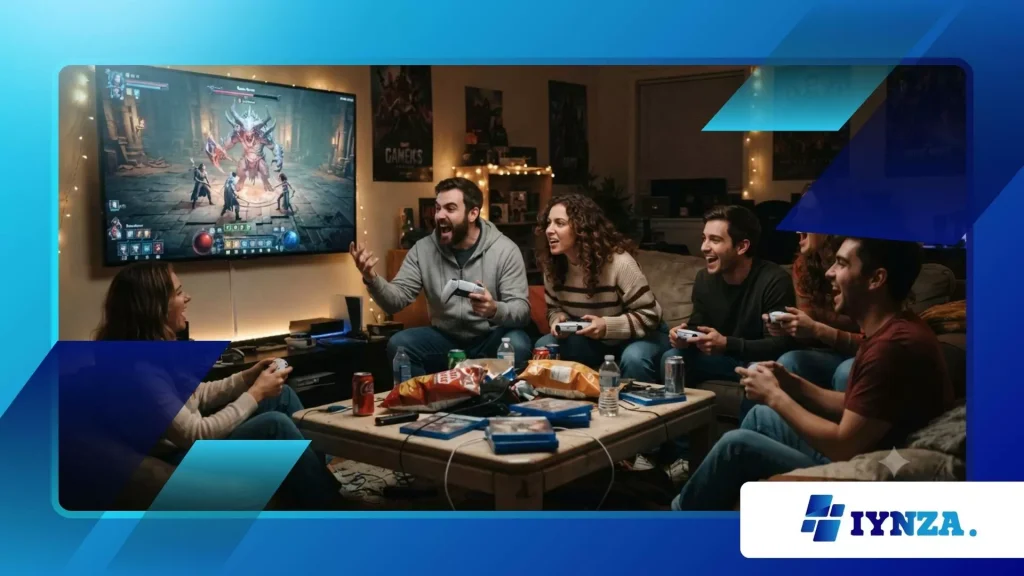
Co-Op Gaming Nights have officially taken over our weekly routines, transforming how we connect with friends in an increasingly isolated digital world.
As a long-time gaming columnist, I have watched the industry pivot from solitary experiences to massive multiplayer battle royales, yet nothing matches this sudden, powerful return to cooperative play.
Today, players are actively choosing shared victories over cutthroat competition, seeking out experiences that reward collaboration, communication, and collective joy right from their living rooms.
This shift represents a cultural movement, a conscious effort to rebuild authentic social bonds through interactive digital mediums.
Historically, we viewed gaming as a solitary hobby, but the modern landscape proves that multiplayer engagement has evolved into a vital social anchor.
The exhausting nature of online toxicity in competitive matchmaking has pushed everyday gamers back into the welcoming arms of cooperative campaigns.
Whether you are coordinating a chaotic kitchen in Overcooked! All You Can Eat or surviving deep-space mining operations in Deep Rock Galactic, the sentiment remains identical.
We are no longer just playing games; we are actively curating memories, sharing physical spaces, and using technology to bridge the gap that modern life continuously widens.
Navigating This Guide
- The Psychological Appeal: Why collaborative play beats modern competitive stress.
- Curating the Perfect Night: Practical steps, gear, and game selections for hosts.
- Industry & Economic Impact: How developers are shifting resources to meet this demand.
- Comparative Data & FAQs: Real statistics on cooperative gaming and quick answers.
Why Are We Choosing Connection Over Competition?
What Is Driving the Return of Cooperative Play?
Modern gamers are facing unprecedented levels of daily stress, making the high-stakes environment of ranked competitive matchmaking feel more like a second job than a relaxing escape.
When you spend your entire workday managing tight deadlines and high pressure, the last thing you want is a teenager screaming at you through a headset during a stressful round of a competitive shooter.
Cooperative gaming offers a psychological safe haven, replacing toxic lobbies with shared goals and laughter where the only enemy is the game itself.
Furthermore, this resurgence is deeply tied to our fundamental human need for authentic social connection, which social media promises but rarely delivers.
Think of it as the modern equivalent of gathering around a campfire; we are sharing stories, face-to-face interactions, and mutual triumphs in a controlled, low-pressure environment.
By removing the threat of interpersonal defeat, group play fosters an atmosphere of mutual support where players of varying skill levels can comfortably contribute.
How Does Co-Op Gaming Combat Digital Fatigue?
The passive consumption of endless video feeds and algorithmically generated content leaves us feeling strangely empty, whereas interactive group gaming demands active cognitive and social engagement.
Engaging in a shared digital mission acts as a collaborative puzzle, stimulating brain regions associated with problem-solving, empathy, and motor coordination simultaneously.
This active participation creates a state of shared flow, where a group of friends becomes entirely synchronized in pursuit of a common objective.
To use a simple analogy, if scrolling through social media is like eating a bag of empty-calorie potato chips, then hosting structured Co-Op Gaming Nights is akin to preparing and enjoying a home-cooked meal with loved ones.
It nourishes our social health, leaving us genuinely fulfilled rather than superficially distracted by glowing screens.
The laughter generated during a failed attempt to coordinate a virtual heist does more for mental well-being than any solo gaming session ever could.
++ Passive Gaming Trends 2026: Why Idle Play Is Growing Fast
What Are the Mental Health Benefits of Shared Victories?
Psychological studies continuously highlight how collaborative activities release oxytocin, the hormone responsible for bonding, trust, and social cohesion among human beings.
When a team successfully defeats a difficult boss after hours of trying, the collective rush of dopamine is amplified by the shared validation of your peers.
This shared success strengthens real-world friendships, creating lasting inside jokes and stories that persist long after the console or computer is powered down.
Consider the massive success of It Takes Two, a game literally designed around cooperation that went on to sell over 16 million copies worldwide.
This commercial milestone proves that players are craving narrative-driven, cooperative experiences that require emotional and tactical synchronization to progress.
It shows that gaming can be an empathetic journey, teaching us communication skills that directly translate to healthier real-world relationships.
How Do You Host the Ultimate Cooperative Session?
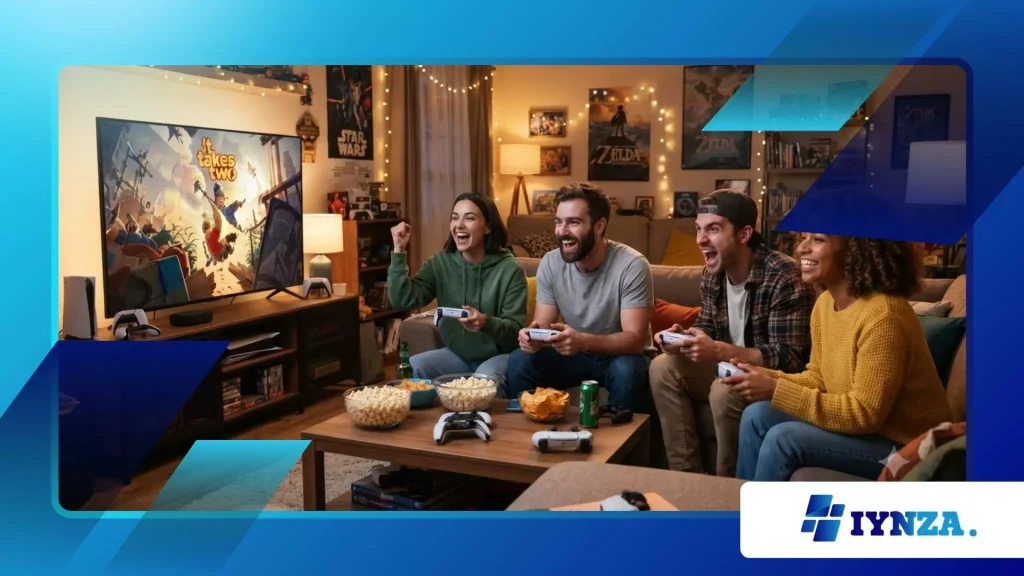
What Are the Essential Ingredients for a Great Game Night?
Hosting a successful gathering requires more than just turning on a console; it demands intentional preparation to ensure everyone feels included and comfortable.
First, you must consider the physical space, ensuring there is ample seating, proper ventilation, and easy access to snacks that do not leave grease on expensive controllers.
Setting a welcoming tone from the moment your guests arrive helps transition everyone from their busy workdays into a relaxed, playful mindset.
Second, choosing the right game is paramount, and you must carefully match the selection to the collective skill level of your invited group.
A mix of highly accessible party games and slightly deeper cooperative adventures ensures that both hardcore gamers and casual players find their rhythm.
The goal of Co-Op Gaming Nights is to minimize frustration and maximize interaction, so keep the barrier to entry low during the initial hours.
Also read: How “Desktop Pets” and Mini Idle Games Are Becoming a Productivity Trend for Gamers
Which Games Offer the Best Local and Online Experiences?
For local, same-couch chaos, games like Overcooked! All You Can Eat or Moving Out are spectacular because their simple controls hide a hilarious need for constant verbal communication.
If your group prefers a deeper narrative experience, titles like Baldur’s Gate 3 allow up to four players to cooperatively shape a massive fantasy world.
These games allow players to split up, specialize in different roles, and tackle challenges using their unique personal strengths.
For online groups separated by distance, Helldivers 2 became a cultural phenomenon in 2024 precisely because it perfected the chaotic, cinematic nature of cooperative PvE (Player vs. Environment) gameplay.
The game’s reliance on friendly fire and intense tactical coordination means that even failure is incredibly entertaining.
It proves that modern players are eager to unite against a common virtual threat when the gameplay loop rewards selfless teamwork.
Read more: Best Gaming Apps for Staying Connected With Friends
How Can You Bridge the Gap Between Different Skill Levels?
The greatest challenge of organizing group play is managing the disparity between experienced enthusiasts who know every mechanic and casual friends who rarely play.
To solve this, seasoned players must consciously adopt a supporting role, focusing on helping their friends shine rather than rushing ahead to clear the map.
Choose games that feature asymmetrical mechanics, where less experienced players can handle vital, low-stress tasks while veterans manage complex defensive maneuvers.
For example, in many cooperative survival games, one player can focus entirely on base building and resource management while others hunt dangerous monsters.
This division of labor ensures that every participant contributes significantly to the group’s survival, regardless of their mechanical reflexes.
It turns diversity of skill into a group asset, reinforcing the core philosophy that every team member’s contribution is valuable.
Why Is the Gaming Industry Shifting Toward Co-Op?
What Do the Latest Industry Statistics Reveal?
The financial and critical success of cooperative titles over the past few years has forced major game publishers to re-evaluate their development pipelines.
According to the Entertainment Software Association (ESA), over 70% of gamers play with others, with a massive portion of that demographic actively preferring cooperative modes over competitive ones.
Developers are realizing that communities built around cooperative play are far less toxic, leading to higher long-term player retention and steadier revenue.
This shift is a direct response to market saturation, as players grow tired of live-service competitive shooters that demand constant financial investment and daily grinds.
Publishers are discovering that players are highly willing to purchase cooperative titles that respect their time and offer genuine, uncompromised fun with friends.
The economic viability of these games is no longer in question; they are leading the industry in sales and player satisfaction.
How Are Developers Designing Games Specifically for Collaboration?
Modern game design is moving away from simply adding a second player to a single-player campaign, focusing instead on mechanics that require cooperation to function.
Games are being built from the ground up around the concept of mutual dependency, where progress is physically impossible without active coordination.
This design philosophy forces players to talk, plan, and execute strategies together, turning the gameplay itself into a conversational tool.
Consider how Helldivers 2 uses shared resources and strategic call-ins that require input from multiple players to deploy effectively.
This level of mechanical integration makes Co-Op Gaming Nights feel like highly rewarding team-building exercises rather than simple button-mashing sessions.
Developers are successfully gamifying human cooperation, creating digital systems that reward altruism, sacrifice, and clear communication.
What Does the Future Hold for Group Gaming Experiences?
As virtual reality and augmented reality technologies continue to mature, the potential for immersive, shared physical-digital gaming spaces will expand dramatically.
Imagine sitting in your living room while holographic game boards manifest on your coffee table, allowing local and remote friends to interact seamlessly.
The future of cooperative play lies in erasing the physical distance between players, making virtual gatherings feel as tactile and intimate as traditional board game nights.
Additionally, we will see highly sophisticated artificial intelligence companions designed to fill empty slots in your cooperative party, adapting dynamically to your group’s playstyle.
However, no matter how advanced the technology becomes, the human element will always remain the irreplaceable heart of these cooperative experiences.
The technology will simply serve as a more transparent window, allowing our natural desire for connection to shine through effortlessly.
Analyzing the Rise of Cooperative Gaming
To better understand why cooperative play is dominating the gaming landscape, we can look at how it compares directly to competitive gaming across several key social and psychological metrics. The table below outlines these differences clearly.
| Feature / Metric | Cooperative Play (Co-Op) | Competitive Play (PvP) |
| Primary Social Goal | Social bonding and mutual support | Skill comparison and individual dominance |
| Average Stress Levels | Low to moderate (relaxing) | High to extreme (sweaty/intense) |
| Toxicity Levels | Exceptionally low; highly welcoming | High; frequent player conflicts |
| Inclusivity | High; accommodates all skill levels | Low; high barrier to entry for beginners |
| Core Emotional Reward | Shared triumph and collective memory | Individual accomplishment and prestige |
Creating Lifelong Memories Together
Ultimately, the massive resurgence of Co-Op Gaming Nights is a heartwarming reminder that technology, when designed with empathy, can bring us closer together.
These gatherings offer a vital sanctuary from the frantic pace of modern life, allowing us to laugh, collaborate, and conquer challenges as a team.
By prioritizing shared joy over individual dominance, we reclaim gaming as a communal celebration, proving that the best virtual adventures are always the ones we share.
So, the next time you look at your library of games, consider inviting a few friends over, ordering some food, and embarking on a shared journey.
Whether you win or lose, the shared laughter and strengthened bonds will always be worth far more than any solo trophy.
Let us power up our controllers, connect our headsets, and continue building spaces where teamwork, friendship, and collective fun always take center stage.
Frequently Asked Questions
What is the difference between local co-op and online co-op?
Local co-op, often called couch co-op, allows players to play together on the same physical screen and console, while online co-op connects players via the internet across different locations and devices.
Do I need expensive equipment to host a co-op night?
Not at all. Many fantastic cooperative titles run on standard consoles or budget-friendly laptops, and many party games only require players to use their smartphones as controllers.
Why are competitive games losing appeal compared to co-op?
Competitive games often demand significant time commitments to maintain skill levels and can feature toxic player environments, whereas cooperative games focus on low-stress, lighthearted fun.
