
Cross-Region Esports Transfers: Why Players Are Moving Globally
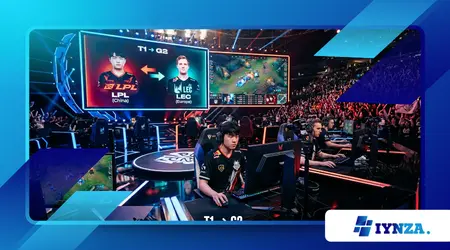
Cross-Region Esports Transfers define the modern competitive landscape of 2026, as top-tier organizations hunt for international talent to bridge the widening gap between regional playstyles.
This global circulation of players represents a strategic evolution where geographical borders matter less than mechanical ceiling and psychological resilience in high-pressure matches.
Top organizations now operate like multinational corporations, scouting prospects from Seoul to São Paulo to build diverse, unbeatable rosters.
This migration reshapes how fans connect with teams, creating a more unified and borderless professional gaming culture that celebrates talent above national origin.
Global Talent Insights
- Performance Synergy: Analyzing how importing specialized players from regions like Korea enhances the tactical depth of North American and European squads.
- Economic Drivers: Understanding the massive salary discrepancies and sponsorship opportunities that lure professional gamers across the Atlantic or Pacific oceans.
- Cultural Adaptation: The challenges and triumphs of young athletes moving to new continents, including language barriers and intensive gaming house environments.
- Regulatory Shifts: A look at how residency rules and visa regulations in 2026 impact the feasibility of frequent international roster changes.
Why is the hunt for international talent intensifying?
The surge in Cross-Region Esports Transfers stems from a desperate need for tactical diversity in games like League of Legends and Valorant.
Organizations realize that dominating a local league is no longer enough to secure victory at international mid-season invitationals or world championships.
Importing a “star” player often acts as a catalyst, forcing local teammates to adapt to a more rigorous, disciplined training methodology.
This cross-pollination of ideas ensures that the meta-game evolves rapidly, pushing the entire industry toward higher levels of professional execution.
How do regional playstyles influence these moves?
Eastern players often bring a reputation for mechanical perfection and incredible stamina, while Western regions are frequently praised for their creative, out-of-the-box strategies.
By blending these two approaches, a team can create a balanced system that is harder for opponents to predict or counter.
Think of it like a master chef sourcing spices from around the world to create a unique flavor profile.
Without these diverse “ingredients,” a roster might remain stale, predictable, and unable to compete against truly globalized organizations.
++ Advanced Strategies for Tower Defense Games
What are the financial incentives for players?
Many players from emerging markets view a move to North America or China as a life-changing financial opportunity that secures their future.
High-income regions offer salaries that can be ten times higher than what a player might earn in their home country.
Beyond just the base salary, moving to a larger market increases a player’s personal brand value and social media reach exponentially.
This allows them to secure lucrative streaming deals and global sponsorships that would be unavailable in smaller, more isolated competitive regions.
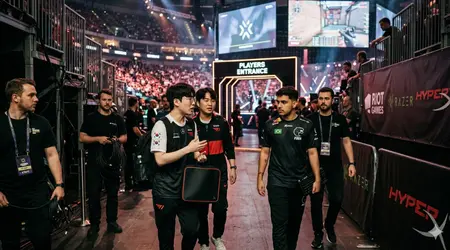
How do organizations manage cultural and logistical hurdles?
Executing successful Cross-Region Esports Transfers requires more than just a big checkbook; it demands a robust support system for the athlete.
Moving a nineteen-year-old halfway across the world involves managing homesickness, dietary changes, and the intense pressure of a new language.
Modern gaming houses in 2026 now employ full-time translators, specialized chefs, and sports psychologists to ensure the transition is as smooth as possible.
These professionals work behind the scenes to keep the player focused on the game rather than the stresses of immigration.
Also read: Advanced Tactics for PvP Battles in Online Games
Why is language communication a primary barrier?
Communication is the heartbeat of competitive play, where a split-second delay in a voice call can lead to a devastating defeat.
Players must learn basic tactical terminology in the team’s primary language almost immediately to maintain their competitive edge during matches.
Teams often use visual pings and standardized “game-speak” to minimize the impact of language gaps while the player undergoes intensive tutoring.
Success often depends on the team’s patience and the player’s willingness to integrate into a completely foreign social environment.
Read more: How to Survive the First 10 Minutes in Hardcore Games
What is the role of 2026 visa regulations?
Visa issues remain the biggest “final boss” for organizations attempting to finalize international rosters before the start of a major season.
Governments are slowly becoming more accommodating to esports athletes, but the process still involves rigorous background checks and high administrative costs.
A failed visa application can leave a team with a hole in their lineup just days before a tournament begins.
This risk forces managers to have solid backup plans and local substitute players ready to step in at a moment’s notice.
What is the long-term impact on regional identities?
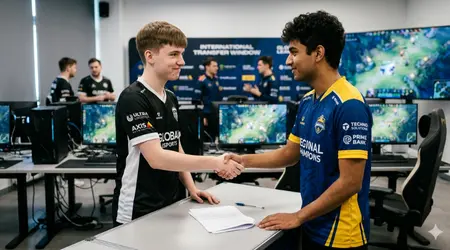
The frequency of Cross-Region Esports Transfers has led some fans to worry about the “dilution” of regional identity in professional gaming.
When a European team consists of four Korean players, does it still truly represent the spirit of European competition to the fans?
However, most viewers have embraced this globalization, preferring to watch the highest level of play regardless of the players’ birthplaces.
This shift signals a move toward “club” loyalty, similar to traditional soccer, where the crest on the jersey matters most.
Are regional boundaries disappearing?
League organizers continue to adjust “residency” rules to ensure that local talent still has a pathway to the professional stage.
These rules act as a protective barrier, preventing the richest organizations from simply buying up every top player from a single dominant region.
In 2026, the balance between “import talent” and “local growth” is the most debated topic in team boardrooms across the world.
Striking this balance is essential for maintaining a healthy, sustainable ecosystem that appeals to both global and local audiences.
Why does “Importing” fail for some teams?
History is littered with examples of “super-teams” that failed because they relied on big names without considering the social chemistry of the group.
A player might be a mechanical god in their home region but become a liability when isolated from their support network.
Successful transfers require a shared vision and a humble attitude from both the newcomer and the existing roster members.
Without a cohesive team culture, even the most expensive Cross-Region Esports Transfers can lead to a disappointing, early exit from the standings.
2026 Global Transfer & Performance Metrics
| Region | Avg. Import Salary | Player Retention Rate | Primary Source Region | Performance Impact |
| North America | $450,000 | 65% | South Korea | High (Strategic) |
| Europe (LEC) | $320,000 | 72% | South Korea / TR | Moderate |
| China (LPL) | $550,000 | 80% | South Korea / SEA | High (Mechanical) |
| South Korea | $280,000 | 90% | Local (Niche) | Extreme (Internal) |
| Brazil (CBLOL) | $120,000 | 55% | South Korea / EU | High (Social) |
| Southeast Asia | $95,000 | 60% | China / Korea | Emerging |
| Latin America | $85,000 | 50% | South Korea / NA | Moderate |
| Japan (LJL) | $110,000 | 75% | South Korea | High (Tactical) |
According to the 2025 Esports Global Census, nearly 42% of starting rosters in the top four professional leagues now feature at least one international player.
This data confirms that Cross-Region Esports Transfers are no longer a luxury but a fundamental requirement for staying competitive in the current era.
Moving an athlete across the globe is like transplanting a delicate tree into new soil; the climate must be perfect for it to bloom.
If the organization fails to provide the right nutrients socially and tactically the investment will inevitably wither away under the spotlight.
The professional gaming world is smaller than ever, and the path to glory is now a global highway with no speed limits.
We are witnessing the final breakdown of regional silos in favor of a truly meritocratic, worldwide competitive theater.
Does a team’s national identity matter to you, or do you just want to see the best players on the server together?
This question will continue to shape the narrative of professional gaming for the next decade of digital competition.
As the 2026 season progresses, keep your eyes on the rosters that successfully blend cultures, as they are the ones most likely to lift the trophies.
The world is watching, and the players are ready to move wherever the challenge and the glory awaits them.
How do you feel when your favorite local team replaces a veteran with a star from another continent? Share your experience in the comments!
The Global Arena
The phenomenon of Cross-Region Esports Transfers reflects a world where skill is the only currency that truly matters in the end.
By bridging cultures through gaming, we are building a more connected and competitive future for everyone involved in this digital sport.
Frequently Asked Questions
How do players handle the jet lag of international moves?
Professional teams usually fly players in weeks before a season starts to allow their circadian rhythms to adjust to the new time zone.
Are there limits on how many players a team can import?
Yes, most major leagues in 2026 maintain a “two-import” rule to ensure that at least three local players remain on every starting roster.
Does moving regions hurt a player’s career long-term?
It is a risk; while the salary is higher, failing to adapt can damage a player’s reputation and make it harder to find a team later.
Why is South Korea the main source of talent?
The country’s highly developed infrastructure and cultural emphasis on gaming discipline produce a consistent surplus of world-class athletes every year.
