
Twin-Stick Shooter Indies: Why This Genre Is Back
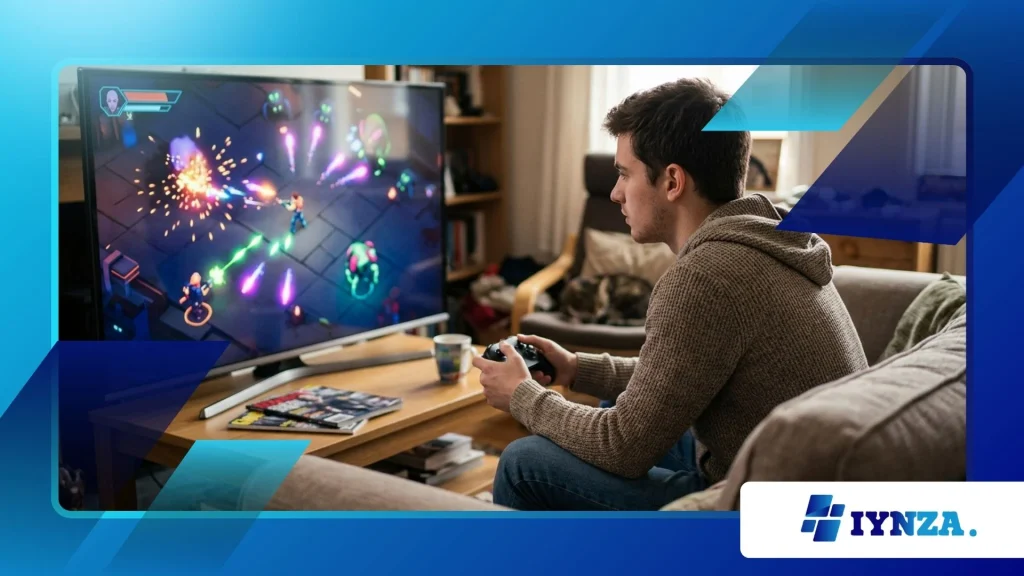
Twin-Stick Shooter Indies represent one of the most explosive resurgence stories in modern gaming, capturing the hearts of millions of active players who demand pure skill, precise controls, and endless replayability across contemporary platforms.
Modern independent studios have fundamentally reimagined this classic arc-arcade design blueprint, elevating simple multidirectional shooting mechanics into high-stakes tactical survival experiences.
By combining nostalgic retro aesthetics with tight physics engines, responsive controls, and innovative gameplay loops, these titles now consistently dominate digital storefronts and streaming platforms worldwide.
As gaming hardware advances toward unprecedented graphical realism, why are players increasingly flocking back to high-octane 2D directional shooters?
The answer lies in the unmatched clarity of play design: instant feedback loops, transparent difficulty curves, and deep mechanical mastery that modern AAA blockbusters often struggle to deliver consistently.
Today, independent developers leverage advanced procedural generation and tight bullet-hell balancing to keep audiences engaged for hundreds of hours.
In This Article:
- Why Are Twin-Stick Shooter Indies Resurging Right Now?
- What makes dual-stick controls so timelessly satisfying for modern gamers?
- How do indie developers innovate classic arcade mechanics without losing their core appeal?
- Why does short-form rogue-lite design fit today’s gaming habits perfectly?
- How Do Modern Indies Master Gameplay Mechanics and Visual Design?
- What role does procedural generation play in extending total replay value?
- How do developers balance intense bullet-hell difficulty with player accessibility?
- Why are synthwave and dark minimalist aesthetics driving visual appeal?
- Which Key Titles and Market Trends Define the Current Twin-Stick Wave?
- How did titles like Vampire Survivors redefine minimalist action mechanics?
- What sales metrics and player trends highlight this genre’s commercial viability?
- Where is the genre heading next on modern handheld PC consoles?
- Genre Comparison & Performance Overview
- The Future Horizon of Precision Action Gaming
- Frequently Asked Questions
Why Are Twin-Stick Shooter Indies Resurging Right Now?
What makes dual-stick controls so timelessly satisfying for modern gamers?
The fundamental charm of Twin-Stick Shooter Indies stems directly from their absolute mechanical clarity and instant tactile responsiveness.
Holding one analog stick for 360-degree spatial locomotion while simultaneously utilizing the secondary stick for directional firing creates an immediate, intuitive link between player instinct and screen action.
This seamless control scheme completely removes input latency barriers, allowing players to enter a state of pure cognitive flow within seconds of launching a match.
Unlike complex multi-button action games, this genre relies on effortless spatial awareness where survival depends entirely on positioning, dodging, and continuous movement.
When an independent title strips away cinematic fluff to focus exclusively on tight movement vectors, every dodge feels earned and every mistake remains transparent.
That immediate feedback loop creates an addicting gameplay rhythm that keeps both casual players and competitive speedrunners continuously returning for just one more run.
How do indie developers innovate classic arcade mechanics without losing their core appeal?
Independent creators have successfully revitalized classic 1980s arcade foundations by seamlessly blending multidirectional shooting with modern meta-progression systems, deck-building, and procedural upgrades.
Early arcade ancestors like Robotron: 2084 focused strictly on high scores and linear wave escalation within confined static screens.
Contemporary independent studios, however, construct complex skill trees, synergizing item builds, and dynamic environmental hazards that transform standard shooting sessions into deep strategy puzzles.
By layering persistent unlockables over tight moment-to-moment action, developers give every failed attempt a tangible sense of long-term reward and player progression.
You are no longer just chasing an abstract leaderboard rank; you are actively unlocking new weapon synergies, playable characters, and tactical evasive abilities.
This fusion of retro arcade purity with rich modern progression mechanics keeps the core gameplay instantly familiar yet perpetually fresh and evolving.
++ MS-DOS Games Revival: Why PC Classics Are Trending Again
Why does short-form rogue-lite design fit today’s gaming habits perfectly?
Modern lifestyle demands have significantly shifted player preferences toward self-contained, highly engaging gaming sessions that respect the user’s available personal time.
The integration of rogue-lite mechanics into Twin-Stick Shooter Indies allows players to experience complete, thrilling gameplay arcs within fifteen to thirty minutes.
This bite-sized structure makes these games ideal choices for busy adults, casual enthusiasts, and handheld console gamers who want high-intensity action without long cinematic setup requirements.
Furthermore, this rapid session design aligns exceptionally well with modern live-streaming platforms and community content creation ecosystems.
Viewers can watch an entire run, observe unique weapon combinations, and witness dramatic clutch moments unfold within a single broadcast segment.
The high unpredictability of procedural runs ensures that no two stream broadcasts look identical, driving massive viral organic marketing across social platforms.
How Do Modern Indies Master Gameplay Mechanics and Visual Design?
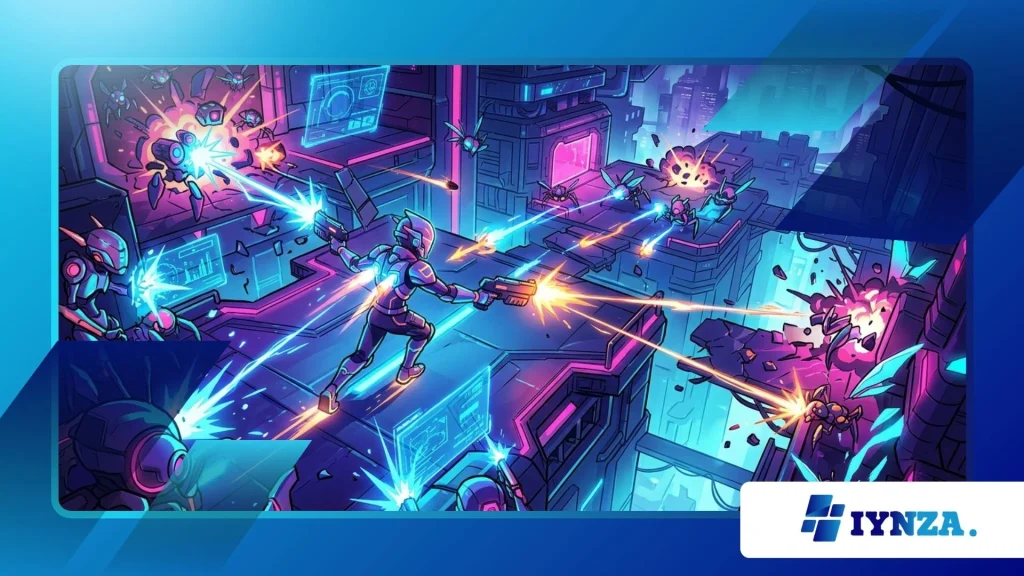
What role does procedural generation play in extending total replay value?
Procedural level layout generation combined with randomized loot tables ensures that spatial layouts, enemy wave compositions, and available power-ups continuously mutate across every fresh run.
When players enter a stage, they cannot rely on passive muscle memory or static map memorization to survive incoming swarms.
Instead, they must continuously evaluate dynamic combat spaces, analyze real-time projectile trajectories, and adapt their offensive strategies on the fly based on current equipment drops.
This continuous environmental variance transforms every single session into a unique tactical exercise where adaptability dictates overall survival duration.
Developers carefully calibrate algorithm parameters so that arena shapes, enemy spawn density, and item synergy probabilities remain balanced yet completely unpredictable.
As a direct result, players can invest hundreds of hours into a single indie title without ever experiencing a repetitive scenario.
Also read: Retro Games Worth Revisiting After All These Years
How do developers balance intense bullet-hell difficulty with player accessibility?
Achieving optimal difficulty balance in modern action games requires a delicate equilibrium between intense screen complexity and clear, readable visual communication.
Successful developers achieve this balance by assigning distinct neon color codes, high-contrast silhouettes, and predictable acceleration vectors to enemy bullet patterns.
This visual clarity enables players to quickly process dozens of moving hazards simultaneously without feeling overwhelmed by screen clutter.
Additionally, many modern titles introduce flexible accessibility modifiers, such as adjustable game speeds, passive auto-aim options, or custom damage scaling sliders.
These customizable options allow newcomers to gradually build spatial awareness skills without diluting the core challenge for veteran enthusiasts.
Is it possible to create a punishing bullet-hell experience that remains welcoming to beginners?
By decoupling mechanical complexity from visual readability, independent creators prove that extreme difficulty and broad accessibility can coexist harmoniously.
Read more: Indie Farming Games 2026: Why Cozy Sims Still Dominate
Why are synthwave and dark minimalist aesthetics driving visual appeal?
Visual design in Twin-Stick Shooter Indies heavily emphasizes high-contrast pixel art, vibrant synthwave neon color palettes, and minimalist vector graphics for functional gameplay reasons.
Beyond offering striking retro-futuristic nostalgia, neon aesthetics isolate critical interactive elements against dark, unobtrusive background textures.
Players can instantly distinguish their character model, incoming enemy tracks, and lethal laser grids during chaotic high-density firefights.
This artistic direction is complemented by pulsing electronic, synthwave, and industrial darksynth soundtracks that synchronize directly with spatial combat intensity.
Dynamic audio systems scale musical layers based on current combo multipliers or remaining health reserves, amplifying adrenaline during critical boss encounters.
The combination of vivid neon visuals and driving electronic soundscapes delivers a cohesive sensory experience that defines modern indie gaming culture.
Which Key Titles and Market Trends Define the Current Twin-Stick Wave?
How did titles like Vampire Survivors redefine minimalist action mechanics?
The massive commercial breakthrough of Vampire Survivors in 2022 drastically altered industry perspectives regarding directional shooting and automatic combat design pipelines.
By automating projectile targeting and focusing player input purely on spatial positioning, movement dynamics, and build optimization, it spawned an entire sub-genre of minimalist survival shooters.
The game demonstrated that stripping away complex mechanics can actually expand player engagement when paired with addictive power-scaling logic.
According to global video game industry reports from SteamDB, Vampire Survivors achieved an incredible peak concurrent player count exceeding 77,000 players on Steam while maintaining a 98% positive user review score across over 200,000 submissions.
This historic success proved that small development teams can achieve massive viral success through transparent design, fair pricing models, and exceptional gameplay pacing.
What sales metrics and player trends highlight this genre’s commercial viability?
The commercial performance of independent multidirectional shooters highlights a broader industry pivot toward systems-driven, high-replayability indie titles over static single-player narratives.
Major digital storefront analytics indicate that top-tier indie action games consistently deliver higher long-term player retention metrics compared to traditional linear games.
Lower production overhead combined with long-term post-launch content support enables small studios to maintain robust profitability for years after release.
Player engagement metrics show that community creation, daily challenge leaderboards, and modding support extend title lifespans significantly beyond initial launch windows.
Gamers actively seek out titles that offer immediate mechanical depth and flexible session lengths rather than padded narrative experiences.
This shift in consumer purchasing habits has established independent action games as core pillars of the modern digital games ecosystem.
Where is the genre heading next on modern handheld PC consoles?
The rapid widespread adoption of handheld gaming hardware li
ke the Steam Deck, ROG Ally, and Lenovo Legion Go has created the perfect platform ecosystem for Twin-Stick Shooter Indies.
Dual thumbsticks, precise touchpads, high-refresh-rate screens, and ergonomic physical grips make modern handheld devices ideal for precision arcade shooting on the go.
These titles run at native performance targets with minimal battery consumption, making them premier choices for handheld gaming enthusiasts.
Looking forward, developers are actively integrating local cooperative modes, asynchronous online challenges, and cross-platform save features tailored specifically for hybrid gaming setups.
As handheld hardware continues to evolve, independent studios will push the boundaries of particle physics, screen enemy counts, and network netcode.
The future of precision action gaming remains brighter than ever as hardware portability opens new avenues for player engagement globally.
Genre Comparison & Performance Overview
| Title | Key Mechanics | Visual Style | Average Run Duration | Target Platform Appeal |
|---|---|---|---|---|
| Enter the Gungeon | Dodge-rolling, gun-synergies, bullet-hell | High-detail 16-bit pixel art | 30 – 45 Minutes | Hardcore arcade purists |
| Vampire Survivors | Auto-firing, passive spatial positioning | Minimalist retro 8-bit | 15 – 30 Minutes | Casual & session gamers |
| Hades | Isometric combat, rich narrative integration | Hand-drawn comic aesthetic | 25 – 40 Minutes | Story-focused action fans |
| Helldivers (Original) | Co-op tactical shooting, friendly fire | Top-down 3D military sci-fi | 15 – 20 Minutes | Team strategy enthusiasts |
| Geometry Wars 3 | Pure score-chasing, vector movement | Vibrant neon grid graphics | 5 – 10 Minutes | Traditional arcade loyalists |
The Future Horizon of Precision Action Gaming
The ongoing renaissance of modern top-down action titles proves that intuitive controls, refined mechanics, and deep progression systems will always transcend temporary graphical trends.
Independent developers continue to push design boundaries, demonstrating how classic arcade foundations can continually adapt to serve modern player expectations.
As handheld hardware matures and global gaming communities demand transparent value, these precision shooters stand as shining examples of pure, unadulterated gameplay design excellence.
Whether you are a veteran arcade player chasing global leaderboard ranks or a casual gamer looking for quick high-intensity sessions, the current indie landscape offers an unprecedented variety of exceptional titles to explore.
The combination of creative freedom, low input latency, and continuous mechanical innovation guarantees that this vibrant genre will thrive for years to come.
What is your absolute favorite indie twin-stick shooter of all time, and what specific mechanics keep you coming back for more?
Share your personal recommendations and favorite build strategies in the comments section below to join the discussion!
Frequently Asked Questions
Why are dual-stick control layouts so popular among independent game developers?
Dual-stick controls offer complete independence between movement direction and firing vectors, allowing for unmatched tactical freedom during chaotic screen encounters.
This classic configuration enables developers to create complex bullet-hell patterns and spatial puzzles that test player reaction speed, positioning accuracy, and movement instincts without requiring bloated control schemes.
Do I need a controller to play twin-stick shooters effectively on PC?
While a dedicated twin-stick gamepad provides optimal analog directional precision and ergonomic comfort, many modern PC titles support precise keyboard and mouse control schemes.
Mouse aiming often allows for pinpoint target selection, while WASD keys handle spatial movement, giving PC players a viable alternative depending on personal preferences.
What is the primary difference between traditional twin-stick shooters and modern rogue-lites?
Traditional twin-stick arcade games focused primarily on static linear stages, strict lives counters, and global score chasing without persistent progression.
Modern rogue-lite adaptations incorporate randomized level layouts, dynamic loot drops, deck-building elements, and permanent metaprogression upgrades that reward players even after failed runs.
How do indie twin-stick shooters maintain high performance on handheld hardware?
Indie developers typically utilize optimized 2D render pipelines, clean visual vector art, and efficient particle engines that require minimal GPU overhead.
This structural efficiency allows titles to maintain locked 60 or 120 FPS performance targets while drawing very little power, drastically extending battery life on portable gaming devices.
Are twin-stick indie games beginner-friendly for casual players?
Yes, modern Twin-Stick Shooter Indies frequently feature scalable difficulty modifiers, extensive accessibility settings, and intuitive control schemes that accommodate players of all skill levels.
Beginner-friendly progression systems allow players to steadily acquire permanent power upgrades over time, ensuring gradual forward progress regardless of initial skill level.
