
Indie Deckbuilding Games: Fresh Card Games Beyond the Hits
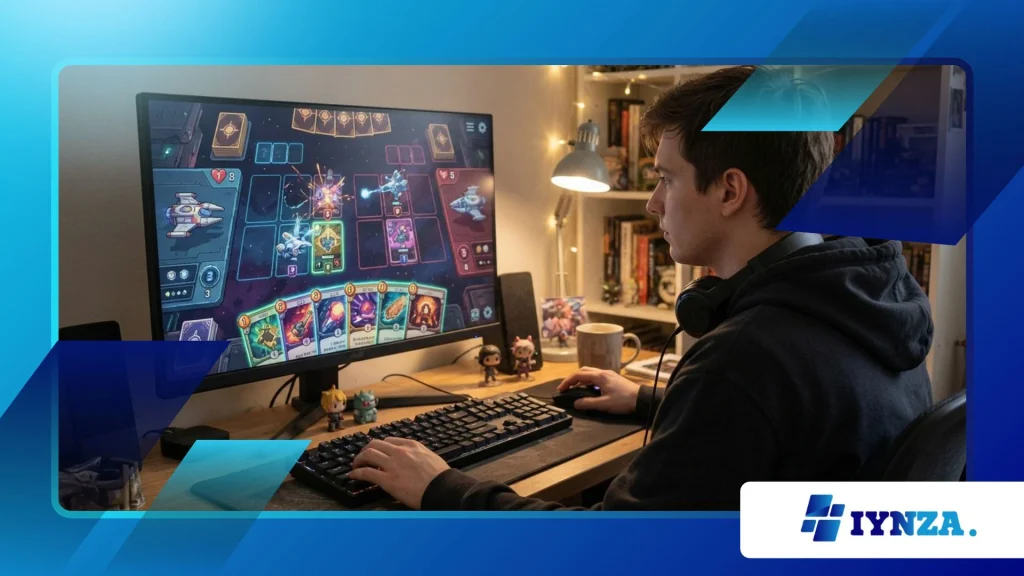
Indie Deckbuilding Games have quietly become the sharpest proving ground for mechanical risk-taking in modern PC and console gaming.
While mainstream digital card battlers often rely on endless booster-pack monetization and rigid competitive ladders, smaller independent studios continue to strip the genre down to its tactical bones and rebuild it with wild, singular ideas.
Readers searching for fresh card experiences in 2026 are no longer satisfied with clones that merely copy familiar spire-climbing paths without adding a distinct mechanical hook.
Instead, the most exciting releases right now blend card manipulation with spatial grid combat, dice engineering, narrative detective work, and physics-driven table layouts.
Understanding what makes these newer releases stand out requires looking past the obvious genre heavyweights that dominated early storefront charts.
Players today want concrete recommendations that respect their time, reward clever sequencing, and introduce rulesets they have not already solved a hundred times over.
Across Steam, Nintendo Switch, and handheld PCs, a wave of inventive titles proves that shuffling a custom deck still holds plenty of surprises when developers dare to break traditional turn-based conventions.
What You Will Discover in This Guide
- Which lesser-known indie card battlers deliver genuinely original mechanics beyond classic dungeon climbs.
- How hybrid genres are reshaping tactical deck construction through spatial boards, dice manipulation, and tabletop physics.
- Why independent developers are outpacing major studios in player-friendly progression and experimental design.
- A side-by-side breakdown comparing core mechanics, platforms, and run lengths across standout fresh releases.
- Clear answers to the most common questions players ask before diving into modern card-based roguelikes and tactical battlers.
Which Indie Deckbuilding Games Offer Truly Original Mechanics?
How Does Cobalt Core Reinvent Space Combat With Cards?
Cobalt Core transforms traditional hand management into a tense, single-axis tactical dogfight where positioning matters just as much as raw damage output.
Developed by Rocket Rat Games and published by Brace Yourself Games, the game places your three-person crew inside a nimble starship dodging incoming enemy fire across a horizontal lane.
Every card you play either shifts your vessel left or right, raises temporary shields, or fires cannons down specific columns.
Because enemy intent is telegraphed clearly before each turn resolves, every hand becomes a spatial puzzle rather than a simple math check.
You might burn an attack card purely to sidestep a heavy laser barrage, or align your ship so a single volley strikes an opponent’s fragile missile bay.
Unlocking different crew members completely alters your card pool, encouraging experimental synergies that feel fresh across dozens of expeditions.
What Makes Wildfrost Stand Out From Standard Roguelike Battlers?
Wildfrost, created by Deadpan Games and Gaziter, replaces static turn orders with a dynamic countdown system that keeps every combat round razor-sharp.
Instead of playing cards freely until your energy runs out, every unit on the snow-covered board operates on a visible counter that ticks down whenever you take an action.
Triggering a powerful companion attack requires careful timing, especially when enemy bosses retaliate immediately after taking a hit.
The game also introduces a memorable charm system that lets you attach permanent modifiers directly onto individual cards mid-run.
A humble healing item can suddenly apply frost damage, or a fragile frontline fighter can gain multi-hit frenzy if you survive long enough to upgrade them.
Even defeating the final boss carries a clever twist, as your victorious champion becomes corrupted and serves as the end-game threat for your very next run.
++ Neo Geo Games Collection: Rare Classics Worth Revisiting
Why Is Inscryption Still a Benchmark for Narrative Card Design?
Inscryption, crafted by solo developer Daniel Mullins, proves that Indie Deckbuilding Games can weave psychological mystery directly into the physical rules of a card table.
Set inside a shadowy cabin, the opening act tasks you with sacrificing squirrels and woodland creatures to summon stronger beasts onto a four-lane wooden board.
However, stepping away from the table between matches reveals escape-room puzzles that directly unlock hidden cards and alter your deck’s capabilities.
As the story unfolds, the game repeatedly dismantles its own visual style and mechanical framework without losing its core card-playing soul.
One moment you are inscribing sigils onto pelts at a mysterious altar, and the next you are managing energy cells or debating talking cards that comment on your tactical blunders.
Few titles demonstrate so clearly how tabletop mechanics can serve interactive storytelling rather than acting as mere combat filler.
How Are Hybrid Mechanics Reshaping Modern Card Games?
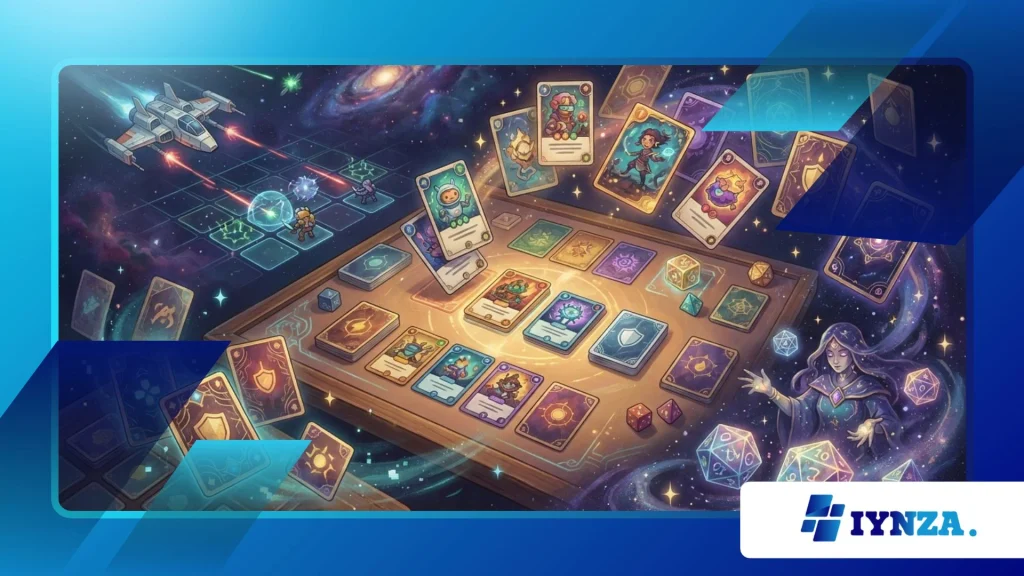
How Does Astrea: Six-Sided Oracles Replace Cards With Custom Dice?
Astrea: Six-Sided Oracles, developed by Little Leo Games, swaps paper cards for a customizable pool of six-sided dice that balance purification and corruption.
Instead of drawing five cards each turn, you pull dice from a bag and roll them to determine your available actions, creating an immediate sense of tactile risk.
Every die features safe, risky, and epic faces, allowing you to tailor your probability curve as you recruit new dice during a run.
The dual-damage system turns self-inflicted harm into a deliberate strategic resource rather than a simple mistake to avoid.
Taking corruption damage unlocks powerful overcharge abilities on your character’s health bar, tempting you to walk a razor-thin line between survival and disaster.
Managing reroll tokens and manipulating individual die faces gives players remarkable control over randomness, turning seemingly terrible rolls into game-winning combos.
++ Twin-Stick Shooter Indies: Why This Genre Is Back
What Happens When Deckbuilding Meets Grid Tactics in Fights in Tight Spaces?
Fights in Tight Spaces, developed by Ground Shatter, merges martial arts choreography with tight, room-scale grid combat that plays out like an interactive action movie.
Your deck represents punches, throws, blocks, and acrobatic dodges executed inside cramped subway cars, dark alleys, and corporate lobbies.
Momentum acts as your primary resource, forcing you to chain movement and strikes fluidly before your stamina runs dry.
Pushing an armed thug into the line of fire of their own ally or slamming an opponent through a glass window feels deeply rewarding because positioning dictates survival.
Rather than trading blows passively across an empty screen, you constantly measure sightlines, wall hazards, and enemy counterattack ranges.
Watching the seamless replay at the end of a brutal encounter turns your careful card sequencing into a clean cinematic brawl.
Also read: Retro Games Worth Revisiting After All These Years
Why Do Physics and Board Control Matter in Dicey Dungeons and Ring of Pain?
Ring of Pain, created by Simon Boxer and Twice Different, arranges your entire dungeon encounter as a circular ring of cards surrounding your character.
Rather than holding a conventional hand, you interact directly with the two cards flanking your current position, choosing whether to attack, sneak past, or grab nearby equipment.
Every move shifts the ring, meaning a safe step to the left might rotate a lethal exploding creature right into your face.
By eliminating traditional hand sizes and focusing on spatial adjacency, the game captures the tension of classic dungeon crawlers in brisk, fifteen-minute sessions.
You spend every turn weighing immediate loot against long-term board state, knowing that ignoring a weak monster early can crowd the circle later.
This streamlined approach shows how stripping away familiar genre conventions often produces the most memorable tactical decisions.
Why Do Independent Studios Lead Innovation in Card Design?
How Does Player-Friendly Monetization Improve Game Balance?
Indie Deckbuilding Games almost universally reject randomized microtransactions, which fundamentally changes how designers balance card pools and progression systems.
When a studio sells a complete experience upfront rather than chasing recurring pack revenue, there is zero financial incentive to introduce artificial power creep.
Developers can tune synergies around pure fun and replayability, knowing every player accesses the exact same card pool through gameplay milestones.
According to Steam storefront data tracked by Valve and independent market analysts like VG Insights, single-player roguelike deckbuilders consistently maintain some of the highest median playtime-to-price ratios among indie releases.
Players reward transparent pricing with fierce loyalty, leaving detailed feedback that helps small teams refine balance patches over months or even years.
Think of a well-crafted indie card game like a finely tuned mechanical watch rather than a vending machine every gear exists to serve the mechanism, never to extract another coin.
What Role Does Rapid Prototyping Play for Small Development Teams?
Small teams of two to ten developers can test radical card concepts in days rather than waiting months for corporate greenlights or massive art pipelines.
Using clean iconography, stylized 2D illustrations, and modular rule engines, independent creators iterate directly alongside passionate communities during public demos and Steam Next Fest events.
If a specific card keyword feels sluggish or overpowered, a solo developer can rewrite its behavior overnight and gather immediate player reactions.
Consider two concrete examples of how rapid iteration shapes standout design:
- Custom Modifier Stacking: A small studio prototypes a simple sticker system where players paste status effects onto existing cards, discovering that limitless combinations create far richer replay value than printing hundreds of static cards.
- Telegraphed Enemy Intent: By displaying exact enemy damage numbers above sprites before the turn ends, developers eliminate frustrating guesswork and turn defensive planning into a transparent puzzle.
Why Do Niche Themes Thrive Outside Mainstream Publishers?
Major publishers frequently steer projects toward safe fantasy tropes or established franchises to minimize perceived marketing risks.
Independent creators face no such committee pressure, freeing them to build Indie Deckbuilding Games around cosmic ocean dread, culinary alchemy, courtroom debates, or cozy woodland expeditions.
That thematic freedom directly inspires fresh mechanics, because a game about brewing potions or negotiating contracts naturally demands different card interactions than swinging a broadsword.
Have you ever noticed how the most unforgettable games in your library are rarely the ones with the biggest marketing budgets?
When mechanics and theme reinforce each other such as shuffling memories in a narrative mystery or managing fuel reserves on a crumbling starship players feel genuinely immersed in the ruleset.
That tight bond between premise and play remains the defining advantage of independent studios in 2026.
Side-by-Side Comparison of Fresh Indie Card Games
| Game Title | Developer | Signature Twist | Core Platform Availability | Average Run Length |
| Cobalt Core | Rocket Rat Games | Horizontal ship positioning and column-based artillery fire | PC, Nintendo Switch | 45–60 minutes |
| Wildfrost | Deadpan Games / Gaziter | Dynamic action countdown timers and customizable card charms | PC, Nintendo Switch, Mobile | 50–75 minutes |
| Inscryption | Daniel Mullins Games | Cabin escape-room puzzles intertwined with creature sacrifices | PC, PlayStation, Xbox, Switch | 10–14 hours (Campaign) |
| Astrea: Six-Sided Oracles | Little Leo Games | Customizable six-sided dice pools with purification/corruption balance | PC, PlayStation, Xbox, Switch | 60–90 minutes |
| Fights in Tight Spaces | Ground Shatter | Room-scale martial arts grid combat with momentum combos | PC, PlayStation, Xbox, Switch | 60–80 minutes |
| Ring of Pain | Simon Boxer / Twice Different | Circular dungeon ring where every step rotates adjacent threats | PC, PlayStation, Xbox, Switch | 15–30 minutes |
The Future of Independent Tabletop Strategy
Exploring Indie Deckbuilding Games beyond the usual storefront frontrunners reveals a vibrant creative landscape where rules are meant to be bent, remixed, and reinvented.
From dodging laser fire in Cobalt Core to rolling corrupted dice in Astrea: Six-Sided Oracles, today’s standout card titles prove that thoughtful design easily outshines bloated budgets.
Every studio highlighted here demonstrates how combining tight strategic choices with bold thematic hooks creates experiences players return to long after the credits roll.
Whether you prefer brisk fifteen-minute dungeon loops or deeply layered tactical campaigns, there has never been a better moment to expand your digital card collection.
Pick one title from the comparison table that challenges your usual playstyle, experiment with unfamiliar synergies, and share your favorite underrated card battlers in the comments below so fellow readers can discover their next obsession.
Frequently Asked Questions
What defines a true deckbuilding game compared to a collectible card game?
In a deckbuilding game, every player starts with a basic, identical set of cards and constructs their deck dynamically during the match or run by drafting new cards, upgrading favorites, and removing weak ones.
Collectible card games, by contrast, require you to assemble a fixed deck from an external library before a match even begins.
This distinction makes deckbuilders feel like self-contained strategic puzzles where adaptability matters more than owning rare cards.
Are modern indie card games accessible for beginners who rarely play strategy titles?
Most contemporary independent card battlers include clean visual telegraphs, hovering tooltips, and adjustable difficulty modifiers that make learning effortless.
Games like Cobalt Core and Wildfrost clearly display exact incoming damage and turn order previews before you commit to a move, eliminating hidden math.
Starting on standard difficulty allows newcomers to grasp card synergies naturally within their first two or three runs.
Which platform offers the best experience for playing indie card battlers?
PC via Steam remains the primary hub for early updates, community mods, and rapid patches, while the Nintendo Switch and Steam Deck provide unmatched comfort for portable sessions.
Because card-based interfaces rely on deliberate turn-based inputs rather than twitch reflexes, handheld screens with touch or controller shortcuts feel tailor-made for quick runs during commutes or travel.
How long does it typically take to complete a single run in these games?
Standard roguelike card runs generally last between thirty and seventy-five minutes, depending on how carefully you plan each turn and how far you progress toward the final boss.
Faster-paced titles like Ring of Pain can wrap up in under twenty minutes, whereas narrative-driven campaigns such as Inscryption span roughly ten to fourteen hours across multiple distinct acts.
Why do so many independent deckbuilders include roguelike progression elements?
Procedural map paths, randomized card drafts, and permanent unlocks give small development teams immense replay value without requiring hundreds of hours of scripted levels.
Each run forces players to improvise around whatever cards, relics, or dice appear in shops, ensuring no two playthroughs rely on the exact same winning strategy.
