Why Gaming Slang Is Becoming Part of Everyday Conversation Online
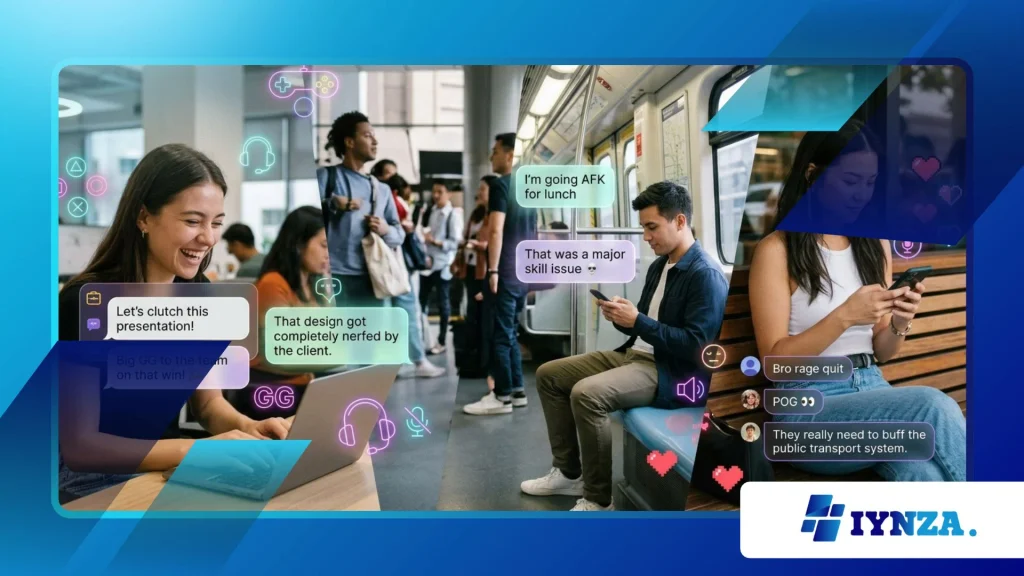
Gaming Slang now shapes how millions of people communicate across social media feeds, workplace chats, and casual text threads every single day.
What started inside competitive lobbies, late-night voice channels, and text-based chat boxes has migrated into mainstream digital culture with remarkable speed.
Walk through any comment section on TikTok, YouTube, or X in 2026, and you will spot phrases born from controller inputs and multiplayer strategy being used by people who have never touched a console.
Language evolves wherever people spend intense, collaborative time together, and interactive entertainment has become the primary gathering square of modern youth and young adult culture.
Rather than staying locked behind loading screens, these compact expressions offer a faster, punchier way to convey emotion, praise, frustration, and irony online.
Understanding this linguistic shift reveals not just how we type, but how digital communities build shared identity in real time.
What You Will Discover in This Guide
- The cultural and technological engines pushing multiplayer vocabulary into mainstream internet conversations.
- How major social platforms, streaming algorithms, and workplace messaging apps accelerate linguistic adoption.
- Real-world examples of classic and modern terms translated from in-game callouts to everyday digital speech.
- A complete reference table comparing original gaming meanings against modern online usage.
- Answers to common questions about the future of digital vocabulary and generational language shifts.
Why Is Gaming Slang Spreading Beyond Video Games So Quickly?
How Have Streaming Platforms Accelerated Mainstream Vocabulary Adoption?
Live streaming transformed gaming from a private hobby into a daily spectator sport watched by hundreds of millions of viewers worldwide.
Creators on Twitch, YouTube Gaming, and Kick broadcast unscripted reactions for hours, repeating high-energy catchphrases during clutch victories and catastrophic defeats.
Viewers absorb these verbal habits passively, then carry them into unrelated comment sections, group chats, and school hallways without thinking twice.
Because live chat moves at breakneck speed, audiences rely on ultra-condensed expressions to react together in real time.
A single three-letter abbreviation or punchy verb replaces an entire paragraph of emotional explanation during a viral broadcast moment.
Once a clip escapes the gaming category and lands on short-form video feeds, non-gamers adopt the phrasing simply because it sounds witty and current.
Why Do Social Media Algorithms Reward Compact Digital Expressions?
Short-form video platforms and microblogging feeds prioritize rapid comprehension, high engagement, and remixable audio trends.
Gaming Slang thrives in this environment because these terms were engineered under intense time pressure during fast-paced matches where every syllable counts.
Think of these expressions like linguistic zip files: they compress a complex situational emotion into two or three letters that unpack instantly in the reader’s mind.
When a creator uses a term like “nerfed” to describe a disappointing restaurant menu or “speedrunning” to describe finishing Monday chores, the post immediately feels relatable and energetic.
Algorithms detect higher comment velocity and shares on posts using trending vernacular, pushing that vocabulary to broader audiences every week.
Have you noticed how quickly a phrase goes from a niche Discord server to your local coffee shop’s social media caption?
++ Healthy Gaming Habits Every Player Should Build
How Does Remote Work and Digital Chat Blur Subculture Boundaries?
Modern office communication increasingly resembles the text channels that multiplayer communities pioneered decades ago.
Platforms like Slack, Microsoft Teams, and Discord rely on rapid-fire text threads, custom emojis, and asynchronous status updates that mirror guild chat rooms.
Younger professionals entering the workforce naturally bring the conversational shorthand they grew up using with teammates into daily project discussions.
Saying a coworker “carried” a difficult client presentation or asking team members not to “afk” before a deadline feels intuitive in a text-first workplace.
According to Newzoo’s Global Games Market Report, more than 3.4 billion people worldwide play video games, meaning interactive entertainment is no longer a niche subculture at all.
When over a third of the global population shares a common recreational pastime, its vocabulary inevitably becomes the default dialect of the internet.
Which Everyday Words Actually Originated in Gaming Communities?
How Did Competitive Callouts Become Everyday Emotional Reactions?
Many phrases people type daily without a second thought began as urgent tactical warnings inside first-person shooters and battle arenas.
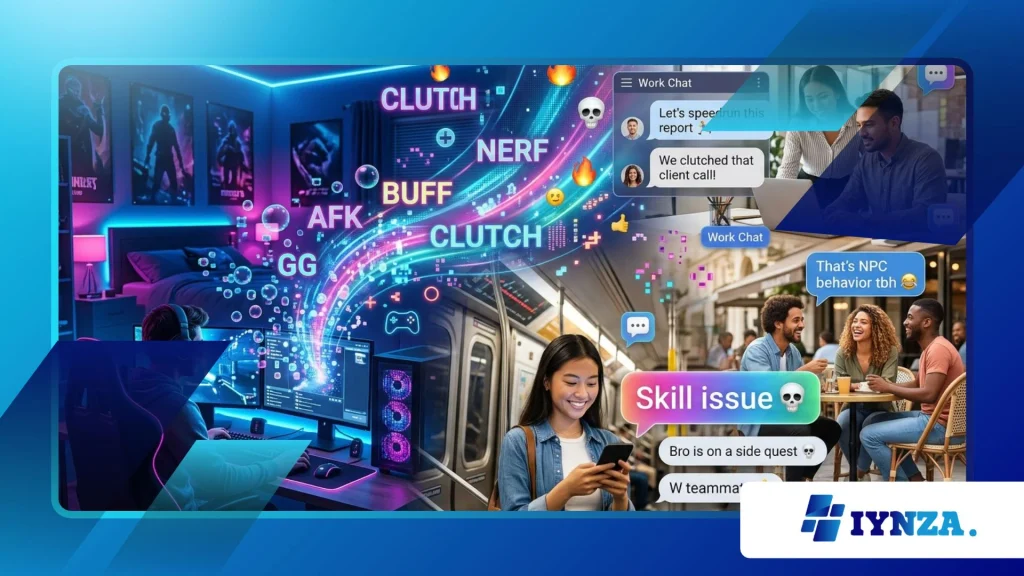
Terms like “GG” (good game), “AFK” (away from keyboard), and “lagging” started as functional status reports so teammates knew why a player stopped moving or how a match ended.
Today, people type “GG” when they spill coffee on a white shirt or say their brain is “lagging” during an afternoon meeting.
Consider two practical examples from everyday online life in 2026.
First, a university student posts a photo of an empty library desk at 2:00 AM with the caption “finally beat the final boss of organic chemistry, GG,” turning an academic milestone into a victorious raid clear.
Second, a fitness influencer films a twenty-minute grocery haul and titles it “speedrunning meal prep before work,” borrowing a competitive timing category to describe everyday efficiency.
Also read: Video Game Vinyl Records: Why Soundtracks Became Collectibles
Why Do People Use Balance Patch Terms to Describe Real Life?
Role-playing games and competitive multiplayer titles regularly release updates that strengthen weak characters (“buffs”) or weaken overpowered ones (“nerfs”).
Internet users discovered that these mechanical balance concepts describe everyday life frustrations far more accurately than traditional adjectives.
Calling a rainy weekend a “weather nerf” or describing an extra shot of espresso as a “morning buff” adds immediate humor to mundane updates.
Using Gaming Slang in this way turns passive complaints into playful commentary on life’s unpredictability.
Instead of writing a long post complaining that a favorite streaming service raised prices while removing features, a user simply writes that the platform got “nerfed into the ground.”
Everyone reading the thread understands the exact mix of disappointment and irony within half a second.
Read more: Best Gaming Apps for Staying Connected With Friends
What Role Do Memes Play in Translating Niche Terms for Non-Gamers?
Internet memes act as visual translation dictionaries that teach outsiders what specialized vocabulary means through context alone.
When a funny reaction image pairs a dramatic facial expression with a caption like “skill issue” or “side quest,” readers grasp the joke even if they have never played an action role-playing game.
The image supplies the emotional subtext, allowing the vocabulary to stick effortlessly.
Once a term enters meme templates, it detaches from its original game genre and becomes a universal commentary tool.
A traveler taking an unplanned detour to visit a roadside bakery calls it a “side quest,” while someone failing to parallel park jokes about a “skill issue.”
Through constant visual repetition across feeds, specialized jargon transforms into shared cultural shorthand.
How Is Gaming Slang Reshaping Modern Online Communication?
Does Digital Shorthand Make Online Conversations More Inclusive or Exclusive?
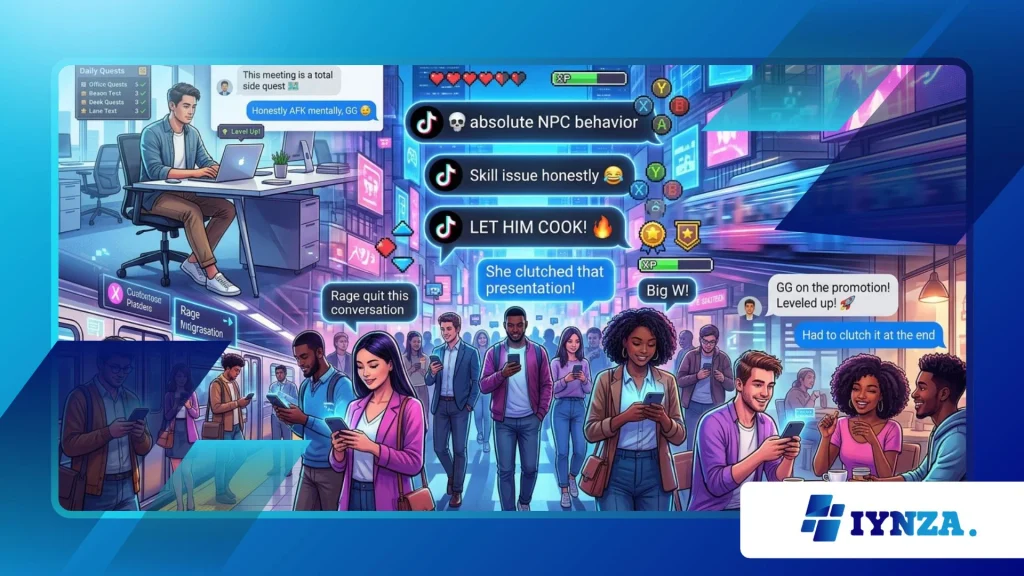
Every generational dialect creates an instant sense of belonging among people who understand the references while occasionally puzzling newcomers.
Inside digital spaces, using familiar Gaming Slang signals cultural fluency, humor, and approachability without needing formal introductions. Strangers in comment sections bond immediately when they trade playful callouts and shared jokes.
At the same time, rapid linguistic turnover means expressions evolve faster than traditional dictionaries can document them.
Older relatives, educators, and brand managers sometimes misread playful teasing like “ratio” or “noob” as genuine hostility when they lack gaming context.
Bridging that gap simply requires recognizing that most multiplayer expressions prioritize dramatic exaggeration over literal criticism.
How Are Brands and Content Creators Adapting Their Tone of Voice?
Marketing teams and digital publishers now study multiplayer culture closely because forced or outdated phrasing triggers immediate audience skepticism.
Successful brands avoid stuffing ads with random buzzwords and instead use gaming metaphors only when the situational comparison genuinely fits.
A productivity app announcing faster load times might playfully note that it “removed lag from your workflow,” which feels natural and clever.
Content creators across lifestyle, cooking, finance, and fitness niches also weave these terms into video titles to boost click-through rates.
Framing a personal budget overhaul as “fixing your character build” makes intimidating financial advice feel approachable and actionable. Readers respond warmly when complex topics borrow the encouraging, progress-driven language of leveling up.
Will Today’s Viral Gaming Terms Survive in Mainstream Dictionaries?
Linguists note that slang terms survive long-term only when they fill a genuine gap in everyday expression rather than serving as temporary catchphrases.
Words like “avatar,” “glitch,” and “easter egg” entered standard English dictionaries decades ago because technology created permanent real-world equivalents for them.
Modern additions like “NPC,” “nerf,” and “speedrun” show strong staying power because no single traditional English word captures their exact nuance.
As virtual worlds, augmented reality, and interactive social spaces become even more integrated into daily routines in 2026 and beyond, the boundary between “gamer talk” and “regular talk” continues to dissolve.
Using Gaming Slang no longer marks someone as a hardcore hobbyist sitting in a dark room with a headset. Instead, it reflects a connected generation fluent in fast, expressive, and collaborative digital communication.
Quick Reference: Gaming Terms in Everyday Online Conversation
| Term | Original Gaming Meaning | Modern Everyday Online Usage | Example in a Real Sentence |
|---|---|---|---|
| GG | “Good game,” typed at the end of a match to show sportsmanship. | Used sarcastically or sincerely to mark the end of an effort or minor mishap. | “I forgot to save my spreadsheet before my laptop died, GG.” |
| Nerf / Buff | Reducing or increasing the power of a weapon, character, or ability in a game patch. | Describing something that got worse (nerfed) or better (buffed) in real life. | “They shrunk the portion sizes at my favorite cafe; the lunch menu got nerfed.” |
| Side Quest | An optional mission outside the main storyline of a role-playing game. | A spontaneous errand, detour, or fun distraction from your primary daily goal. | “Went to buy milk and ended up on a two-hour side quest at the bookstore.” |
| NPC | Non-player character controlled by game code rather than a human player. | Someone acting robotically, following crowds blindly, or repeating scripted opinions. | “Everyone repeating the exact same viral take in the replies sounds like an NPC.” |
| Carry | One skilled player doing most of the work to help a weaker team win. | One person, ingredient, or feature saving an entire group project or experience. | “Garlic bread completely carried that mediocre Italian dinner last night.” |
| Speedrun | Completing a video game as fast as humanly possible. | Finishing a routine chore, errand, or task at record-breaking speed. | “I have to speedrun cleaning my apartment before my guests arrive in twenty minutes.” |
| AFK | “Away from keyboard,” warning teammates you stepped away from controls. | Stepping away from a desk, chat thread, or social gathering temporarily. | “Going AFK for fifteen minutes to grab lunch, message me if anything urgent pops up.” |
The Future of Digital Dialect Is Already Here
Interactive entertainment has permanently reshaped how people express humor, frustration, teamwork, and achievement across the internet.
From live-stream chat rooms and short-form video algorithms to remote workplace channels, compact expressions born inside virtual worlds now power everyday digital conversation.
When used naturally, Gaming Slang adds precision, energy, and shared cultural warmth to ordinary online interactions.
Language has always belonged to the communities that live inside it most actively, and today those communities gather online.
Pay attention to your favorite social feeds over the next few days, and you will likely spot dozens of controller-era expressions hiding in plain sight.
Which gaming phrase do you catch yourself using most often outside of video games? Drop your favorite example in the comments below and share how your friends or coworkers react when you use it.
Frequently Asked Questions
Why do non-gamers use gaming slang on social media?
Non-gamers pick up these expressions through viral short-form videos, memes, and live-stream clips that circulate across mainstream platforms like TikTok, Instagram, and YouTube.
Because terms like “side quest” and “nerfed” describe everyday situations with humor and brevity, people adopt them naturally without needing to play video games.
Is using gaming slang professional in workplace chat apps?
Light, universally understood terms like “AFK” or joking about “carrying” a presentation are common in casual Slack or Teams channels among modern digital teams.
However, using obscure competitive jargon in formal client emails or executive reports can cause confusion, so matching your audience’s communication style remains essential.
Which gaming terms have officially entered mainstream dictionaries?
Major dictionaries such as Merriam-Webster and the Oxford English Dictionary have added numerous gaming-rooted words over the years, including “avatar,” “glitch,” “noob,” “easter egg,” and “speedrun.”
Linguists add these terms once sustained usage proves they carry clear meaning across general media, journalism, and everyday speech.
How fast does online gaming vocabulary change?
Specific memes and catchphrases from trending multiplayer titles can peak and fade within a few months as players move on to new releases.
By contrast, foundational tactical terms like “GG,” “lag,” and “buff” have remained relevant for over two decades because they describe recurring human experiences efficiently.
What is the difference between internet slang and gaming slang?
Internet slang encompasses all informal language created across forums, texting, and social media, whereas gaming slang originates specifically from multiplayer mechanics, voice chat callouts, and game design concepts.
Over time, the two categories overlap heavily as gaming culture continues to dominate mainstream online entertainment.
