
Why VALORANT’s 2027 Tour Is Expanding Across 15 Global Host Cities
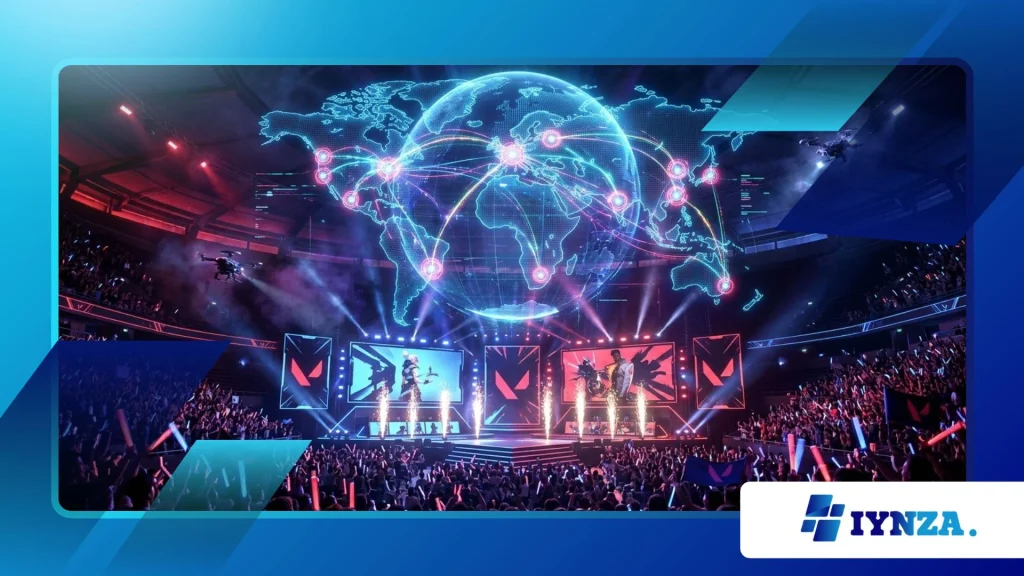
VALORANT’s 2027 Tour represents the most ambitious geographical overhaul in tactical shooter history, moving Riot Games away from centralized studio hubs into 15 distinct international arenas.
For years, the VALORANT Champions Tour relied heavily on four regional leagues concentrated in Los Angeles, Berlin, Seoul, and Shanghai.
While those studios built foundational stability during the early franchise era, passionate fanbases across Latin America, Southeast Asia, and Eastern Europe remained geographically disconnected from top-tier live competition.
By decentralizing the calendar in 2027, Riot Games directly addresses regional viewership imbalances while unlocking massive live-event revenue streams.
This strategic shift mirrors traditional global sports circuits that thrive on local stadium atmospheres rather than isolated broadcast studios.
Fans attending live matches create an electric energy that broadcasts simply cannot replicate from empty or small-capacity studio floors.
Furthermore, bringing tier-one tactical competition directly to emerging gaming capitals strengthens grassroots player pipelines and attracts regional corporate sponsors.
Key Takeaways & Article Roadmap
- Strategic Decentralization: How moving out of four centralized studio cities solves travel fatigue and regional engagement gaps.
- Commercial & Competitive Impact: Why stadium ticketing, local sponsorships, and flexible tournament formats drive the 2027 blueprint.
- Regional Host Breakdown: A comparative look at the 15 host destinations, arena capacities, and economic targets.
- Looking Ahead & Reader FAQ: What this global expansion means for roster endurance and common questions from the competitive community.
What Is Driving Riot Games to Decentralize the VCT Ecosystem?
Why Did the Four-Hub Studio Model Reach Its Competitive Limit?
Operating four permanent regional hubs in Los Angeles, Berlin, Seoul, and Shanghai created severe logistical bottlenecks for traveling rosters and broadcast crews.
Teams from Brazil, Japan, and Southeast Asia spent months living abroad, separated from family support systems and local training facilities.
That prolonged isolation drained player morale and inflated operational housing budgets for partner organizations throughout the regular season.
Broadcast metrics also revealed stagnation when regular-season matches took place inside familiar, small-capacity studio environments week after week.
Viewers craved the high-stakes intensity of packed arenas, yet those moments occurred only three times per year during Masters and Champions events.
Expanding VALORANT’s 2027 Tour across 15 cities transforms ordinary regular-season weeks into genuine festival stops.
How Do Live Arena Crowds Transform Broadcast Engagement and Viewership?
Loud arena crowds elevate every clutch play, turning routine tactical rounds into viral cultural moments across social media platforms.
According to official Riot Games viewership reports from the 2024 and 2025 international circuits, arena-hosted playoff weekends consistently generated peak concurrent viewership figures exceeding 1.4 million fans, nearly triple the average studio broadcast.
Sponsors notice that spike immediately, because arena signage and crowd reactions deliver superior brand recall compared to static studio backdrops.
Think of the difference between watching a late-night acoustic rehearsal and experiencing a sold-out stadium world tour.
Both feature the exact same musicians playing identical notes, yet the stadium environment amplifies emotional investment for everyone watching at home.
Riot Games recognized that VALORANT’s 2027 Tour needed that continuous stadium electricity to sustain long-term commercial growth.
++ How VCT 2027 Open Qualifiers Could Reshape the Pro Esports Circuit
Which Emerging Markets Benefit Most From Hosting Tier-One Events?
Latin America, Southeast Asia, and Central Europe stand to gain the biggest competitive and commercial boosts from the 2027 calendar.
Cities like São Paulo, Manila, Jakarta, and Katowice boast massive, deeply engaged tactical shooter communities that routinely pack arenas within minutes of ticket releases.
Hosting official circuit stops in these regions validates local fan passion and rewards organizations investing in regional talent.
Local municipal tourism boards also actively subsidize arena rentals and broadcast infrastructure to attract international esports visitors.
For example, a single three-day weekend stop in Manila or São Paulo draws thousands of traveling fans who book hotels, dine locally, and purchase merchandise.
Those municipal partnerships dramatically lower Riot Games’ live-production overhead while expanding the competitive footprint.
How Will the 15-City Format Reshape Competitive Integrity and Team Logistics?
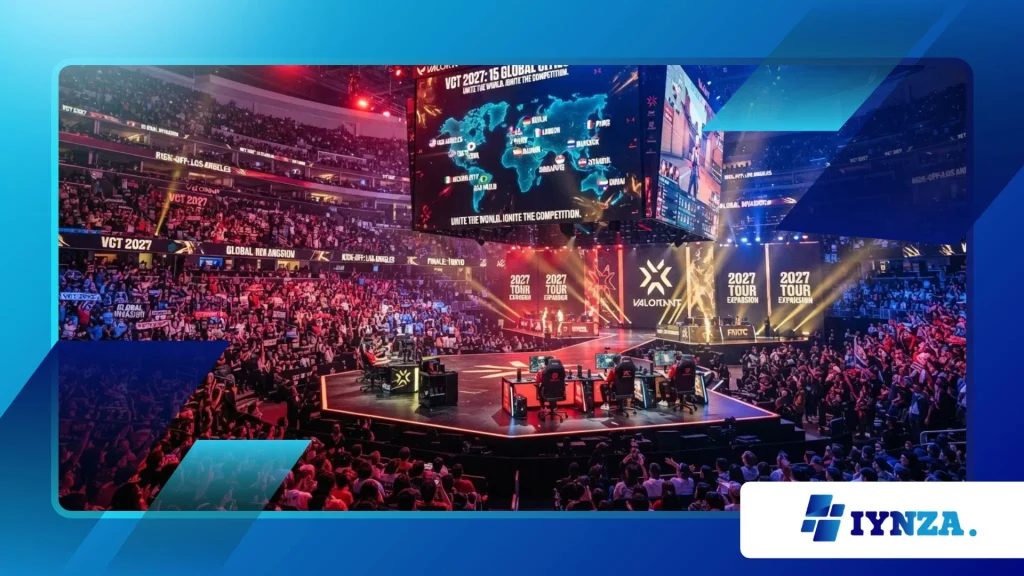
How Can Teams Manage Travel Fatigue Across Fifteen International Stops?
Managing cross-continental travel across 15 destinations requires strict scheduling blocks rather than chaotic weekly flights across multiple time zones.
Riot Games structured the 2027 calendar into regional clusters, allowing squads to compete in two or three neighboring cities before returning home for recovery blocks.
Organizations are already hiring dedicated performance coaches and sleep specialists to keep player reaction times sharp despite frequent hotel stays.
Consider a hypothetical Pacific roster competing during the spring swing across Tokyo, Seoul, and Manila over a five-week stretch.
Because all three cities share closely aligned time zones and short flight durations, players avoid debilitating jet lag while enjoying massive home-region crowd support.
Smart clustering ensures competitive integrity remains intact without burning out star duelists before mid-season international playoffs.
++ The Most Promising Esports Prospects to Watch This Season
What Financial Advantages Do Partner Organizations Gain From Touring?
Partnered esports teams struggled for years to monetize regular-season studio matches where Riot Games controlled all ticketing and venue branding.
Under the new touring framework, host-region organizations gain dedicated arena booth space, co-branded merchandise rights, and localized hospitality packages for VIP sponsors.
Selling physical jerseys directly to 12,000 energized fans inside an arena generates immediate cash flow that digital skins alone cannot match.
Consider an organization based in Madrid or Santiago hosting a regional showcase stop during VALORANT’s 2027 Tour.
That franchise can pitch regional telecom and banking sponsors on tangible, in-person brand activations right inside the arena concourse.
Traditional corporate partners understand live sports hospitality far better than abstract digital banner impressions.
Also read: The State of Esports in 2026: What Changed in Just One Year?
Why Does Open-Circuit Integration Matter for Rising Challengers Squads?
Franchise exclusivity previously created a rigid wall between tier-one partnered rosters and hungry Challengers squads grinding in regional leagues.
The 2027 touring model introduces localized play-in brackets at select host cities, giving top Challengers teams direct arena stage experience against established giants.
Facing a partnered roster in front of a roaring hometown crowd accelerates rookie development faster than months of online scrimmages.
Viewers love underdog storylines, and nothing sparks arena excitement faster than a local qualifier squad upsetting an international powerhouse.
Integrating regional qualifiers into select tour stops keeps the competitive ecosystem meritocratic and prevents tier-one rosters from growing complacent.
What Does the 2027 Global Host City Blueprint Look Like?
Which Cities Anchor the Americas, EMEA, Pacific, and China Circuits?
Riot Games balanced legacy esports capitals with high-growth metropolitan markets to ensure every major time zone receives prime-time live action.
The Americas circuit spans North and South America, pairing established hubs like Los Angeles and Toronto with vibrant arenas in São Paulo, Santiago, and Mexico City.
Meanwhile, EMEA spreads across Berlin, Madrid, Istanbul, and Katowice to capture passionate European and Turkish fanbases.
Pacific and China complete the 15-city map by rotating through Seoul, Tokyo, Manila, Jakarta, Shanghai, and Chengdu.
Each destination features arenas holding between 8,000 and 18,000 spectators, guaranteeing broadcast-ready lighting rigs, low-latency fiber networks, and accessible international airports.
How Do Arena Capacities and Regional Markets Compare Across the Tour?
Evaluating the 15 destinations highlights how Riot Games tailored venue sizes to match local ticket demand and broadcast production goals.
Rather than booking oversized football stadiums that risk empty upper decks, organizers selected mid-to-large indoor arenas built for acoustics and sightlines.
Why would any league settle for half-empty bleachers when a packed 12,000-seat arena looks electric on every camera angle?
| Host Region | Selected Host Cities (15 Total) | Target Arena Capacity | Primary Strategic & Commercial Objective |
| Americas | Los Angeles, Toronto, Mexico City, São Paulo, Santiago | 9,000 – 15,000 seats | Bridge North and South American fanbases; maximize Spanish and Portuguese live broadcasts |
| EMEA | Berlin, Madrid, Istanbul, Katowice | 10,000 – 16,000 seats | Tap into high-growth Turkish and Southern European markets with strong municipal support |
| Pacific | Seoul, Tokyo, Manila, Jakarta | 8,500 – 15,000 seats | Capture peak mobile and PC gaming engagement across Southeast and East Asia |
| China | Shanghai, Chengdu | 12,000 – 18,000 seats | Leverage massive domestic arena infrastructure and tier-one corporate sponsorships |
What Infrastructure Standards Must Host Venues Meet for Tactical Shooters?
Hosting a premier tactical shooter demands far stricter technical infrastructure than a standard concert or basketball game.
Every host arena must guarantee redundant fiber-optic internet lines, sub-five-millisecond local server routing, and acoustic isolation booths so players cannot hear crowd callouts.
Broadcast production teams also require dedicated backstage coaching rooms, press interview zones, and high-amperage power grids for stage LED walls.
Venues failing rigorous pre-tour stress tests risk losing their hosting slot to backup cities on Riot Games’ reserve list.
Maintaining uniform competitive conditions across all 15 arenas ensures that an operator shot in Jakarta feels identical to one fired in Berlin.
The Road Ahead for Global Tactical Esports
Decentralizing professional competition marks a bold coming-of-age moment for Riot Games and the entire tactical shooter genre.
By moving away from four isolated studio cities and embracing 15 international arenas, VALORANT’s 2027 Tour prioritizes live community energy, sustainable team monetization, and true regional representation.
Success will depend heavily on smart travel clustering and strict technical execution across diverse venues, yet the commercial upside far outweighs the logistical complexity.
Share which of the 15 host cities you want to visit live in the comments below, and tell us which regional crowd will bring the loudest atmosphere!
Frequently Asked Questions
How many total host cities are included in VALORANT’s 2027 Tour?
The 2027 competitive calendar expands across 15 global host cities divided strategically among the Americas, EMEA, Pacific, and China circuits.
This structure replaces the old four-studio model with rotating arena stops throughout the year.
Will every regular-season match take place inside a large arena in 2027?
Most major weekend showcases and playoff stages will take place inside 8,500-to-18,000-seat arenas, while early weekday seeding matches may still use localized broadcast stages.
This hybrid approach keeps production costs sustainable while maximizing weekend ticket sales.
How does the 15-city expansion help esports organizations make money?
Partnered teams receive on-site merchandise booths, VIP sponsor hospitality suites, and localized commercial activation rights at host venues.
These physical revenue streams reduce reliance on digital in-game bundle sales.
Does traveling to 15 cities hurt player health and competitive performance?
Riot Games minimizes jet lag by grouping host cities into geographic clusters and scheduling dedicated recovery weeks between international swings.
Teams also employ travel performance staff to manage player sleep and nutrition.
Can non-partnered Challengers teams qualify for any of the 2027 tour stops?
Yes, select tour destinations feature integrated play-in brackets where top Challengers rosters compete directly against partnered tier-one teams on the main arena stage.
